

During the 114th Tennessee General Assembly, April 2026
School vouchers, which essentially funnel public dollars toward private schools, were once again at the forefront of the Republican supermajority’s education agenda at the state Capitol.
Tennessee’s statewide voucher program, dubbed Education Freedom Scholarships, was initially narrowly passed by state lawmakers during a special session in early 2025. The program launched in the 2025-26 school year offering 20,000 vouchers — split evenly between students with a financial need and universal vouchers (available to any student, regardless of income status). This initial legislation allowed for an additional 5,000 vouchers to be added every academic year if at least 75 percent of the previous year’s vouchers were utilized. More than 56,000 applications were submitted for the 2026-27 school year.
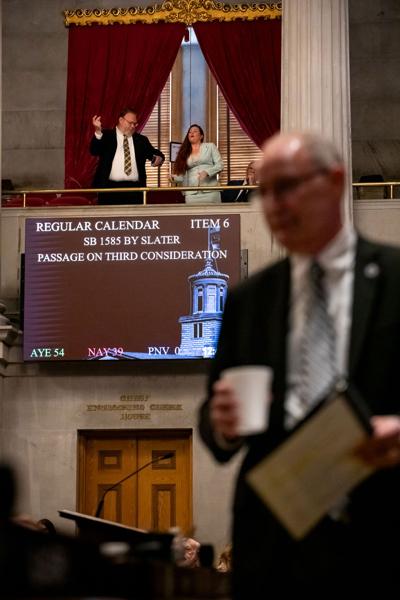
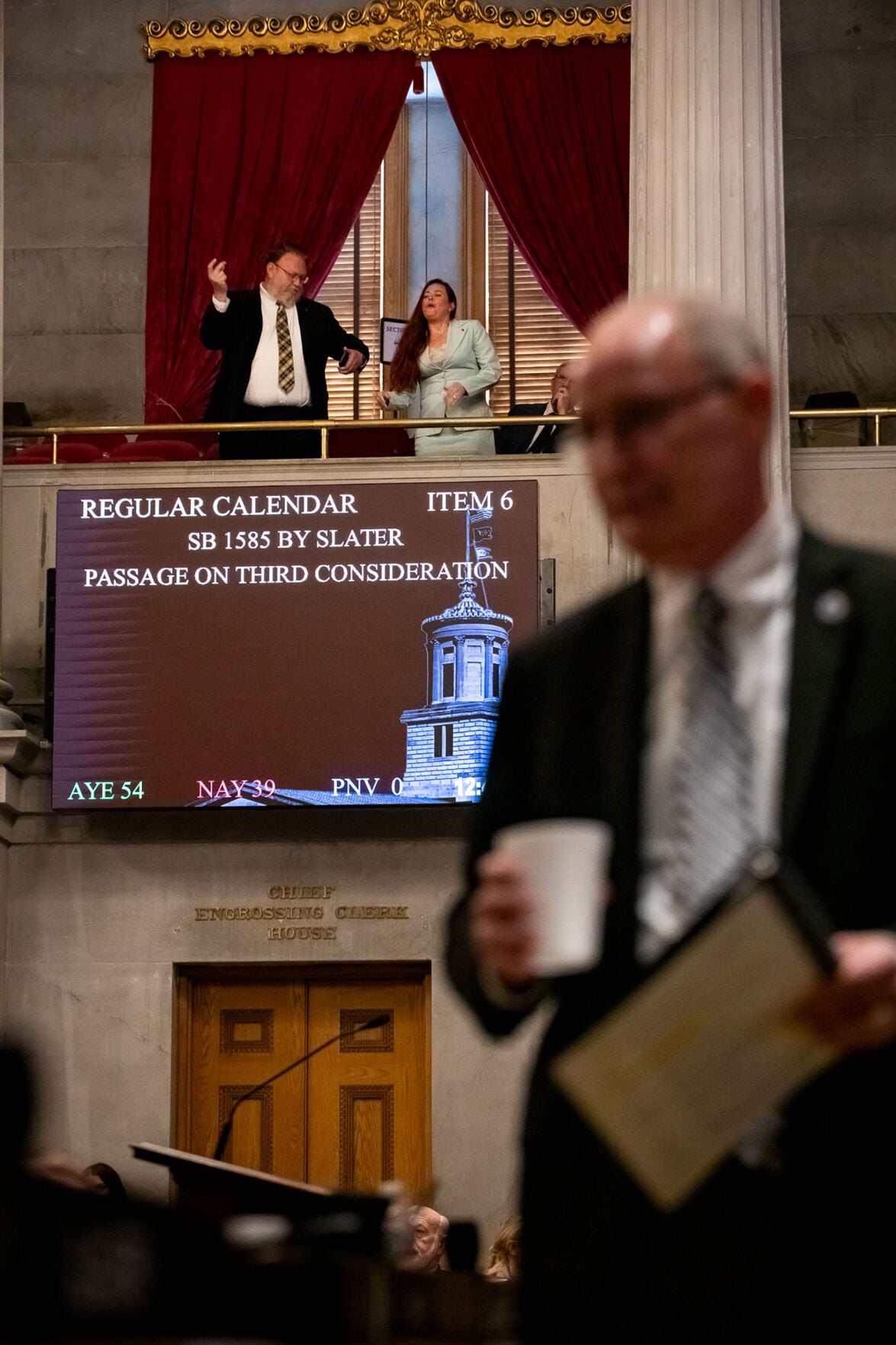
During this year’s session, Republicans were able to get an expansion of the program passed — but it was a tight vote, with many Republicans breaking from the pack to join Democrats in voting against the expansion. Under the new legislation, the EFS program will offer a total of 35,000 vouchers — valued at roughly $7,500 each — for the 2026-27 school year. (The number fell short of Gov. Bill Lee’s initial proposal of 40,000.) The new legislation also reorders who gets top priority for receiving the vouchers.
This prioritization continues as:
Students who received vouchers during the previous school year.
Students whose household income falls below 100 percent of federal eligibility for free or reduced-priced lunch.
Students whose annual household income is below 300 percent of that amount, and then students whose household income exceeds 300 percent of that amount and are currently enrolled in public school or entering kindergarten.
Students whose annual household income exceeds 300 percent of the federal eligibility amount — meaning some vouchers could go to students who already attend private schools.

Amendment aims to increase tracking requirements for the immigration status of K-12 students
Also shoehorned into the voucher expansion bill is a provision that allows public schools to receive funding for students who disenroll because of EFS — but only if they provide Social Security numbers associated with said students. This measure comes as a revamped version of a previously proposed amendment attempting to require public school districts to provide proof of citizenship or legal immigration status of students who leave to attend private schools as a part of the EFS program.
While the state’s leading Republicans have maintained their argument that vouchers expand school choice across Tennessee, Democrats and Republicans alike have expressed budgetary concerns as well as worries over the lack of data on who exactly is benefiting from the EFS program. Every attempt at increasing transparency and accountability for the program died in committee this session.
And while most of the session focused on Republicans’ expansion of EFS, a last-minute effort to ease testing requirements related to Tennessee’s Education Savings Account program also passed. The program acts as the state’s pilot program for vouchers offered to low income students, which operates only in Nashville, Memphis and Chattanooga. The legislation now allows private schools to administer other national tests instead of TCAP. Opponents argue that the legislation makes it more difficult to know if students’ test scores are improving when they transfer to private schools under the voucher program. Meanwhile, Republicans also launched an “intervention” of the Memphis-Shelby County Schools district following the release of a forensic audit detailing “systemic problems.”
As budgetary concerns and the EFS program’s potential impact on the lottery-funded HOPE Scholarship loom, Republicans appear interested in expanding the voucher programs even further. When asked whether a potential EFS expansion could be on the horizon next year, House Speaker Cameron Sexton (R-Crossville) says that depends on the outcome of this year’s gubernatorial race and where the next governor’s priorities land when it comes to school vouchers.
“They’re going to have their agenda,” Sexton said at a press conference on April 23. “We’re going to stay here. … We’ll regroup and re-go.”
House Majority Leader William Lamberth (R-Portland) was less shy about his desire to increase the amount of vouchers.
“I’m sure the next governor will do a fantastic job, and as she evaluates this, will truly consider whether or not those 56,000 families deserve a choice,” says Lamberth — using “she” as a nod to the Republican U.S. Sen. Marsha Blackburn, the odds-on favorite to win the governor’s race in November.

We recap what the state legislature did — and didn’t do — this year at the Capitol



Post a comment as anonymous
Report
Watch this discussion.
(0) comments
Welcome to the discussion.
Log In
Welcome to the discussion.
Keep it clean. Please avoid obscene, vulgar, lewd, racist or otherwise abusive language. Comments featuring hate speech or threatening or violent content will not be tolerated.
PLEASE TURN OFF YOUR CAPS LOCK.
Be truthful. Don't knowingly lie or mislead.
Be proactive. Use the “report” link on any comment that violates our comment policy.
Share with us. We'd love to hear your feedback.