
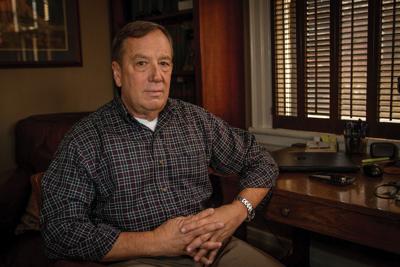

Election cycles come like waves. New names and personalities come into old seats, often with promises to improve on the status quo. Old names disappear by defeat or by choice, and eras shift. East Tennessee Sen. Art Swann (R-Maryville) slipped in his retirement announcement during this year’s opening state Senate session.
“We all have a shelf life here,” Swann told his colleagues. “And I’ve had two.”
Swann served one stint in the House in the mid-1980s, rejoined in 2010 and crossed over to the Senate in 2017 by appointment when his predecessor was tapped to be a U.S. attorney by then-President Trump. His brief remarks drew tremendous applause from fellow senators of both parties and prompted floor speeches from Sens. Ken Yager (R-Kingston), Paul Bailey (R-Sparta), Becky Duncan Massey (R-Knoxville), Rusty Crowe (R-Johnson City) and Jeff Yarbro (D-Nashville), all of whom painted Swann as a mentor and confidant. He wants to spend time with his wife and friends. Deputy Speaker Curtis Johnson (R-Clarksville), a top-ranking House Republican, wants to golf as much as possible. They are two of a handful of longtime lawmakers who have announced they won’t seek reelection this year.
“Everyone has their own reasons,” says Darren Jernigan (D-Old Hickory). In October, Nashville Mayor Freddie O’Connell recruited Jernigan as a bridge-builder between Metro and the state legislature. “And maybe the environment pushes them to go ahead and do it.”
Jernigan and Rep. Sam Whitson (R-Franklin), a conservative representing a big chunk of Williamson County, bonded as back-benchers in Whitson’s first term. Both have bowed out of reelection. They reflected on a combined 20 years in the legislature one Thursday during an impromptu meeting of the “peanut-butter-and-jelly caucus,” Whitson’s name for their frequent lunch dates. Jernigan worked on a loaded baked potato from the cafeteria in the Cordell Hull Building.
In the fall, Whitson publicly opposed Gabrielle Hanson’s upstart campaign for Franklin mayor. Hanson, a former alderman, had publicly courted local Nazi groups and embraced extreme right-wing politics. Whitson and Jernigan compliment each other as “statesmen” rather than politicians preparing to leave parties that, both say, are moving toward extremes.
A few outgoing lawmakers will not change the political balance in Tennessee, says Jernigan. But it could take away swing votes that determine what gets out of subcommittees or the informal social bonds that mitigate interpersonal ill will after otherwise contentious floor debates. In other words, who you’ll ride the elevator with, says Whitson.
Executive secretary Linda Bowers plans to beat her boss, Deputy Speaker Johnson, into retirement by a few months. Bowers has 45 years working for lawmakers in the legislature to Johnson’s 20 years. It’s easy to see how both have survived for so long. Neither dints their party, however much it’s changed since Johnson’s first election in 2004. Every few minutes, Johnson’s eyes check in with the tape recorder on his desk. Bowers’ memory is an encyclopedia of scandals and missteps; her desk has the physical newspaper clippings to match.
“Shoot straight with your colleagues and with your constituents and whoever’s working bills,” Johnson says. “Your word is your bond here. If you lie once, it’ll stick with you.”
Neither Johnson nor Swann mentions thorny culture-war issues like trans health care or abortion in two hours’ worth of conversation. Unlike in today’s stump speeches by newer colleagues, both talk about money. Anti-tax populism swept Johnson into office, and fiscal conservatism is Swann’s ideological bedrock. Tennessee’s full coffers were evidence they did right by their constituents.
Tax-slashing and austere social spending helped Republicans gain control of Tennessee through the mid-2000s. Party talking points have drifted since then, favoring cultural, religious and social battles framed as an existential fight against a Democratic menace. On his way out, Swann warns that missteps can follow stretches of unchecked political decadence.
“When things get too easy or too hard for you, that’s when changes occur,” says Swann. “We all have a sense of what’s proper and what’s improper. I believe we’re in one of those times of change. We’ll just have to see what the adjustment is.”
Swann has taken the party line on many contentious topics — notably co-signing a letter backing former President Trump’s unfounded challenge of 2020 election results. But he won’t follow Republicans’ unequivocal contempt for gun control.
“I grew up a hunter,” Swann tells the Scene in his seventh-floor office. “My grandaddy was a hunter. And the one place I was most torn is the gun issue. It challenged my belief system about right and wrong. I recognized that we had a problem and further recognized that I’ve been a part of that problem all these years. When we’re making guns for military purposes and giving them out to the general public, there’s serious concern we’re going to see more and more of these shootings everywhere. I think we have a social responsibility to protect each other, not just ourselves.”

State leaders return to Nashville to consider laws related to abortion, education and the ongoing culture wars



