
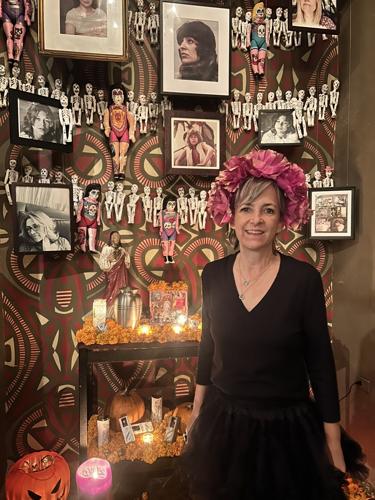


Kathleen Cotter at a restaurant in San Miguel de Allende, Mexico
Kathleen Cotter
Businesswoman, cheese expert, friend
After a short stay in hospice when her pancreatic cancer returned, Kathleen Cotter died in June at the age of 54. First diagnosed in 2023, Cotter faced her battle with her trademark good humor and fighting spirit.
I first met Kathleen back in 2009, when we were both regulars at the bar of Tayst, Jeremy Barlow’s restaurant right around the corner from my house. Kathleen was a dedicated turophile and taught me more about cheese over glasses of happy-hour wine than anyone I’ve met before or since. She soon began supplying cheese to Barlow and storing the inventory for her virtual cheese shop, The Bloomy Rind, in Tayst’s refrigerators. She expanded her business and hosted Southern Artisan Cheese Festivals, becoming the go-to expert on all matters cheese-related in Nashville. She loved sharing her passions, from new creameries she had discovered to social causes that she cared deeply about. She was sharp-witted and unafraid to speak her mind, but you didn’t want to get on her bad side — though few did, given her amiable nature.
Kathleen volunteered for the Nashville Farmers Market, was a member of Les Dames d’Escoffier and chaired Generous Helpings (twice!) for Second Harvest. I’ll miss her as a knowledge resource and a cheese sherpa, but most of all as a friend. —Chris Chamberlain

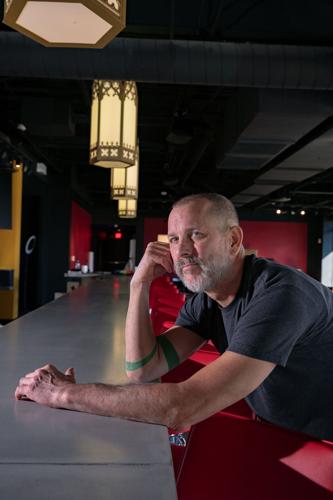
Owner Darek Tanner in Canvas' East Nashville space
Darek Tanner
Canvas founder, LGBTQ community leader
Darek Tanner was the kind of soft, empathetic person whom others would trust to tell about their wins and losses. He also had fierceness that could activate if someone was being disrespectful at the gay bar he founded, Canvas.
I met Tanner while I was writing about the bar’s move to East Nashville in 2022 after 11 years on Church Street. It was clear he was passionate about the space he had created. In response to just one question about the business, he talked for more than six minutes. His work stemmed from his own wounding as a young gay person in rural Southern Illinois in the 1980s. For Tanner, his work was all about giving people something he wished he could have had as he came of age. He was exceedingly proud of the art in the space and the church-style lighting, homages to Church Street and to the things he still valued from his Christian upbringing. Canvas was active in fundraising efforts for HIV prevention and LGBTQ political candidates. When Tanner died suddenly in late 2024, hundreds praised his special ability to cultivate queer community. —Hannah Herner
Ernest Williams III
Philanthropist, financial adviser
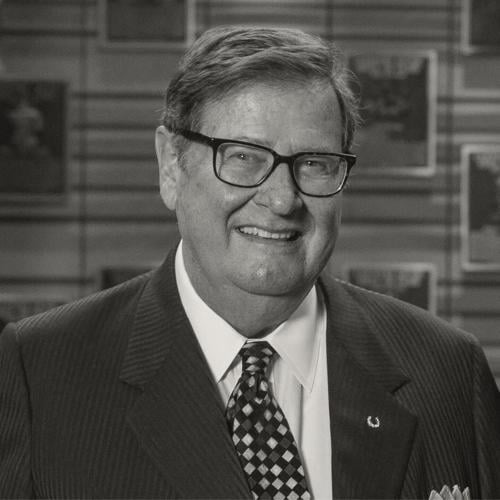
So often were they spoken in one breath — with unanimous reverence for their leadership and philanthropy — that the names of Ernie and Jerry Williams became almost comically confused throughout their 56-year marriage. So for anyone who has ever paused to recall which name belongs to the elegant red-haired former doyenne of Leadership Nashville (Jerry) and which name belonged to her fly-fishing, flip-phoning and trivia-loving value-investor husband (“The Ernie,” who died in November at 84), one eulogy provided this tip: Think of them together as “Anonymous.”
That’s because Nashville will never know the extent of generosity — generosity of both mentorship and money — that Ernie and Jerry have quietly poured into the city. That is, until Country Music Hall of Fame and Museum chief executive officer Kyle Young unmasked Ernie’s anonymous philanthropy. When the museum was still struggling to break even after its 2001 move downtown, longtime board member and trustee Ernie seeded an endowment that helped transform the landmark into an engine of Nashville’s economic development. While Young guarded the secret for two decades, he finally spilled the beans at Ernie’s funeral. To a packed St. George’s Episcopal Church, Young confessed, “It was Ernest Williams III who was there for us long before others came to the table.” —Carrington Fox
Trish Thomas
Restaurateur, equestrian, mother
Patricia Porter was born in Nashville, grew up in Columbia and got her degree in special education at the University of Tennessee, Knoxville. When she met him, her future husband Al Thomas was working in a restaurant there. How was she to know that it wasn’t just a college job for Al as he was getting his degree in hospitality management, but something deeply embedded in his DNA? Or that a clubby, iconic pub/steakhouse in Nashville would eventually bring her back to where she started? In the first 10 years of their marriage, the couple moved 17 times around four states, pursuing Al’s career. They returned to Nashville in 1995, and in 2000, they purchased the then-26-year-old Sperry’s from Al’s father Houston Thomas and uncle Dick Thomas.
The couple built their home in Bellevue on 16 acres, where Trish, an accomplished equestrian, was able to tend to her horses — and raise her two daughters to saddle up and take the reins. When not at the stables or astride a horse, she found joy in, on or near the water — bass fishing on Center Hill Lake, trout fishing in the Caney Fork River and pulling in the big ones while on an offshore boat.
Though Trish was not on site at the restaurant around the clock (as her husband typically was), the original Sperry’s, its expansion to Cool Springs and the addition of other concepts were all led and grounded in family. Her warmth, kindness, generosity and grace were the cornerstones of the hospitality the restaurant is loved for, as ever-present as the signature Green Goddess dressing, crab cakes and prime rib. —Kay West
Judith Brandon Thomas
Sperry’s co-founder, radio pro, singer
Born in 1926, in an era when professional working women — particularly married ones — were a rarity, Judith Thomas excelled at many roles. Senior class president of Ward-Belmont School, she entered Vanderbilt University, then married Marion “Dickey” Thomas Jr. a week after graduation.
A music lover and talented singer, she first hung her stylish hat at WKDA radio, multitasking as traffic manager and vocalist for the station’s on-air jingles. She moved to WSM radio in 1963, serving as assistant to the program director and coordinating public affairs talk shows.
Retirement from WSM didn’t suit her, so she took a job at BMI, where she was assistant to the performance rights organization’s powerful president Frances Preston, with a front-row seat on Music Row during a period of remarkable growth. In the mid-’70s, Judith and Dickey teamed with Dickey’s brother Houston Thomas and his wife Sue Thomas to open Sperry’s Restaurant in Belle Meade. A skilled home cook, Judith delighted in contributing to the first menus of the iconic Nashville steakhouse. —Kay West

Steve Turner
Visionary, veteran, philanthropist
Innovator, philanthropist and visionary — all words that captured the late Steve Turner. Born in Scottsville, Ky., Turner was the youngest child of Dollar General founder Cal Turner Sr. and his wife Laura. He grew up admiring the closeness of small towns and the sense of community woven into everyday life. In Scottsville, as a young man, he met his future wife Judy, and the two felt an immediate spark.
After graduating from Vanderbilt University, Turner served in the U.S. Army. When his service ended, he returned to Scottsville and began his career, first at Dollar General and later at Farmers National Bank. In 1986, Steve and Judy moved to Nashville and quickly saw opportunity. Inspired by their love of European urban living, they worked to draw residents downtown — even transforming a historic Second Avenue building into their home. Turner continued that push to build community. In 2000, he founded M Street Enterprises and helped transform The Gulch into the vibrant neighborhood it is today.
Turner approached philanthropy with equal energy. He championed major initiatives and served on numerous nonprofit boards. He chaired the Country Music Hall of Fame and Museum and sat on the boards of the Frist Art Museum and the Tennessee Performing Arts Center. He also chaired the building committee for the Schermerhorn Symphony Center, home to the Laura Turner Concert Hall. Beyond the arts, he served on Vanderbilt University’s Board of Trust and held roles with the Nashville Area Chamber of Commerce, Cumberland Region Tomorrow and the Transit Alliance of Middle Tennessee.
Turner leaves behind a city profoundly shaped by his vision, generosity and belief in the power of community. —Janet Kurtz

Elmer Denzel "Santa" Irwin
Elmer Denzel “Santa” Irwin
Santa’s Pub owner, gentleman, grandfather
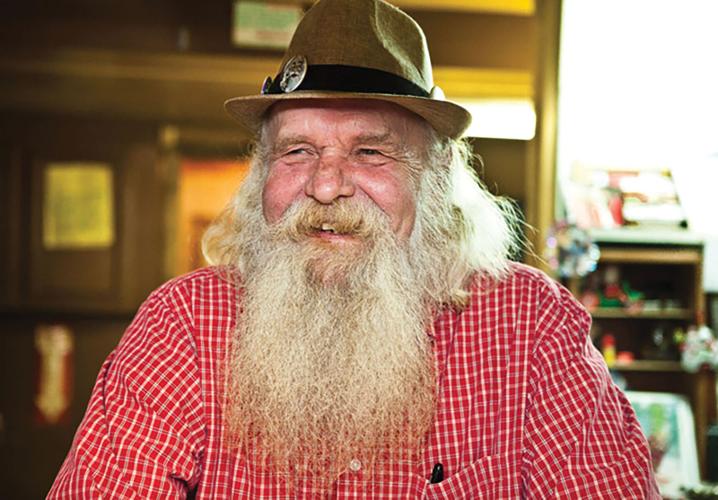
There are a few rules at Santa’s Pub: You can’t curse on the karaoke mic, and there will be no fighting. It’s cash-only and beer-only.
Elmer Denzel Irwin — best-known as “Santa” — believed hard liquor is sure to lead to fighting, and cursing in front of a woman is disrespectful. “Respect women or find another bar,” he’d say. Born in Franklin, Irwin grew up one of 10 children on Nolensville Road, not far from where Santa’s Pub stands today. He was a U.S. Army veteran and had a series of professions throughout his life — including ambulance driver, Pentecostal preacher and, for 45 years, owner of a house-painting business. Santa’s Pub, which opened in 2011 and became one of the best-known dive bars in the country, was actually a retirement project for Irwin and his wife Angelina, whom he was first engaged to in 1969 and later married in 2016.
Irwin has 18 grandchildren who call him Santa, but many others have considered Irwin and Angelina like family. (That includes celebrities including Kacey Musgraves, Jon Bon Jovi and Ed Sheeran, who have also been patrons.) Known to help people down on their luck, Irwin was often called “the real Santa.” —Hannah Herner
Jerry Wayne Peek
Business owner, gay community stalwart
I never went inside Watch Your Hat and Coat Saloon. I was at Lipscomb then. All we could do was to stand across Second Avenue, hoping to get a glimpse of the drag queens, whom we’d never seen before. I’ve seen a lot more since then.
Jerry Peek, who died on Nov. 4, had shown all of us a lot. He and his partner, Joe Heatherly — they’d been together for almost 54 years when Jerry died — were involved in the beginnings of Nashville’s gay community. A lot of young LGBTQ people know nothing about Jerry, but they should.
When Watch Your Hat and Coat Saloon opened in 1970, it was a standard country-Western bar. It was just down the hill from the courthouse, and Metro Mayor Beverly Briley was a patron. (No big surprise there.) Jerry had a chat with the mayor and the Metro chief of police. It became a gay show bar — something Nashville had never seen before.
Jerry founded the Miss Gay America Pageant, which continues to this day. After Watch Your Hat and Coat Saloon burned in 1972, he and Joe went on to start gay bars in Printers Alley. Then they went on to start the Cabaret on Hayes Street. (At 25 cents a beer, I knew it well.)
When Jerry was living in Los Angeles, he became friends with Frances Scribellito. She got pregnant, and Jerry took her to the hospital. She died in childbirth. The hospital people assumed that he was her husband, so they gave the baby to him. No gay man could adopt anybody then, and Jerry named him Eric. He and Joe, Jerry’s grandson, his granddaughter and their extended relatives are still dear friends. A close extended family, even in a straight family, seems to me to be a remarkable thing. —John Bridges
Jamie Clay Vance
Counselor, advocate
Among Kentucky native Jamie Vance’s colorful post-college jobs as a young man seeking himself out West: long-haul 18-wheeler truck driver, ranch hand and outdoor adventure guide for at-risk youth. He knew the challenges facing those youth personally, having struggled with addiction until committing to recovery in his mid-20s.
It was then that he found his lifelong calling and career, starting as a counselor and business development officer at Cumberland Heights, which segued to setting up his private practice and working for mental health start-up companies. In recent years, Vance partnered with the Bradford Group of Atlanta and Nashville to found Healthy Minds, a concept he developed to deliver outpatient psychiatric and counseling services to patients throughout Middle Tennessee. As recognized and accomplished as he was professionally, Vance was most personally rewarded by the services he rendered “for fun and for free” within the recovery community. —Kay West
Meg Giuffrida
Restaurateur, entrepreneur, mom
Giuffrida was one of those Nashvillians who it seemed like everyone knew. That’s in part because she did so many things in and for the community. Before East Nashville was the destination it is now, she opened and cooked at The Red Wagon Cafe on Woodland Street, making brunch dishes people continued to crave decades after it closed. She cooked at The Turnip Truck, The Stone Fox and at the Martha O’Bryan Center, where she made more than 800 meals a day for those in need. She opened Cherry Street Eatery & Sweetery inside the Schermerhorn Symphony Center, hiring women from Thistle Farms to help her behind the counter.
Giuffrida made things with her hands that you didn’t eat too, including colorful skirts with George Washington’s head in profile. It wasn’t unusual to see her at a show at the old Family Wash, sitting in the back row, knitting in time to the music. Her last years were spent fighting breast cancer, once in 2022 and again in 2024, but she made time to jump in the kitchen at Bastion to cook Cambodian recipes for the Slow Noodles cookbook launch. While she embraced being a Renaissance woman, the job she loved most was raising the son she shared with musician Paul Burch. Her Instagram handle summed her up best: @henrysmom. —Margaret Littman

Devin Malcolm
Devin Malcolm
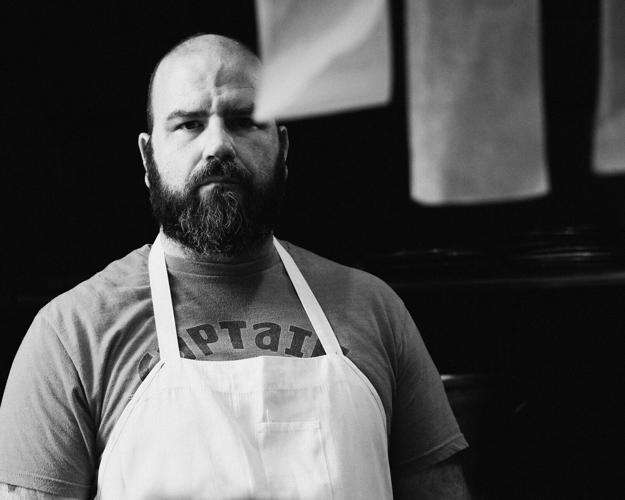
Teammate, father, badass chef
Chef Devin Malcolm was a beloved father, partner and teammate. He joined the Acme Feed & Seed team more than a decade ago, and was a badass chef. He could power through hundreds of tickets without panic, all while live music blared into the open kitchen. Chef Devin kept a strong, focused and quiet demeanor during service, but once the tickets cleared he was a big softy who was quick to smile and cut up, proud of the hard work of his teammates in the kitchen. The love for Chef Devin was overwhelming, as expressed by his three sons and co-worker:
“I miss Dad everyday,” says Declan, his youngest. “He may be gone, but I’ll carry his love through every day I live. Goonies never die.” “I’m grateful for the time spent together in the end,” says Benett, his oldest, “and wish we could play one more round of Swedish.” Ethan, sous chef at Redheaded Stranger and his middle child, says, “I’m proud to follow in my father’s footsteps, and just want to carry on his legacy. I hope his knives stay sharp forever.”
“He loved cooking, his family, the Celtics and Wu-Tang,” says fellow Chef Jeremy Wyatt. “Of all the souls I’ve encountered on this ride, Devin’s was perhaps the most human.” —Lauren Morales, Acme Feed & Seed COO
Donald Main
Chef, musician
People who knew Donald Main were probably familiar with at least one of his two great talents, and you were likely to have encountered him for the first time either in a kitchen or on a stage. As a longtime chef at restaurateurs Vicki and Rick Bolsom’s Cakewalk Cafe and Tin Angel, Main created menus that were steeped in old-school classic dishes, updated for the times and featuring local produce before farm-to-table was de rigueur. His culinary career began during high school in Massachusetts and continued at a restaurant in the Hudson Valley before he struck up a professional relationship with the Bolsoms that lasted more than two decades.
If you didn’t know Main from his work in the kitchen, you were probably familiar with his other career as a singer-songwriter and keyboard player. He released three studio albums and had a five-year stint as one of the founders of popular local club band The Saints. In a town where the old trope is that everyone is a “singer/server” or “songwriter/cook,” Donald Main was the rare talent who genuinely excelled on both sides of the slash. —Chris Chamberlain
Robert McNeilly III
Grandfather, steward, banker
When Rob McNeilly died in January, he left legacies across Nashville rare for any one individual. Born and raised in Nashville, he had a dedicated career steering SunTrust Bank into a regional powerhouse as Nashville CEO. His friends, family and colleagues attribute McNeilly’s success to the core skills he possessed less commonly found in the banking profession — warmth, humor, personability. If he had a professional struggle, it was retiring — something he tried twice before being lured back into senior executive positions at Synovus and Bank of Tennessee; at the latter, he served as Middle Tennessee president late in life.
He filled his free hours with activity, family and deep community involvement, specifically as a leader at St. George’s Episcopal Church and on various Nashville nonprofit boards, including the Nashville Public Education Foundation and Goodwill Industries of Middle Tennessee. He is survived by his wife of 41 years, Caroline Tate McNeilly, and their large and tight-knit family, including three children and seven grandchildren. —Eli Motycka
Daisy King
Chef, cookbook author, TV personality
Very few people leave a significant impact on a community over multiple generations like Miss Daisy King. A legend in the food industry in Nashville and Franklin, King died in March at 80 years old. She was known for dishing up true Southern classics.
Her career began as a caterer, and in 1974 she opened a tea room in Franklin and later in Nashville with the financial backing and encouragement of friends Calvin and Marilyn LeHew. The LeHews pushed King to pen her recipes and release the first of her 14 books. She served her food in various capacities through the years, including at her final venture, Miss Daisy’s Kitchen in Franklin. She was a regular TV guest and speaker throughout the Nashville area, sharing her journey of preserving and serving Southern-staple dishes. —Brooke O’Dell
Henry Rodes Hart Sr.
Businessman, philanthropist, lifelong learner
The former CEO of Franklin Industries was known in the community for much more than his prominence as the leader of the largest local supplier of industrial and agricultural minerals. In 2006, Henry Rodes Hart Sr. sold the company, which was started by the Rodes family in 1911. He was a principal at HSD Holdings later in life. But it was his generosity to education and arts organizations, among others, that earned him the most recognition.
Along with his wife Patricia Ingram Hart, who preceded him in death, Hart endowed multiple chairs across the Vanderbilt University School of Medicine and Peabody College of Education and Human Development, and underwrote two scholarships. He chaired Vanderbilt’s Shape the Future campaign, which raised $1.94 billion, and in 2018 he was named a Vanderbilt University Distinguished Alumnus. He was a founder of the Nashville Symphony and a supporter of the Nashville Zoo. —Nicolle Praino
Michael Alan Zibart
Book industry veteran, publisher, beloved friend
Michael Zibart was a lifelong Nashvillian whose influence on the book world reached far beyond the city he loved. He grew up in the family business of Zibart’s Bookstores, which helped shape Nashville’s cultural life for nearly a century, and spent his career carrying this legacy forward. After graduating from Vanderbilt University in 1969, he joined Ingram Book Company, where he became an executive vice president.
In 1988, Michael launched BookPage, a book review magazine he created with characteristic vision and an innate knack for connecting with people. Nearly 40 years later, BookPage remains a beloved and respected publication for more than 400,000 readers across the country. He never hesitated to blend business with friendship in ways that contributed to his success.
Known as much for his signature style of bow ties and seersucker suits as he was for his generosity and hospitality, Michael always made an impression. And he loved a party. For years, he and his wife Margaret threw a not-to-be-missed Southern Festival of Books carport barbecue, where visiting authors mingled with Nashville’s literary community. At the legendary BookPage holiday lunch — where the guest list was a mix of employees, family, neighbors and vendors — “lunch” was defined loosely, often lasting well past dinner.
For nearly 30 years, Michael was my boss, mentor and dear friend. He taught me that putting people first isn’t just good business — it’s the whole point. He cared deeply about everyone he knew and wanted the best for them, whether securing a favorable interest rate or mixing the perfect cocktail. Michael leaves behind a remarkable legacy in the book industry and an even greater one in the lives of those lucky enough to know him. He will be dearly missed. —Elizabeth Grace Herbert, BookPage president
Chris “Speedy” Krantz
Bartender, restaurant manager, industry expert
When his family announced that beloved bartender, restaurant manager and spirits representative Chris “Speedy” Krantz had “lost his battle with depression” on May 28 at age 50, it was a stark wakeup call to many members of the local hospitality community. From his time working as part of the most amiable bar team in Nashville during the heyday of Rumba on West End, to his move to front-of-house at Chauhan Ale & Masala House and Whiskey Kitchen, to climbing the ladder from brand representative to market manager for Uncle Nearest Premium Whiskey, Krantz always had a smile on his face and a twinkle in his eye.
He was instrumental in growing Uncle Nearest in Tennessee, challenging legacy brands that held firm grips over valuable real estate in service wells and on liquor store shelves, and his frequent public tasting events introduced a host of new fans to the brand’s story. Krantz leaves behind a wife and two daughters, and his legacy includes a crucial reminder: Someone may seem cheerful, but we need to keep checking in. Though he seemed immune to industry stress, he clearly fought hidden battles. Hopefully, the next generation will honor Speedy by taking care of each other. —Chris Chamberlain
Barry Burnette
Grocer, entrepreneur, humanitarian
For many who live on the city’s West Side, The Produce Place is more than a grocery store. It’s a lifeline, and that’s thanks to Barry Burnette, who died this year at 67. Burnette opened The Produce Place in 1988 as the city’s first natural food store in an open-air market on Murphy Road.
The Sylvan Park staple evolved over time, emphasizing locally sourced and organic foods, way ahead of its time. Purveyors of hemp products noted that Burnette put their products on shelves even as others feared possible repercussions. He gave countless kids in the neighborhood their first jobs, teaching them about responsibility, respect, customer service and community. He also helped them out when needed. When one kid was incarcerated, Burnette and other staff wrote to him, and after his release Burnette brought him back to work. Says one mother who asked not to be identified: “I don’t think [our son] was the first troubled kid to work for Barry, but I know that he, and we, will always be grateful to Barry for not just hiring him but for giving him a second chance and for believing in and seeing what was the best in our son.” —Margaret Littman
Duncan Callicott
Cheekwood leader, landscape architect, garden enthusiast
Duncan Callicott’s life revolved around plants. And he himself was a native species to Nashville.
Callicott attended Robertson Academy and Montgomery Bell Academy, and began his studies at Vanderbilt University before transferring to the University of Georgia, where he earned a degree in landscape architecture. He stuck around the university, serving as the landscape architect before coming back to home soil to work for the Tennessee Department of Conservation (now the Tennessee Department of Environment and Conservation). Callicott was known for his work at Cheekwood Botanical Garden, where he served as executive director from 1979 to 1983. For the rest of his career, he worked in private practice — but he also spent lots of time designing and redesigning his own garden and hosting friends and family there. The foliage was sparse when Callicott died in December of last year, so his wife Virginia and two daughters held another celebration in the garden in the spring. —Hannah Herner
Jim Ayers
Shrewd businessman, banking titan,
philanthropist
Born in Parsons, Tenn., banking titan Jim Ayers rose from humble roots. At only 8 years old, he began shining shoes for 10 cents a pair, kicking off a lifetime defined by drive and business instinct. By 10, he was spending weekends on a tractor at a family farm to earn extra money, and he later spent a summer selling Bibles for the Southwestern Company.
Ayers graduated from Memphis State University with a degree in accounting. After college, he moved his young family to Birmingham, Ala., where he built a successful career as a salesman for Ortho Novo. When his father died, he moved the family back to Tennessee to be closer to his mother. He joined Care Inns, an assisted living facility company, as controller. He quickly rose through the ranks, earning a reputation as a leader who could turn the company around — a path that ultimately took him to the top job. From there, Jim opened his own nursing home in Parsons, which turned into American Health Centers with 40 facilities across Tennessee.
In the mid-1990s, Ayers shifted careers and sold his nursing homes to focus on banking. His first acquisition was Farmers State Bank. Not long after, he bought First National Bank of Lexington, Tenn., and renamed it FirstBank. He served as CEO and later moved into the role of executive chairman after taking the company public in 2016.
Ayers’ philanthropy largely defined his legacy, much of it carried out alongside his wife Janet, through the Ayers Foundation. For more than two decades, the foundation has supported more than 20,000 rural Tennessee students by helping them create plans to reach their goals. His generosity also shaped major institutions across the state, including the Ayers Institute at the Vanderbilt-Ingram Cancer Center, the Jim Ayers Medical Tower at Vanderbilt University Medical Center, the Ayers Children’s Hospital in Jackson, Tenn., and the Ayers Institute for Teacher Learning and Innovation at Lipscomb University. Ayers leaves behind a statewide legacy of opportunity, service and deep investment in the people and communities of Tennessee. —Janet Kurtz
Thomas G. Andrews
Gentleman, husband, investor
Thomas Andrews died at the very end of 2024, after a full life lived. An Alabaman in Tennessee, he became a pillar in Nashville’s business community and social life, spanning churches, concerts and country clubs.
An Army veteran, Andrews excelled in investment banking with historic Nashville firm JC Bradford & Co. and its successors Paine Webber and UBS. His family remembers Andrews for a wide range of interests and experiences, including passionate support for the city’s entertainment and arts offerings, specifically opera, theater and jazz. A large family of three children and eight grandchildren grew alongside Andrews and his wife of 61 years, Milbrey Waller Andrews. —Eli Motycka
Jonathan Douglass Andrews
Buyer, businessman, organizer of fun
Jonathan Douglass Andrews was both Old and New Nashville — and he seamlessly, gracefully, buoyantly wove together the two. Born smack dab in the middle of the baby boomer generation, he followed the traditional Belle Meade schooling path: Parmer School, The Ensworth School, MBA and Peabody Demonstration School, then headed west for college at Southwestern at Memphis (now Rhodes College).
On his return, Andrews joined the family business, McClure’s. (Like the best fashionistas, one name was sufficient.) Founded by Andrews’ maternal grandfather as a fabric store in Hillsboro Village, McClure’s grew up to be a statement boutique department store adored for its quality, breadth of choices and personalized service. Andrews was the dress-coat-and-shoe buyer, and his impeccable taste and gift for imbuing classic style with a contemporary edge created loyal shoppers who knew they would find just what they were looking for — even when they weren’t quite sure what that was.
In 1992, he changed course and co-founded Lam-Andrews advertising agency. Off the job, he was the connector and curator of fun, gathering family and friends for bicycling, beaching, water skiing, lake hangs, lively discussions and music appreciation. —Kay West
David Lake Kendall
Belle Meade Cafeteria owner, sportsman
Gubernatorial inauguration dinners, the Swan Ball, the CMA and Johnny Cash were among David Lake Kendall’s high-profile catering clients. From the kitchens of Harpeth Hall, Montgomery Bell Academy and The Ensworth School, he fed the children born of the manor. But his most unique and enduring food service was provided from the buffet line and in the two dining rooms of a Nashville dining institution where time stood still — The Belle Meade Buffet Cafeteria.
In the meat-and-three realm, the cafeteria followed the tried-and-true formula of — as late, great Scene editor Jim Ridley once described it — all things buttered, fried, creamed and mashed. Where it differed was in execution. Patrons walked their tray through the line, choosing their meat and sides, plus a slice of pie, then handed the tray to a bow-tied waiter to carry to their table. This custom created considerable confusion and some discomfort for first-timers. Many Belle Meade residents who dined weekly at the cafeteria also rode with Kendall as members of the Hillsboro Hounds and The Mells Foxhounds; in 2021, he was bestowed the honor of Master Emeritus of The Mells Foxhounds. —Kay West
Fleming Smith Jr.
Architect
Fleming Smith Jr. — a co-founder of Nashville-based design firm Gresham Smith and a highly influential member of the nation’s architecture profession in the 1970s through the early 2000s — died this fall at 89. Known as “Flem,” Smith and Batey Gresham Jr. founded what was then called Gresham and Smith Architects in 1967. Today, Gresham Smith annually ranks among the nation’s top 200 design firms in terms of revenue.
Smith served several professional organizations, including the Tennessee chapter and the Middle Tennessee chapter of the American Institute of Architects, the Nashville Healthcare Council, the American Association for Hospital Planning, Leadership Nashville, the Nashville Unit of the American Cancer Society, the Nashville Downtown Rotary Club and Battle Ground Academy. In 2023, Gresham Smith established the Flem Smith Mentorship Program to honor Smith.
Smith’s philosophy was simple: “Throughout my career, I’ve strived to remain creative and willing to explore new ideas. If you give your best, whatever rewards are appropriate in life will come to you.” —William Williams

Commemorating many of the irreplaceable figures Nashville lost in 2025



Post a comment as anonymous
Report
Watch this discussion.
(0) comments
Welcome to the discussion.
Log In
Welcome to the discussion.
Keep it clean. Please avoid obscene, vulgar, lewd, racist or otherwise abusive language. Comments featuring hate speech or threatening or violent content will not be tolerated.
PLEASE TURN OFF YOUR CAPS LOCK.
Be truthful. Don't knowingly lie or mislead.
Be proactive. Use the “report” link on any comment that violates our comment policy.
Share with us. We'd love to hear your feedback.