




Jerry Jarrett
Jerry Jarrett
Wrestling promoter, legend
Professional wrestling isn’t immune to the debate — common to all art — as to who is truly a genius and who is just a talented imitator. Few would argue that Jerry Jarrett, who died at age 80 in February after a long illness, was anything but a grappling genius of the highest order.
He learned in the ring, most prominently in the tag division that was the territory’s bread-and-butter, partnering with Tojo Yamamoto on the Memphis-based loop. And he learned outside of it. His mother — who you could call “Teeny” if she was pleased with you, and who you had to call “Mizz Jarrett” if she was not — led the Nashville territory in all but title. Being a woman held her back in those days — wrestling has a complicated, if nuanced and often surprising, history of gender politics — but even the nominal head of the area, Nick Gulas, often conceded it was she who ran the show.
And it was in the tiny office where his mom kept books, mothered wrestlers, nursed broken hearts and broken bones, where Jerry learned the craft he’d do better than pretty much anybody. By the time it was all said and done, Jarrett was so respected that when Vince McMahon thought he was going to spend time behind federal bars, it’s said he told his underlings that the only man he’d trust to run what was then the WWF in his absence was the man who’d run the Midsouth for so long.
In Jarrett’s office hung a sign with his credo: “Personal Issues Draw Money.” That may not seem revolutionary in modern times, an era of barely hidden real-life rivalries informing in-ring stories, but in the pre-national promotion days, it’s part of what made the Memphis/Nashville territory one of the most successful. At the time, the biggest promotions — including the one in New York the McMahons were running — was heavy on gimmicky wrestlers, barely less fictional than superheroes. “Real” stories — the ones Jarrett pushed — weren’t the rule.
Jarrett spent his final years telling stories about those days, on podcasts and in interviews, trying to impart that simple wisdom on the next generation, which includes his son Jeff, accomplished in the squared circle in his own right. And every time a story that seems just too real to be scripted pops a Wrestlemania-worthy feud, we know someone in that generation listened. —J.R. Lind

Fred Pancoast
Fred Pancoast
Football coach, business leader, volunteer
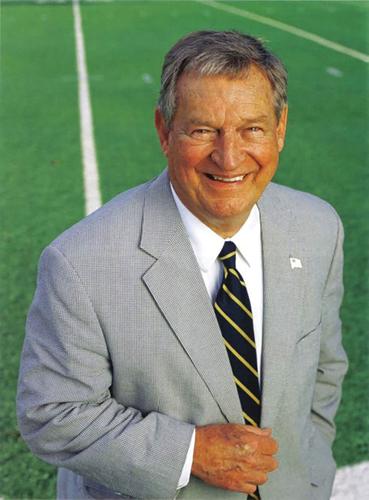
Fred Pancoast made a big impression on the football field and far beyond during his lifetime. He died April 9 at age 90.
The head football coach at the University of Memphis (formerly Memphis State) from 1972 to 1974 and Vanderbilt from 1975 to 1978, Pancoast was awarded the Tennessee Sports Hall of Fame Lifetime Achievement Award in 2007. He received the Middle Tennessee Chapter of the National Football Foundation and College Hall of Fame Fred Russell Distinguished American Award in 2011. A Pensacola, Fla., native who played on the football and baseball teams at the University of Tampa, Pancoast would later spend two decades as a college coach, which included stints as the offensive coordinator at Florida and Georgia.
Pancoast retired from coaching college football in 1978, and in 1985, he founded Pancoast Benefits, an employee benefits marketing and consulting firm, where he built a successful company and new career.
Pancoast was on the original organizing committee and heavily involved with Room In The Inn, a charitable program designed to give people experiencing homelessness shelter and a warm meal during the winter months. He was also heavily involved with several other charities and multiple drug and alcohol rehabilitation clinics.
Thanks in part to his volunteer work with Operation Stand Down, which aids military veterans and their families, Pancoast was awarded the President’s Volunteer Service Award by President George W. Bush in 2008. —John Glennon

Marshall Martin
Marshall Martin
Triathlete, Ironman, business coach
An avid coach, athlete and competitor in endurance sports, Marshall Martin completed eight full Ironman Triathlons, 50 half Ironmans, 500-plus triathlons, 200-plus bike races and 13 marathons. The Brentwood resident swam, ran and biked in competitions all over the country for more than 30 years.
Martin, 58, died on May 29, just over a week after he sustained a head injury while competing in the cycling portion of the Chattanooga Half Ironman competition.
Martin, a Chattanooga native, went to school at the University of Tennessee Chattanooga, graduating in 1990 with a bachelor’s degree in accounting. He also held an executive leadership certification from the Wharton School.
In addition to his racing and coaching, Martin worked as an executive and business coach for a wide range of companies, from small start-ups to large enterprises. Among those who expressed support for Martin was racing star Lance Armstrong, who posted a video on the family’s CaringBridge post, wishing Martin a speedy recovery prior to his death. —John Glennon
Bobby Durnbaugh
Nashville Vol, veteran, ‘good team man’
In 1957, Bobby Durnbaugh made two appearances for the Cincinnati Redlegs — the Reds’ brief moniker during the Second Red Scare. Durnbaugh, from the suburbs of Dayton, Ohio, had grown up a Reds fan, so he probably didn’t mind they’d changed their name; he just wanted to wear the uniform. In those games, he had one at-bat. He grounded out. There’s hundreds of guys like that in baseball’s history.
Durnbaugh’s best years in pro baseball — his career started in what was then the Class D Appalachian League — were spent as a Nashville Vol. The shortstop (and sometimes second baseman) was the Vols’ player of the year in 1956 (after a couple years off to fight in Korea), a reliable singles hitter and middle infielder who his manager said was “a good team man and keeps everyone on their toes when he’s in there” — which, for a 1950s baseball manager, is about as effusive as praise can get. After his brief stint in Cincinnati and being bounced around AAA affiliates, Durnbaugh was happy to head back to Sulphur Dell. He’d married a Nashville girl, after all, and his family in Ohio was just a quick trip away on the L&N. Plus, he liked to hang out backstage at the Opry.
Perhaps the moment Durnbaugh was best remembered for came against Mobile in 1955 and had more to do with chicanery than bat or glove. Rain clouds were threatening as he came to bat, and he knew — under the rules at the time —that if the game was stopped, the score would revert to the last complete inning, when the Vols led 1-0. He called for the trainer to tend to him twice, claiming specks of dirt were stuck in his eye. The umpire was wise to him, unfortunately, and told everyone to get on with it. (In the end, Mobile won.)
After retiring in 1960, Durnbaugh went back home to Dayton and ran a sporting goods business. He was one of the old Vols invited back when the Sounds opened the new park on the site of the old one. He died in September. He was 90. —J.R. Lind

Frank Wycheck
Tennessee Titan, media personality, Music City Miracle worker
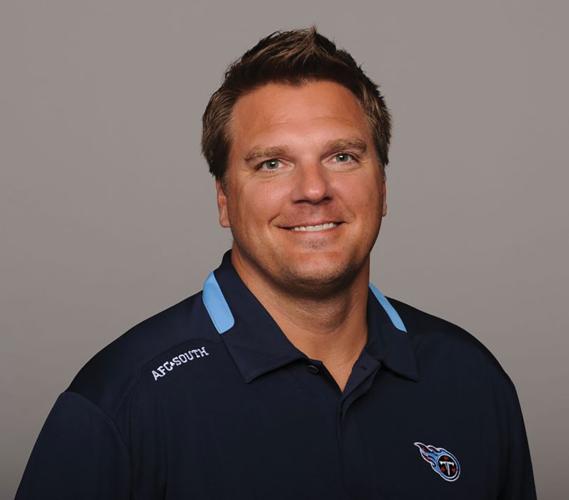
Frank Wycheck, one of the most popular and productive players in Titans history, died in December at age 52. The tight end was an integral part of one of the most memorable plays in NFL history, the Music City Miracle, which allowed the Titans to defeat Buffalo in the 1999 AFC playoffs.
With Tennessee trailing the Bills 16-15 and 16 seconds remaining in that game, Tennessee fullback Lorenzo Neal fielded a kickoff and handed it to Wycheck. Wycheck threw it across the field to Kevin Dyson, who sprinted 75 yards for the winning touchdown.
A sixth-round pick of Washington in 1993, Wycheck spent nine of his 11 seasons with the Oilers/Titans, where he caught 482 passes for 4,958 yards and 27 touchdowns. Overall in his career, Wycheck caught 505 passes (tied for 17th among tight ends in NFL history) for 5,128 yards (39th among tight ends in NFL history) and 28 touchdowns in 155 games.
Wycheck was named three times to the Pro Bowl (1998-2000), was inducted into the franchise’s Ring of Honor — along with former teammates Steve McNair and Eddie George — in 2008, and was inducted into the Tennessee Sports Hall of Fame in 2013.
Wycheck retired following the 2003 season, in part because he suffered a number of concussions that affected him well beyond his football career.
Still, Wycheck remained close to the game for a long time after his playing days were over, serving as the team’s radio analyst from 2005 until 2016 and as part of 104.5-FM’s The Wake Up Zone from 2004 until 2017. —John Glennon
Donovan Stewart
Sports columnist, football fan, father
No one loved Tennessee high school football like Donovan Stewart.
The son of a longtime high school football coach, Stewart was a sportswriter and the media director for the Tennessee Football Coaches Association. His columns “By the Numbers” and “Stat Stuffers” were syndicated in outlets across the state.
But Stewart was perhaps best known for an annual deep dive into the Tennessee high school football landscape with his extremely thorough preview book. Every summer, he would publish his season guide, and fans and media members across Tennessee would clamor for copies as soon as they were available.
A native of Rockvale, Tenn., Stewart, 49, passed away unexpectedly on July 29. —Logan Butts

Commemorating some of the irreplaceable Nashville figures we lost in 2023



Post a comment as anonymous
Report
Watch this discussion.
(0) comments
Welcome to the discussion.
Log In
Welcome to the discussion.
Keep it clean. Please avoid obscene, vulgar, lewd, racist or otherwise abusive language. Comments featuring hate speech or threatening or violent content will not be tolerated.
PLEASE TURN OFF YOUR CAPS LOCK.
Be truthful. Don't knowingly lie or mislead.
Be proactive. Use the “report” link on any comment that violates our comment policy.
Share with us. We'd love to hear your feedback.