




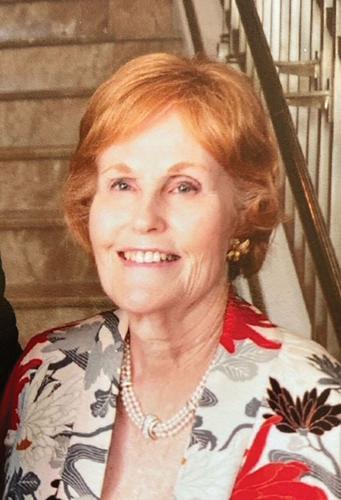


Anne Caldwell Parsons
Anne Caldwell Parsons
Matriarch
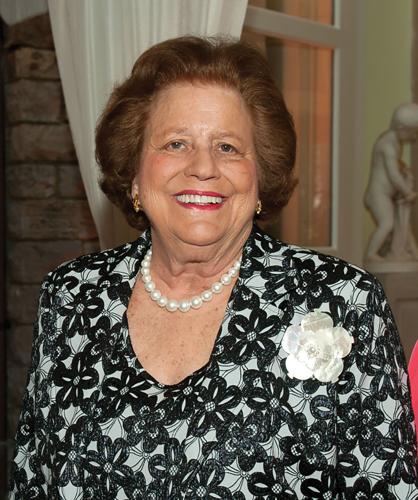
Anne Caldwell Parsons was frequently referred to as the matriarch of the H.G Hill family — furthermore, she was the granddaughter and great-granddaughter of two long-standing Nashville family patriarchs, H.G. Hill and James E. Caldwell, respectively.
If the term “matriarch” conjures an image of a stuffy, buttoned-up, humorless elderly woman, refer to the photo the family chose to run alongside her obituary, in which Parsons beams with a delighted smile and martini glass in hand. Or the image shared by one of the multitudes of extended family members, showing her laughing as a giraffe bends its head toward hers. The thousands of visitors who have enjoyed the Nashville Zoo can thank Anne Caldwell Parsons, instrumental in the donation of family land that became the Nashville Wildlife Park at Grassmere, then the zoo. More than lending her illustrious name to her interests, she generously shared her considerable talents and tireless efforts to community institutions of learning, beauty and service.
At the gathering celebrating her life, on a table with a gorgeous bouquet of fresh flowers, a single martini with two speared olives was set on a silver tray beside a framed photo of a joyous Anne Caldwell Parsons, that seemed to declare, “Cheers to a life well lived!” —Kay West

Clare Corson Armistead
Clare Corson Armistead
Philanthropist, mother, style icon
So fully did Clare Armistead embody Lord Byron’s poem She Walks in Beauty that one might believe the lines were whispered in her baby ear until the two became one and the same.
She walks in beauty, like the night
Of cloudless climes and starry skies;
And all that’s best of dark and bright
Meet in her aspect and her eyes…
Born and raised in Belle Meade, Clare Corson attended the Barmore School in New York City, married the good-naturedly boisterous businessman Hunter Armistead in Nashville, raised two sons whom she encouraged in every endeavor, and immersed herself in a lifetime of service and philanthropy. Organizations and events from the Swan Ball to Once in a Blue Moon Festival, Nashville Public Television to Larkspur Conservation, the Tennessee State Museum to the Nashville Ballet benefited from Clare at the helm or spinning her magic behind the scenes.
With her light hair pulled back from her porcelain face into a tidy knot at the back of her neck, the precise posture of a dancer, her serene poise and her timeless, elegant, impeccable style, Armistead was the only possible choice to receive the first Style Icon Award by Nashville Fashion Week in 2015. In 2019, she was presented the Swan Award from the Swan Ball and the Community Foundation of Middle Tennessee’s Joe Kraft Humanitarian Award.
In her last days, Clare Armistead continued to receive friends in her home, surrounded by all she cherished and all who cherished her.
… And on that cheek, and o’er that brow,
So soft, so calm, yet eloquent,
The smiles that win, the tints that glow,
But tell of days in goodness spent,
A mind at peace with all below,
A heart whose love is innocent!
—Kay West
Kolleen “Koko” Break Hudgins Atwell
Organizer, public servant, matriarch
Born May 18, 1929, Kolleen Break Hudgens Atwell, nicknamed “Koko” by her twin grandsons, was a lifelong Tennessean. She is remembered for her high energy and constant positivity. Atwell enjoyed traveling, painting, public service and event planning. For 32 years, she and her first husband Harold Hudgins hosted a Chili and Cheer Christmas Eve Party that was attended by dozens of Nashvillians with nowhere else to go for the holidays.
In 1975, Atwell began her work in public service with a six-month litter-cleanup program. This led to decades devoted to the revitalization of Nashville, with one of her biggest accomplishments being helping prep the grand opening of Riverfront Park, and subsequently the city’s Fourth of July celebration, which still draws hundreds of thousands of people each year. She served as the special projects coordinator for three mayoral administrations.
Atwood was a lifelong Methodist, and was anointed by her pastor from Dalewood United Methodist Church just a few days before her passing. She is survived by her husband James Atwell, her twin daughters Kay Hudgins and Kim Hudgins Brewer, her twin grandsons Christian and Brittain Brewer, and her great-grandchildren. Atwell died Jan. 13 at age 92. —Connor Daryani
Tama Powers McCoy
Chief of Wordy Operations, A Novel Idea
Tama Powers McCoy was born in Abilene, Texas, in 1954, and she died far too young in San Jose, Calif. She was many things to many people. For more than 400 young writers in Tennessee, she was their greatest cheerleader.
In 2011, Tama and her daughter Kristen House founded A Novel Idea, a summer writing camp for kids ages 5 and up. Over the course of a month, kids from around the county hunkered down with instructors to produce a novel that was published in paperback, complete with a professionally designed cover and an ISBN number. And that was no small task. Children learned how to identify and battle their “inner editors” — mischievous liars and crooks, hell-bent on destroying their confidence, all vanquished by the pen. Then the kids learned how to develop heroic protagonists and cunning antagonists, chart their driving and sometimes chaotic plots, and reveal something of the marrow of life in 100, 200, 800 pages. Tama celebrated however far their pencils would carry them.
She’d bake sky-high pies for school principals across the district, sashay up to strangers at coffee shops to preach the gospel of the program, and treat the instructors in the organization like family — I was lucky to work for her from 2015 to 2018. Tama didn’t care that I had failed at teaching high school. She did care that I played toy soldiers with her grandson Shep after my interview. What mattered to Tama was personal integrity, loyalty, creativity and kindness. She hired me on the spot and quickly became my Southern Mama. Generous, wise and sassy, she was this Yankee’s very own Dolly Parton.
As I listened to Tama’s family eulogize her at a lively memorial at the Cheekwood Estate and Gardens, and as I talked to the people who loved her afterward, I learned that I was not unique. Tama took in people who felt lost and alone, and she treated us like family. She leaves behind her adoring husband Daniel McCoy, her brilliant children Kristen and Ned, and a gaggle of gorgeous grandbabies. Tama loved alliteration, too. —Erica Ciccarone, former Wordy Bird at A Novel Idea
Wosene Yefru
Scholar, activist, mentor, author
“He was compassionate with students in response to their predicaments,” says Sekhmet Maat of fellow Tennessee State University professor Wosene Yefru. “Attempting to be accommodating, when necessary, he balanced this accommodation with high expectations, training students to submit materials on time and challenging them to read; he believed reading was a lost art that students needed to be encouraged to perform.”
Yefru held many roles in his two-plus decades at TSU, including head of the Department of Africana Studies and director of Field Studies. In 1994, he was the first instructor to be hired from outside the university to teach Africana studies. Professor Maat tells the Scene Yefru was “a bright light and a scholar-activist.”
The courses he taught focused on the philosophical, social and economic liberation of Africana people. Yefru was passionate about students receiving firsthand knowledge of ancient African civilization, and in 2009, he took students on a three-week trip to Egypt. He was known for emphasizing that philosophy is a universal concept.
Among Yefru’s accomplishments was writing The Nile Valley Civilization: A Historical Commentary on Ancient Africa, which has become a core textbook for the Introduction to Africana Studies course at TSU.
“He was unquestionably dedicated to the transformation of the consciousness of his students,” Maat says. —KateLynn White
Paul Arndt
Contributor vendor, problem-solver
When Paul Arndt was in high school, he got in big trouble for selling shots of alcohol out of his locker. One dollar per shot. He counted this as his first business — a sign of the resourcefulness that would stick with him for the rest of his life.
Paul came to Nashville a few years ago to escape the cold of his home state of Michigan, and camped under Jefferson Street Bridge for much of his time here before moving into affordable senior housing. If he really had a choice of how to spend his time, he’d be out fishing, but he seemed to think sitting in front of Puckett’s downtown selling The Contributor was a fine second choice.
If Paul had a catchphrase, it would probably be, “What’s going on?” He had a voracious appetite for news, gossip, cigarettes and black coffee. Through his many submissions to the paper, he wanted to share good news, ways things were getting better for him. But he was also very stubborn and very honest about issues he saw. He felt deeply that if he could just get the word out about what people experiencing homelessness needed, it could get better. Paul was up at all hours of the night just thinking about how to solve the world’s problems. I’ll miss hearing about his solutions. —Hannah Herner

Ron Camacho
Storyteller, manager, father, husband, servant
Ron Camacho led a storied life. “Big Ron,” as he was sometimes known, was a native of upstate New York and a natural athlete who excelled at basketball, lacrosse and football — he even had a dalliance with pro wrestling later in life.
Camacho, who ultimately settled in Nashville, worked as a road manager for Chaka Khan and Blood, Sweat & Tears, and as a bodyguard for David Lee Roth, Vince Neil and George Michael, among many others. He had an outsized, magnetic personality and penned books about country music and NASCAR racing — and that’s not to mention his epic fantasy, The Last Dragon: Tear Falle. He wrote poetry, and had a passion for reading comic books.
But more than all that, Camacho was committed to his faith, his family and serving others. With his wife Ellen, in 2016 Big Ron founded Care Kitchen Outreach, a nonprofit dedicated to helping food-insecure folks in Nashville. According to CKO, the organization has rescued dozens of tons of food since its founding — turning food that was headed for the landfill into hundreds of thousands of meals for families in need.
Ron’s friends and family, including Ron and Ellen’s daughter Angelique, will continue his legacy of service in his memory. —D. Patrick Rodgers
Claude Garrett
Father, grandfather, exoneree
At 65, Claude Garrett had plans. When I last saw him on a glorious morning downtown, he was upbeat, inspired by a Nashville he still didn’t recognize. “Everybody’s out, moving around, enjoying life,” he said — and so was he. He’d just gotten a job, his license and a used Toyota Camry, which he drove the speed limit. After decades in prison for a crime he didn’t commit, Claude proceeded with caution.
Claude was much more than his wrongful conviction. Yet the fight to clear his name consumed almost half his life. Twice convicted on junk arson science for killing his girlfriend in 1992, he fought with patience and discipline, alone at first, then alongside fire investigator Stuart Bayne, and ultimately with the help of the Tennessee Innocence Project and the Davidson County District Attorney’s Conviction Review Unit. On May 10, after nearly 30 years behind bars, Claude walked out of Riverbend prison and into the arms of his daughter Deana.
Over the next five months, Claude lived life to the fullest. He swam in the ocean on Father’s Day. He wrestled and took selfies with his 5-year-old grandson. Then, after a Halloween party where he dressed as a cop (he had a great sense of humor), Claude died in his sleep on Oct. 30.
The unfairness remains palpable. Yet Claude’s life was a testament to how we survive unfathomable loss. He wouldn’t want people to spend too much time mourning, Deana said at his funeral. “He would want us to do whatever we could to ensure that no other family was robbed of so much.” —Liliana Segura
Catherine Hayes Carr
Matriarch, community pillar, wisdom-keeper
They say Nashville is changing because the city is losing its institutions. The people and places that contain far more than meets the eye, full of memories that bridge generations and worlds.
Nashville lost Catherine Hayes Carr at age 93 in January. Born in Russell County, Ala., Carr settled in Nashville in the 1960s, where she became a luminary in her neighborhood — Lawrence, then Paris Avenue near today’s 12South — and church, Kayne Avenue Missionary Baptist. She navigated the segregation and misogyny of Jim Crow as a child and young woman, and was recognized as one of Nashville’s Queen Mothers in the 1990s, a nod to her role as one of the city’s prominent Black matriarchs. She was a mother, grandmother and great-grandmother.
Her son jeff obafemi carr remembered her on her 94th birthday in September with these words: “Her hypnotizing look was one of understanding, from lived experience. It’s why she never left a child behind who needed a ride home (even as she told us she wasn’t ‘taking care of anybody else’s children’); it’s why she always poured into people the notion that they could do anything but fail. It’s why she loved all her children — biological and adoptive — through their difficult days.” —Eli Motycka
Michael Hudson Meadors Sr.
OB/GYN, medical family patriarch
In his 40-plus-year tenure as an OB/GYN, Dr. Michael Hudson Meadors Sr. delivered more than 15,000 babies. It was common for people to come up to him and ask if he remembered their baby, and common for him to have to leave in the middle of a tennis match or recital to deliver another.
“It’s something he embraced — he remembered all the names and lineage of different children,” his son Michael Hudson Meadors Jr. tells the Scene.
The Meadors are a Nashville medical family. They owned Peoples’ Pharmacy on Jefferson Street, and Michael Sr. worked there before it was sold and before he attended medical school at Meharry Medical College. All four of Michael Sr.’s children went into the medical field. But it wasn’t something he pushed them to do. Perhaps they were turned on to the idea by their father’s dedication and positive attitude about the job, which he truly enjoyed. His lighthearted and joyous attitude kept patients coming back for each of their pregnancies. (Just check the Google reviews that still live online.) Around the office, he gave out a lot of nicknames — nicknames like “Twerp,” “Buddy,” “Tweety Bird,” “Knucklehead.”
Meadors was a foodie, and gave every dive and diner as well as higher-end restaurants the same chance. He also embraced TennCare in its early days when many doctors shunned it. Maternal mortality is something that weighed on him, and made his hours longer.
“I think that’s also why they worked so tirelessly to make their dent in it,” his son shares. “His calling to be an obstetrician had no boundaries.” —Hannah Herner
Drandon “Chief” Brown
Encampment leader, dog father
We first met Drandon “Chief” Brown about 10 years ago when he was living in an RV in the driveway of Brookmeade Park. We knew he was there, but had not run into him during times when we were there providing street outreach. Then one day, a tall, bearded man flagged us down outside Lowe’s. He introduced himself and asked if we were with Colby’s Army, “the organization that’s helping ‘my people.’ ” He wanted to meet us, and after talking for a time, gave us his stamp of approval. After that, residents of the encampment opened up to us more, and learned to trust our outreach team. We’ve made a lot of headway since then, but the real start for us came with Chief.
In the encampment, Chief took care of everyone. He helped new people get clothes and tents, tarps and food. And if you were his friend, he’d go out of his way to help however he could.
Over the time we knew him, Chief had several dogs, one at a time, all named Daisy. He loved all the Daisies, and took care of them like family, just like he took care of his friends.
But Chief had mental illness. We first saw this as moodiness or weeklong disappearances from his camp, which had by now moved to a tent on the hill behind Lowe’s. After a time, his tent morphed into a wooden structure, and he always kept his home and grounds tidy, and very clean. His mental illness waxed and waned, as mental illness often does, and over the years Chief had good months and rough months. More recently, he had an increase in the length and frequency of angry outbursts. Sometimes it seemed he just wanted someone to listen to him. So we did, and eventually he’d calm down.
Chief died tragically and needlessly. Our entire team mourns his loss, and we will always, always remember him. —Lisa Wysocky, executive director of Colby’s Army

Yusef Harris, left, and his son Jordan at Alkebu-Lan Images
Yusef Harris
lkebu-Lan Images founder, community leader, teacher
Yusef Harris was a teacher, mentor and climber of Mount Kilimanjaro, and his bookstore Alkebu-Lan Images has been a cornerstone of the North Nashville community for more than 35 years.
Harris opened Alkebu-Lan in 1986 while pursuing his doctorate in psychology at Vanderbilt University and teaching part time at Tennessee State University. The Jefferson Street property went up for sale, and he made a down payment with a loan from the Metro Development and Housing Agency. Since then, the shop has become a cultural mecca, selling books, art, apparel and other goods that reflect and celebrate African culture.
He mentored and advised hundreds of Black business owners, according to his son and business partner Jordan Harris. His story times for children are legendary. Countless poets and spoken-word artists found their voices at his open-mic nights, and the shop was a place where emerging Black authors were sure to find support. If you bought a dashiki at Alkebu-Lan Images, Harris could tell you exactly where in Africa the fabric was woven.
In a 2015 interview with the Scene, Harris said his goal was to “instill and improve a person’s self-concept.” —Erica Ciccarone

Harold Hazelip
Former Lipscomb president, preacher
Preacher and Christian educator Harold Hazelip was 92 when he passed in September. Many will remember him as the former president of Lipscomb University, a role he held from 1986 to 1997, and again briefly in 2005. He also served as a chancellor and president emeritus for the university, though his service to Lipscomb wasn’t his only accomplishment.
Before Lipscomb, Hazelip was the dean of the Harding Graduate School of Religion in Memphis for 14 years. He also authored several books, preached for Churches of Christ and was a speaker on the Herald of Truth evangelical television series. As Lipscomb’s president, Hazelip oversaw significant development, including the transition of the institution from the David Lipscomb College to Lipscomb University (which gave Lipscomb the ability to provide master’s degrees), the launch of the university’s first semester-abroad program, expanded academic offerings and more.
“He led with quiet confidence and a strong vision for an academically advancing university,” says Lipscomb’s current President Candice McQueen. “In my first year serving as Lipscomb president, he has been a friend, a supporter and encourager. His wise words — whether speaking as a leader, a Bible teacher, a minister or a mentor — will forever be with me.” Hazelip is survived by his wife Helen, along with his children, grandchildren and great-grandchildren. —Kelsey Beyeler
Dr. Ivan Davis Sr.
Mentor, leader, TSU fan
Dr. Ivan Davis’ life centered on Tennessee State University’s campus.
He was the son of the institution’s second president, who led the university from 1943 to 1968. Growing up in the Goodwill Manor, his family hosted famous Black performers visiting Nashville when they were shunned by hotels. Born in 1943, he had a front-row seat to Wilma Rudolph’s rise; Ed Temple and the Tigerbelles; and civil rights activities at First Baptist Church Capitol Hill, where he would later become a deacon.
Davis is an alumnus of St. Vincent DePaul School, Father Ryan High School, Tennessee State University, Howard School of Dentistry and Meharry Medical College’s School of Medicine.
After spending a few years in private surgery practice, he began serving as the medical director for Tennessee State University’s student health system in 1985, a role he would stay in for nearly 40 years, right until his death. It was a part-time position, and Davis also served at various area hospitals on a freelance basis. His son Ivan Jr. (he also has a daughter, Ivanetta) describes him as someone who loved the people part of medicine. When he closed his private practice, he didn’t sell it but instead referred all his patients to his mentees.
Davis died one day before his and his wife Elizabeth’s 58th wedding anniversary. They met on TSU’s campus, too. —Hannah Herner

Paul Conkin
Paul Conkin
Historian, professor
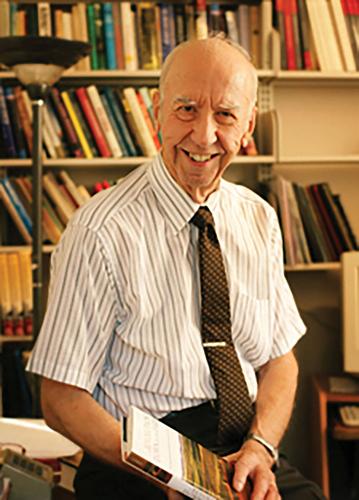
Paul Conkin, distinguished professor of history, emeritus, at Vanderbilt University, accomplished a lot in his 92 years. Many know him from his work as a historian — he wrote more than 20 books and had a long, successful academic career.
Conkin earned a B.A. in 1951 at Johnson City’s Milligan College before earning an M.A. at Vanderbilt in 1953. He was drafted for service in the U.S. Army, later returning to Vanderbilt to earn his Ph.D. in 1957. After that, he spent more than 20 years teaching at the University of Southwestern Louisiana, the University of Maryland and the University of Wisconsin. Conkin joined Vanderbilt’s history department in 1979, going on to chair the department for three years in the ’80s.
“Paul was a legendary figure within our department, one of the most accomplished and prolific American intellectual historians of his generation,” said Thomas Schwartz, distinguished professor of history and professor of political science. “His early work on the origins of the New Deal set the standard for the historiography of this fundamental time in American history.”
Another legendary accomplishment from Conkin’s career: circumventing Vanderbilt’s wishes when finalizing Gone With the Ivy: A Biography of Vanderbilt University. While university administrators wanted to control certain aspects of the book’s edits and promotion, Conkin was ready to publish it and start writing his next book, so he took it over to the University of Tennessee Press to be published. He won a Tennessee History Book Award for it. Conkin was also honored with numerous fellowships and awards throughout his career, and he mentored many students along the way. He was predeceased by his first wife Dorothy Tharp Conkin, and is survived by his second wife, Diane Baldwin Conkin, along with his sister, his children and his grandchildren. —Kelsey Beyeler
Angelo Volpe
Chemist, Tennessee Tech president
From 1987 until 2000, Angelo Volpe served as Tennessee Tech’s seventh president. He died in May at 83.
The New York native and nationally recognized chemist had a knack for fundraising, leading and, according to his colleagues at Tech, remembering names. Volpe helped the university’s endowment and reputation grow substantially during his tenure — he also fought to keep the Appalachian Center for Craft open, oversaw the construction of several campus buildings and established the university’s Women’s Center and Leona Lusk Officer Black Cultural Center. A staunch sports fan and supporter, Volpe saw Tennessee Tech’s athletic programs grow and thrive while he was president. He was inducted into the TTU Sports Hall of Fame in 2006 and the Ohio Valley Conference Hall of Fame in 2001. —Kelsey Beyeler

Elizabeth Brent Crigger Scokin Majors
Elizabeth Brent Crigger Scokin Majors
Model, socialite, fundraiser
She tore into town like a Texas tornado, with that dazzling megawatt Julia Roberts smile, a lithe supermodel frame made for haute couture, and all the sparkling glamour of a 1940s Hollywood movie star. Elizabeth Scokin — as she was known even after she and Daniel Scokin divorced, and she married Joe Majors in 2004 — never met a room she couldn’t own or a party she couldn’t plan.
She was raised in Blytheville, Ark., but had no intention of staying. At 19, she put on her stilettos and strutted off to big city Dallas to successfully pursue her dream of modeling. She married, had four children and immersed herself in the charity-ball world there, a passion she brought to Nashville. Her timing was impeccable, arriving at a time when the social scene was covered on a regular basis by both daily papers plus the Green Hills News, and Nfocus just as it was launching — and her face was ubiquitous on those pages. She was just as likely to be found in committee meetings of fundraisers, planning extravagant fashion shows for corporate clients and running her Haute Hostess Aprons business.
Scokin’s obituary notes that she fought a short battle with breast cancer with “great ferocity and vivaciousness until the very end.” Unsurprisingly, the beauty who mastered the art of making an entrance conquered her exit as well. —Kay West
Linda Coral Cawthon
Fashion director
Linda Cawthon turned the expression “clothes make the man” upside-down and re-gendered it to boot; the elegant beauty could put on the cheapest polyester pantsuit and make it look like a million bucks. Back when homegrown department stores Cain-Sloan and Castner-Knott were locked in a Macy’s-Gimbels-style battle for shopper loyalty, Castner-Knott got two legs up by hiring Cawthon as its fashion director. She knew how to dress a mannequin to sell a dress, and how to mold even the most awkward young women she plucked from the Caster-Knott Teen Board into graceful, self-confident models for the fashion shows she produced. Local photographers, advertising agencies and “women’s section” editors at the daily papers knew to call on her for help in finding talent who would show up on time and prepared to work.
She spent her final day with Castner-Knott on Sept. 30, 1998, cleaning out the fashion office of the Cool Springs store. In an image by Tennessean photographer Nina Long, Cawthon is sitting cross-legged on the floor, going through hundreds of photos and stacks of boxes. Wearing a white T-shirt, denim overalls and sneakers, she looks like a million bucks. —Kay West

Bobby Lovett
Teacher, historian, thought leader
Dr. Bobby Lovett taught history at Tennessee State University for nearly 40 years and served as dean of the College of Arts and Sciences for more than a decade. He taught and mentored countless students. He also served on a number of historical societies and advocated for the preservation of Nashville history. He was a prolific writer, and his book — The African American History of Nashville, 1780-1930: Elites and Dilemmas, which came out in 1999 — is still the only comprehensive book on African American Nashville history.
The irony is that his biggest legacy is practically invisible, since it so thoroughly changed the city. Lovett was a founding member of the committee that organized the Nashville Conference on African American History and Culture, which solidified a people-first approach to Nashville history that has become the way people expect our history to be told. Lovett and his colleagues moved our historical lens off the exploits of powerful enslavers or flowing-haired Confederate generals and put our focus squarely on the people who risked (and lost) their lives for freedom. Lovett and his compatriots also insisted that history and historical knowledge should be available to everyone, and not just sequestered on a university campus. This approach is just how city history is done now. It feels natural, but it came from Dr. Lovett and his peers. —Betsy Phillips
Matthew David Ramsey
Historian, professor, intellect
Historian and Vanderbilt University professor emeritus Matthew David Ramsey passed away in September, leaving behind a profound legacy. Some may recognize Ramsey as the author of Professional and Popular Medicine in France 1770-1830: The Social World of Medical Practice, a popular reference point in Ramsey’s field — the history of modern France, medicine and public health.
Others may recognize him as the founding director of Vanderbilt’s Center for Medicine, Health and Society. Throughout his career, Ramsey also worked as an international speaker and consultant, taught at Harvard and Princeton, served on the editorial board of Medical History and received multiple grants and fellowships. Outside of academia, Ramsey remained an ever-curious person whose wide array of interests ranged from birdwatching to playing squash. He is survived by his wife Linda, sister Judith, son David, daughter-in-law Grace and grandchildren Marigold and Cosmo. —Kelsey Beyeler
H. Jackson Brown
Author, bestseller, father
H. Jackson Brown’s first book, A Father’s Book of Wisdom, and his second, P.S. I Love You — collections of sayings and advice from his own father and mother, respectively — did respectably well. But Life’s Little Instruction Book (1991) was the third-time rocket-fueled charm that catapulted to the top of the New York Times bestseller list and, as the paper’s obit reported, ruled their “advice, how to and miscellaneous” bestsellers until the summer of 1994.
The blockbuster book had a humble origin story: tips jotted down for his son Adam for his freshman year at the University of Tennessee, compiled in a plastic binder. There were 511 in all, ranging from “Take someone bowling” to “Strive for excellence, not perfection.” Though critics competed for snarkiest reviews, one Kentucky bank president bought 2,000 copies for clients rather than the country ham he traditionally gave.
An industry of Instruction Book swag followed, as did multiple sequels and variations on the theme. The former advertising executive would no doubt appreciate the sales copy for the posthumous Life’s Little Instruction 2023 Day-to-Day Calendar: “This thirtieth edition of the calendar includes classic — yet relevant — instructions for getting along with others and living a rewarding life with integrity.” —Kay West
Sister Sandra Smithson
Faith leader, teacher, visionary
Sister Sandra Smithson, a pioneering Black Catholic sister, is remembered as a tireless advocate for improved education opportunities for children from low-income families and as the founder of Nashville’s first charter school. She founded Project Reflect, the nonprofit dedicated to education and policy reform, and served as its executive director from 1992 through 2014. In her later years, she used her considerable influence in the passage of charter school legislation for the state.
After being rejected by women’s religious communities because of her race, Sandra was accepted into the School Sisters of St. Francis and served as a teacher for more than three decades before returning to Nashville to begin making an impact at home. Project Reflect began as a summer tutoring program and grew to a year-round effort focusing on reading literacy. Following passage of the charter school act, Smithson-Craighead Academy opened, primarily serving Black and and Hispanic children.
In recent years, Sister Sandra continued working to improve educational opportunities for poor and at-risk children by republishing her books and donating all royalties to support scholarships for academically promising students. When she passed at age 96, she had served more than 67 years as a teacher, author, religious leader and visionary. —Holly Hoffman
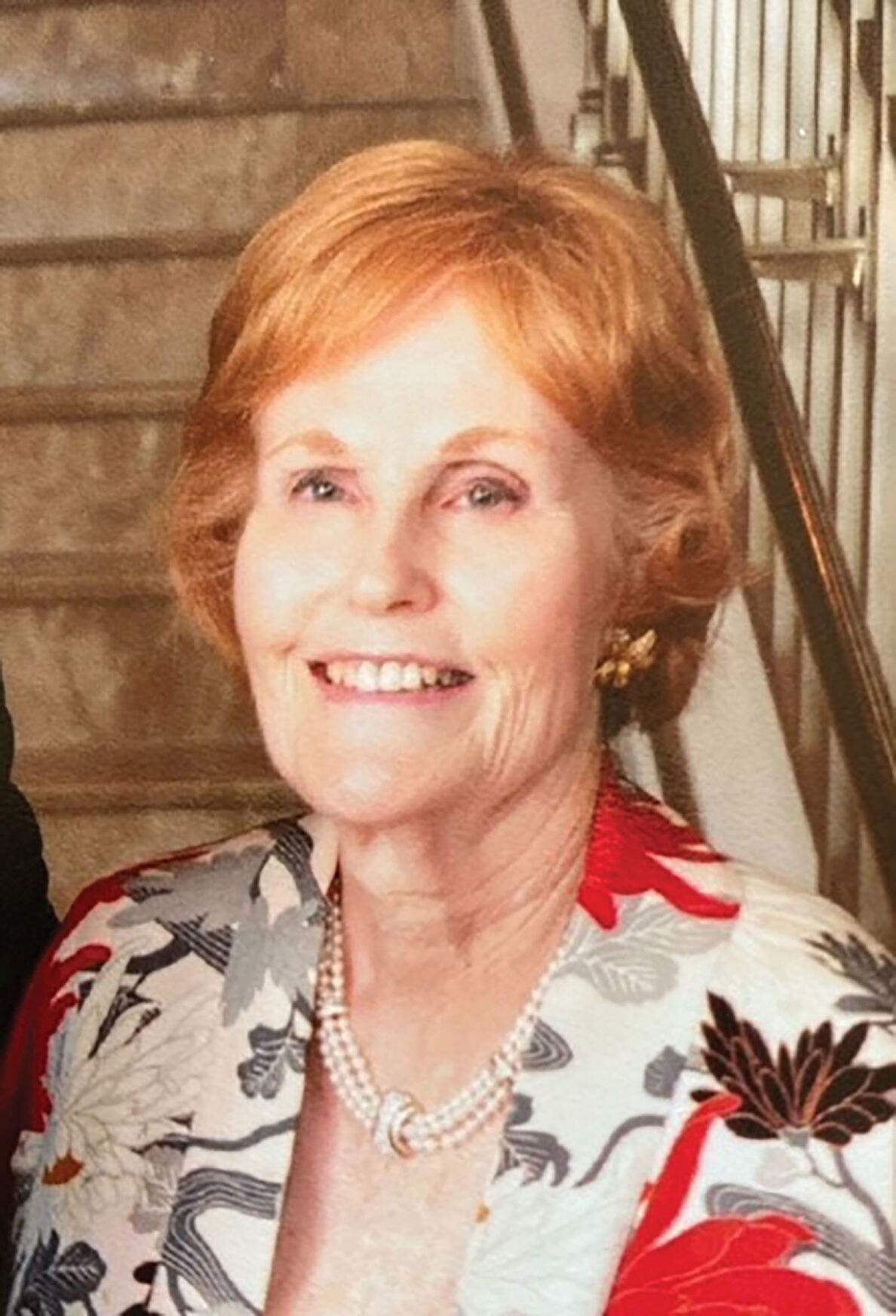
Irene Jackson Wills
Children’s advocate, devoted preservationist
Irene Jackson Wills was born and raised in Nashville but went north to Connecticut College for Women, spending a study year abroad at the Sorbonne in Paris. The worldly young woman considered job opportunities in Manhattan but went back to Nashville first.
She fully intended to return to New York until she met and fell in love with Ridley Wills II; after they married, they made Nashville home. That decision reverberated through the years and community in profound and enduring fashion. The tragic death of the couple’s second son Jesse to a heart defect in 1968 drove Wills to push for better pediatric care at Vanderbilt Hospital. She served on the founding committee to establish a children’s hospital there and helped propel efforts to move the Junior League Home for Crippled Children to Vanderbilt.
In the early 1980s, dismayed by years of disrepair and inattention at the Belle Meade Farm, Wills joined the board, and with her husband led the restoration of the carriage house and mansion and helped lay the groundwork to Belle Meade’s contemporary use as a historic site and event space. Irene Wills was a painter, gardener, devoted preservationist, and a proud 50-year server at the annual Downtown Presbyterian Church Waffle Shop the first Thursday in November. —Kay West
Henry W. Foster Jr., M.D.
Physician, advocate, nominee for U.S. surgeon general, casualty of 1990s culture wars
Dr. Hank Foster devoted his career to serving the obstetrical needs of vulnerable communities, while also helping steer the combination that made Meharry’s Hubbard Hospital into Metro Nashville’s main public hospital. For his efforts, he received a presidential nomination and rejection by a Republican minority in the Senate.
In 1995, President Bill Clinton chose Foster — who passed away on Sept. 25, 2022, at the age of 89 — to serve as the country’s surgeon general. Some Republicans announced their opposition within hours of the nomination. Foster later told The New York Times that official Washington knew little about him “except that I was an obstetrician-gynecologist, and as part of my practice, I recognized the right of American women to choose.”
In June 1995, 57 senators voted to approve him for the position. Because the tally fell shy of the 60 votes needed to defeat a GOP filibuster, the nomination failed. Clinton issued this statement: “Henry Foster is qualified to be our Surgeon General. He spent 38 years in medicine. He spent a lot of his time working to improve the health of women and children in poor and rural areas. He’s delivered thousands of babies and trained hundreds of young doctors. His efforts to curb teen pregnancy have earned him high praise among Republicans and Democrats. He shares my view that abortion should be rare and safe and legal.”
Foster graduated from the University of Arkansas School of Medicine in 1958 as the only Black student in a class of 96. He became dean of Meharry Medical College’s School of Medicine in 1990. In the mid-1990s, as interim president of Meharry, he played a critical role in the Hubbard Hospital-Nashville General Hospital merger. —E. Thomas Wood
Veronica Strobel-Seigenthaler
Educator, community servant, matriarch
Veronica Strobel was born on New Year’s Day 1939. And on New Year’s Day 2022, her 83rd birthday, Veronica Strobel-Seigenthaler unexpectedly passed away, leaving three bereft younger siblings, four grieving daughters, 10 grandchildren and multitudes of in-laws, nieces, nephews, cousins and friends. She was preceded in death in 2004 by her beloved husband, Tom Seigenthaler, who was born two days before her and always joked she first caught his eye in the St. Thomas nursery. Like everyone who met the petite bundle of energy nicknamed “Boo Boo” in childhood, he was equally enchanted and inspired by her.
Raised devoutly Catholic in a well-known and highly regarded Nashville family devoted to community, service and giving, she married into another, and the couple formed a remarkable partnership. Unlike most brides of her day, Strobel-Seigenthaler attached her maiden name to her married one, and was committed to equality for women, showing her daughters there were no limitations on what they could accomplish. With a degree from Peabody College, she began a lifelong career as an educator by first establishing a kindergarten in her own home and then teaching piano for more than 30 years at St. Cecilia Academy.
Her marriage was nurtured and enriched by the couple’s mutual love of music, art, travel, adventure, and welcoming family and friends through the revolving door of their home for food, drink, singing, games and lively political discourse. Her brother Charlie Strobel, founder of Nashville nonprofit Room In The Inn, frequently sought their counsel, and the art program at RITI was founded by Tom. After she was widowed, Strobel-Seigenthaler pursued her interests in genealogy, wildflowers, gardening, historic preservation, remembering every family birthday and celebrating the feast days of every Catholic saint. —Kay West
Emily Sotelo
Daughter, student, volunteer
It’s hard to imagine what Emily Sotelo didn’t do, reading the memorials from her family after the Vanderbilt student’s tragic death in November. She was a musician with a penchant for mathematics and an aspiring doctor, already trained as an EMT, determined to hike every peak in New Hampshire higher than 4,000 feet (there are 48) before her 20th birthday. In school, Sotelo excelled academically and spread herself across the Vanderbilt community in mentorship roles and community service.
Sotelo, home in Massachusetts during a school break, set out in New Hampshire’s White Mountains well before sunrise on Nov. 20 — she had hiked 40 of the state’s 4,000-foot peaks in the previous two years and aimed for more that weekend. Conditions at elevation were significantly colder, windier and snowier than at the trailhead, where Sotelo’s mom dropped her off and planned to pick her up later that day. Emergency personnel eventually found Sotelo’s body five days later, the search prolonged by subfreezing and snowy conditions. Sotelo’s family requests donations in Emily’s memory to the area’s search-and-rescue teams. Vanderbilt offers resources for student grief and mental health services. —Eli Motycka
Members of the local homeless community
Nashville lost more than 178 people who had experienced homelessness in 2022, according to a count collected by homeless advocacy group Open Table Nashville. The count is informal and therefore incomplete each year, though it falls in line with the shortened life expectancy and common causes of death found in the homeless community around the country. While not all ages were available, the median age at the time of death was 54. There are other blanks yet to be filled — of more names and dates of death, but also when it comes to the city putting forward enough resources for housing for all.
Minard Abernathy; Johnathan “Gato” Alston; Andrew Scott Alsup; Timothy Eugene Anderson; Todd Daniel Andrews; Paul Arndt; Wayne Arnett; Larry Arnold; Gene Atherton; Travis Melton Barrett; Daniel James Baynes; LaKeisha Bean; Courtney Beasley; James Blansett; Danielle Bowan-Colgan; William Bowen Jr.; Thomas Boykin; William Branch; Chris Brimm; Drandon “Chief” Brown; Clarence Brown Jr.; Lesley Brummond; David Allen Burke; Cory Bush; James Campbell; Christopher Carr; Rebecca Castle-Brown; Perry Champion; Jared Charles; James Church; Paul Ciappetta; Bobby Clark; Robert Cloyd; Cherieda Cooke; Brenda Gail Coons; Jon Copen; Robert Cotter; Joshua Coulter; Joseph Cox; Ricky Cramblit; Teri “Blu” Cross; Melinda Crumpler; Mukesh Dadwal; Anthony Darden; Philip Davenport; Jeff Dean; Samuel Dillard; Jane Doe; Melvin Dunlap; Martin Clayton Edwards; Robert Eickhoff; John Fitzgerald Ewin; Charlie Farmer; Jeremy Fenton; Michael Figard; Jaciento “Jake” Fleming; Deborah Fleming; Roger Freels; James Fulmer; Salomon Garcia-Perez; Juan Garza Jr.; Thomas Gaston; William Todd George; Joseph Gilkey; Steven James Godwin; Larry Goff; Christopher Goodale; Deon Goodson; Fred Gordon; Mark “Marty” Shannon; Graham; Bradley Allen Granke; Keith Hagan; Robert Haney; Jerry Harding; Joshua Hawkins; Daisy Georgia Hendershot; Roy “Devin” Hensley; Roy Hetzel; Jonathan Martin Hickman; Alton Ray Hinsley; Ingrid Hofmann; Mark “Marty” Shannon; Holloway; Ronnie Charles Hopson; Casey Ladd “Gage”; Hubbard; Kevin Ray Huddleston; Shannon Hull; Brandon Hutchison; Salvatore Ippolito; Corey Jackson; Michael Jones; Jeffery Jones; Curtis Wayne Jones Jr.; Joseph Jurek; Yvette Kahle; Roderick Keeton; Charles King; Darrell King; Charles Kinzer; Loretta Kuhn; Christopher Liebhart; Sean Linklater; Alonza Love; Ricky Lyons; Sherill Manning; Traci Marcum; Jonathan R. Martin; Kelly Martin; Dennis Dwain Matthews; Larry McConnell III; James McKissack; Lisa Carroll Miller; Jerry Muller; William Danny Nalley; Lesmy Napoles; David Mark Nelson; Ryan Christopher Nelson; Paul Nevels; Robert Frank O’Donald Jr.; Ashley Owen Bennet; David Lynn Painter; Gary Maurice Palmer Sr.; Casey Lee Storm Parks; Justin Scott Parks; Joseph Blake Parrott; Mitchell Pate; David Patterson; William Patton; Richard Allen Paul; Lucienda Peden; William Peete III; Lorenzo Petway; Kenny; Shan Pobst; Stephen Presley; Marty Radney; John Redmond; Bonnie Reffegee; Harold Ray Rickman; Kathyrn Roberts Moore; Ariel Rose; Rodney Fitzgerald; “Cleveland” Sanders; Colton “Colt” Sanders; Thomas Shepherd; John Sinks; David Sitterly; Patrick Smith; Stephoin Smith; Geraline Smith; Hoyt “Chicago” Smothers; Amber Sylvester; Emmanuel “Manny” Tarr; Jakeisha Pinkerton; Sean Tatum; Mary Taylor; Ronnie Teasley; Michael Thompson; Nova Thompson; Rogelio Tonshend; Joel Torres; Allen Tribett; Kayla Turner; Elijah Vanderpool; Gerald Vaughn; Timothy Vernon; Kenneth Waddy; Gregory Scott Walden; Robert Warren; Kimberly Lynn Watts; Sandra Whitehead; Ricky Wilson; Woodrow Wilson III; Robert Winters; Kimberlee Wright; Charles Edward Yazell. —Hannah Herner

Remembering some of the irreplaceable Nashville figures we lost in 2022



Post a comment as anonymous
Report
Watch this discussion.
(0) comments
Welcome to the discussion.
Log In
Welcome to the discussion.
Keep it clean. Please avoid obscene, vulgar, lewd, racist or otherwise abusive language. Comments featuring hate speech or threatening or violent content will not be tolerated.
PLEASE TURN OFF YOUR CAPS LOCK.
Be truthful. Don't knowingly lie or mislead.
Be proactive. Use the “report” link on any comment that violates our comment policy.
Share with us. We'd love to hear your feedback.