

It’s been an awful decade for traditional media.
The Tennessean’s daily print circulation has fallen to roughly 35,000, and — battered by insufficient digital revenue and the effects of the coronavirus pandemic on its advertisers — the paper had to furlough parts of its staff for most of 2020. On the broadcast side, consumers continue to cut the cable cord, leaving local affiliates scrambling for new ways to reach viewers. Radio has seen its audience drastically reduced as working from home reduces the number of commuters listening in their cars.
But if you’re looking for the moment when traditional Nashville sports media blew its huge lead, you probably need to look at Jim Wyatt’s career.
The man identified with covering the Titans for more than two decades grew up in Nashville and had early aspirations of being a journalist. He couldn’t get a full-time gig at The Tennessean or the since-folded Nashville Banner after graduating from the University of Tennessee in 1989 because the benches were so deep: Legends John Bibb and Fred Russell still wrote columns; Jimmy Davy and Mike Organ duked it out on the Vanderbilt beat against Greg Pogue; David Climer and Joe Biddle were the faces of their respective newspapers’ sports sections; a young Buster Olney, who would go on to work for The New York Times and ESPN, covered college basketball and, of course, minor league baseball.
Wyatt paid his dues in a Tennessean section the editors called “preps,” or high school sports, earning bylines on a part-time basis for years until a full-time opening came up in 1997. Two years later, he became a Titans beat writer alongside Paul Kuharsky during the Titans’ run to the Super Bowl. By 2015, Wyatt was widely regarded as one of the best beat reporters in the country, and he was named the state’s top sports writer six times. When news on the Titans beat broke, it was almost always because Wyatt broke it.
But things had changed seismically. The Banner was closed by Gannett in 1998, and The Tennessean’s sports section was weakened by years of cuts. Nightly sports reports on the city’s broadcast outlets had been nipped and trimmed as sports-television viewers departed en masse for cable sports networks. The internet gave rise to any manner of fan sites — like On the Forecheck and Music City Miracles — which made up in volume and frequency what they might have lacked in authority.
In fact, it could be argued that by 2015 Wyatt’s most important asset was not his byline on the front page of the print edition of The Tennessean, but rather his Twitter feed. That’s where he doled out almost hourly updates on everything from front-office changes to injuries to practice-field surprises. The Titans certainly noticed — they made him an offer to become the senior reporter for Titans Online, the team-owned news site. And so in June of that year, Wyatt crossed over to the digital side, and The Tennessean never fully recovered, replacing him with a succession of solid beat writers who never reached his heights.
Into the traditional-media breach, though, has come a wave of newcomers determined to meet consumers at one place — your phone. From streaming broadcasts to premium news sites to podcasts, Nashville sports fans have never had more options than they do now. These newer entities have all been enabled by an internet culture that has been gradually eroding the authority of legacy media. It’s likely that they won’t all find success — nobody has developed a foolproof revenue model — but fans are richer for their attempts.
What follows is a look at the biggest players in Nashville’s sports-media landscape, piece by piece.
The Sole Practitioner
PaulKuharsky.com

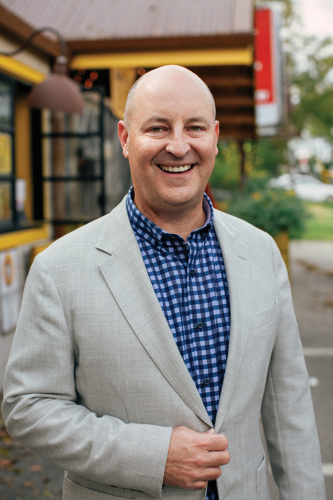
Paul Kuharsky
If you’ve followed the Tennessee Titans since they arrived in Nashville, you are familiar with Paul Kuharsky. First as a beat writer covering the team for The Tennessean and then the AFC South for ESPN, the acerbic Kuharsky has juggled his reporting duties with his presence on The Midday 180 on 104.5 WGFX-FM The Zone. But when ESPN eliminated his position in a reorganization three years ago, Kuharsky took a different tack — he hung out his own shingle.
Because sometimes the person is the brand.
At PaulKuharsky.com, for $5.99 per month readers get the full PK, including news stories, features, analysis, podcasts and exclusive video chats on the Tennessee Titans. Kuharsky’s status as one of the longest-serving writers covering the team gives him a perspective only a couple of other reporters in Nashville can match. His market is die-hard fans.
“If you’re a really big fan of the team — and you’ve got to have tickets to a certain game, or a jersey of a certain player, or you feel like you’ve got to have all these things in order to show that you’re a high-level fan — and you don’t have a membership to my site then you’re incomplete,” Kuharsky says. “I think if I’m not part of the coverage that you’re reading, you’re missing out on the hardest-edge, most critical analysis of it. If you don’t have that, you’re not seeing the full picture.”
If that sounds like boasting, Kuharsky has earned the right. He has clashed with coaches and previous Titans administrations by not being afraid to ask a tough question. He also breaks the occasional big story, including a piece about a non-NFL-sanctioned practice that players held at Montgomery Bell Academy in the middle of a team lockdown due to positive coronavirus tests.
The daily radio gig provides a symbiotic situation for his site. With Titans news dominating most of the talk on WGFX’s shows, Kuharsky brings news experience to a medium that can get bogged down in opinionating. And when he breaks a story on air — like the aforementioned MBA practice — it’s a good plug for his site. It’s little surprise that when the station shuffled its lineup earlier this year, The Midday 180 crew of Jonathan Hutton, Chad Withrow and Kuharsky became the central focus of the station’s schedule.
Kuharsky defers when asked about numbers. His premium membership group, called the All 22, has remained full since the site launched. That group pays Kuharsky $125 a month for special access to him, including a private group chat and the ability to text him questions. He holds regular events with the group and has even brought in guests like Titans general manager Jon Robinson and tackle Taylor Lewan for private, off-the-record sessions.
He will say, however, that his paid audience has been more stable than his sponsors, many of whom dropped out during the pandemic. Ticket broker Tennessee Tickets remains a title sponsor and enables him to travel to cover the team. Some back-of-the-napkin math, based on audience, would indicate that Kuharsky is pulling in well over $60,000 per year just from his site, but he won’t confirm anything.
With the Titans making a run to the AFC Championship game last year, expectations are sky-high this season. And more interest has meant more members on Kuharsky’s site.
“There’s a lot positive that’s been going on with this team in the last couple of years and I’ve certainly written about that,” he says, aware of his reputation. “The Titans could go to the Super Bowl — I picked them to. For everybody that wants to make me out to be constantly negative, I kind of blew up their theory with that.”
The Premium Option
The Athletic

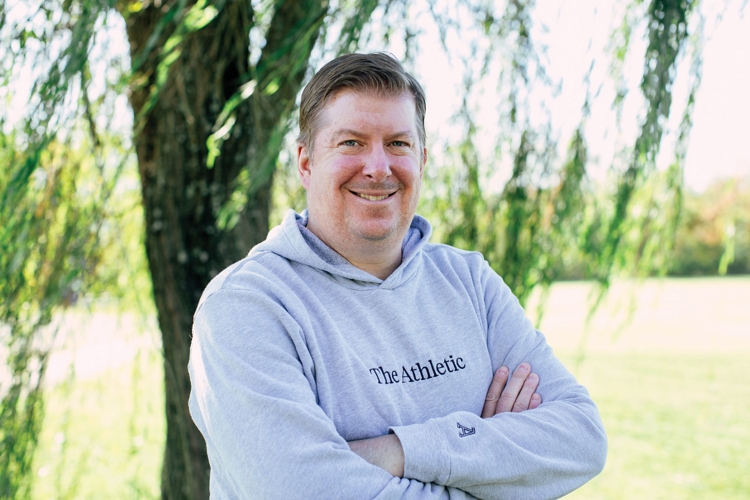
Joe Rexrode
Anyone trying to make the case that sports fans should pay for content would be hard-pressed to find a better example than the piece Joe Rexrode posted on Aug. 20 on The Athletic.
Titled “Fourth and Inches Every Day,” Rexrode’s story drew a straight line from Mike Vrabel’s 2012 season as an Ohio State defensive coach on Urban Meyer’s staff to Vrabel getting the Tennessee Titans head-coaching job six years later. It was full of anecdotes and details about the season and the transformation of a young coach fresh from his NFL playing career. The piece was of a quality you might expect from a magazine of another era, full of color and an expert-level grasp of the material.
A little more than a year ago, the piece might have appeared in The Tennessean in one form or another, though it’s hard to see it taking up the two broadsheet pages necessary to let it breathe in today’s thin sports section. But Rexrode was lured from his columnist position at the daily to join The Athletic in August 2019, and the piece shows why they wanted him — he built his reputation in Michigan as a talented enterprise writer and Michigan State beat reporter before taking over David Climer’s lead-columnist job at The Tennessean in 2016. Years of Big 10 football gave him the chops and sources to dig into Vrabel’s time in Columbus. And he’s got a distinctive style.
In short, Rexrode’s story has everything The Athletic says sets them apart from the newspaper staffs they’ve been raiding since launching in 2016. Nationally, the site covers virtually every major sports franchise and has a significant presence in soccer, including arguably the best stable of English Premier League writers on either side of the pond. In 2018 they opened a Nashville office, covering the Preds and Titans, UT football and occasionally more. Adam Vingan was hired away from The Tennessean to cover hockey, but Rexrode’s hiring a year later was a shot directly at the paper. The coverage is less frequent, but more in-depth.
“I think there’s just an emphasis on finding the deeper story,” Rexrode says. “So I think of myself as more of a features writer who also has the freedom to be a columnist. Whereas at The Tennessean it was a lot more emphasis on reacting to news and your opinion. I guess I’ve always wanted to be versatile, so even as a beat writer I like to do different kinds of stories.”
At $5.99 a month, the price is comparable to what most serious sports fans are paying for a streaming add-on beyond their current TV packages. The company, based in San Francisco, announced that it hit a million subscribers in September, but its success has not been without hiccups. A round of layoffs earlier this year cost longtime Titans writer John Glennon his job. The site is backed by analytics-obsessed Silicon Valley money, and a change in subscription patterns might spell other changes in the future.
But that still pales compared to the instability in newspapers right now, and the chance to work at arguably the highest-profile sports site in the country was too good of an opportunity for Rexrode to pass up.
“You always have a certain fear of like, ‘Man, I’ve been in newspapers my entire life, how could I not still be in newspapers?’ ” Rexrode says. “The print readers, that’s who I would get emails from, and I know it’s like people who [are] not on Twitter. They are a lot of older people who are reading this. But people who really still appreciate the newspaper and interact with you, and you still feel connected to that audience. And, you know, ‘OK, they’ll never read another word I write.’ So you think about all those things. But the short answer is that The Athletic was very convincing. I believe in The Athletic. I was a subscriber early and was thrilled with the product as a consumer. I mean, I can’t read all the good stuff every day.”
The Podcaster
440 Podcast Network

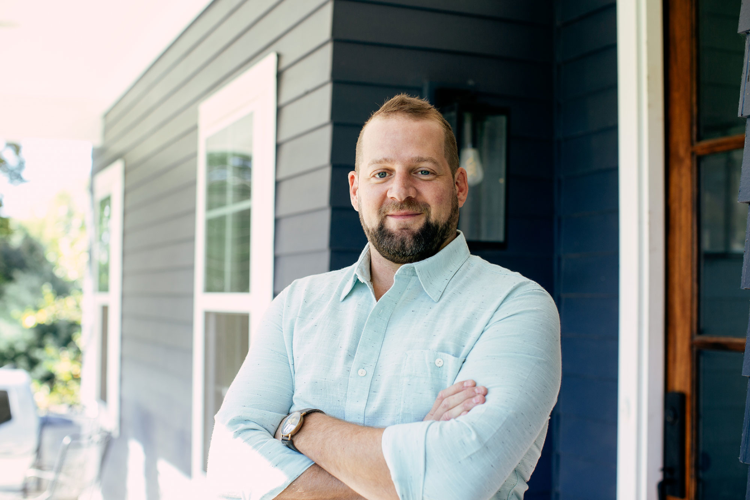
Braden Gall
Braden Gall had been restless for a while.
A good talker who can toggle effortlessly from sports to news to music, Gall was a host on 102.5 WPRT-FM The Game’s morning show for four years. And in service to the medium, he ran afoul of the scientific methodology of executing sports talk radio: A host will tease, pay off the tease, set up an audio clip, play the audio, set up two sides of a discussion, argue about it, and move on to the next thing. The worst versions of terrestrial radio can feel like a bad version of Groundhog Day.
It’s the polar opposite of a college football podcast he’s been co-hosting for Athlon Sports for several years — the Cover Two podcast — which is just as likely to nerd out on variations of the “air raid” style of offense as it is to examine Vince Dooley’s coaching tree. Even contract stints on ESPN Radio and SiriusXM college football shows provided more depth — and fulfillment — than morning radio. The disconnect between his day job and his side work had been eating at him for a couple of years, to the point that he even pitched versions of a series of podcasts to friends and colleagues.
Gall was ready to cut the cord. As it happens, so was 102.5. Gall and co-host Derrick Mason were fired in February as the station, which had been bleeding listeners and slipping in the ratings, shuffled its lineup.
“It is 100 percent fair to say that I was unhappy and looking around, but I also need to be very clear that it was not my decision to leave,” Gall says in the improvised studio in his East Nashville home. “102.5 canceled our show. They canceled Nick Kayal first in November, and then canceled Derrick and I on Feb. 10. And there was never a discussion about why. And that’s OK, that’s their prerogative.”
Gall had no idea that six months later he’d be starting his own free podcast network, 440 Sports. But the more he talked through the idea, the more passionate he became about getting into more depth in sports talk than terrestrial radio was offering.
“It allows you to go deeper, it allows you to go nerdy and analytical, it allows you to go into storytelling mode, it allows you to pull back so many layers of the singular topic that you love the most so that you learn a lot more about it,” Gall says. “And I think you become a smarter and better sports fan because of that. That is what a podcast as a format does. And while there are plenty of good people doing good work in the city of Nashville, it feels like there is a void and a vacuum in the sports-talk area in this city around all of the things that people love.”
Gall launched three main podcasts in September: Fringe Element, an in-depth look at SEC football with Erin Dugan; The Gold Standard, a Nashville Predators podcast with Adam Vingan of The Athletic; and The 440 Daily, a less-than-10-minute podcast with headlines and short analysis about Nashville sports.
(Full disclosure: I co-host a fourth podcast from 440 about local sports business and media, Lamestream Sports. I receive no money from Gall for appearing, and he didn’t see this story prior to publication.)
Gall is also carrying other people’s podcasts on his network, including a ton of Titans pods by Broadway Sports and one by Vandy Sports. The plan, Gall says, is to turn the listener who may be unhappy with radio options into an on-demand consumer using the technology already in their pocket. He’ll sell ads on the podcasts as his audience expands.
“I believe people want to control the content,” he says. “They don’t want to allow other people to decide what they hear or what they care about. And that is essentially what you are doing when you are listening to a radio sports talk show, is you are choosing to allow that host to drive whatever topic he or she wants in that moment. That means if you’re a die-hard Nashville Predators fan, you don’t know when you’re going to get Predators content on the radio. But if you go to a Predators podcast, you are going to get exactly what you want every single time you go there.”
The Freemium Co-Op
Broadway Sports Media

Johnathan Boren
Had things worked out differently, Johnathan Boren would have been on the sidelines instead of in the press box. For several years, he analyzed film as an assistant coach under former Titan Kevin Dyson at Independence High School in Williamson County. But things “just didn’t break right, so I went a different direction,” he says.
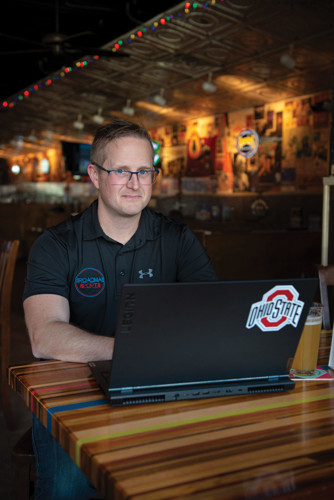
Boren leads a collective of 16 people as CEO of Broadway Sports, the newest entity in the Nashville sports market. Fans will recognize parts of other sports media in the bios of the Broadway lineup — including Music City Miracles and On the Forecheck, two of the highest-profile fan-led sites — but Boren says the disparate parts needed to get organized under one roof.
“All of our entities that we’ve had have been operating independently, and I think almost creating competition for ourselves,” Boren says. “I think there’s also a growing market here in Nashville, and the media hasn’t necessarily grown with it. Being able to bring in new faces and incorporate that into the media landscape with a growing city, if we want to be a big-time city, we’ve got to be able to cover it like a big-time city. We saw an opportunity, had a decent-sized group with a skill set and some familiarity with covering the team, I saw an opportunity and said, ‘Let’s give it a shot.’ Here we are.”
With some known quantities — like John Glennon on the Titans and Kris Martel on the Predators — blended with a boatload of Titans podcasts (Football and Other F Words and Homerun Throwback to name two), Boren thinks there’s room for a freemium player in the market. The idea is to pair some free stories with deeper analytical work, like Mike Herndon’s film study of the Titans, and unique content — including stories from Speedway Soccer’s Ben Wright and Davey Shephard — behind a paywall. At $9.99 per month, it’s the most expensive play of the upstarts, but nobody is getting rich anytime soon. Aside from Glennon, the entire group is working day jobs to support their sports media careers.
“I would say that the value is, again, you’re going to get it all in one place,” Boren says during a break from his gig as a project manager for HCA Healthcare. “I think that the quality of what we provide and also just the access, everybody who is on that site is easily accessible and easy to interact with. I think a lot of times you have these folks that may be local, but they come from a national entity. Or if you’re getting that production quality, it’s guys at ESPN that are providing these kinds of things — which, cool, they say something, you get kicked off and that’s it. There’s no other way to actually interact with those people. One of the things that I pride ourselves on is the accountability. ‘Hey, we’re going to be wrong at some point, but one, we’re going to tell you why we thought the way we did, and we’re also going to own it.’ That’s the big thing.”
The Online Talk Show
AtoZ Sports

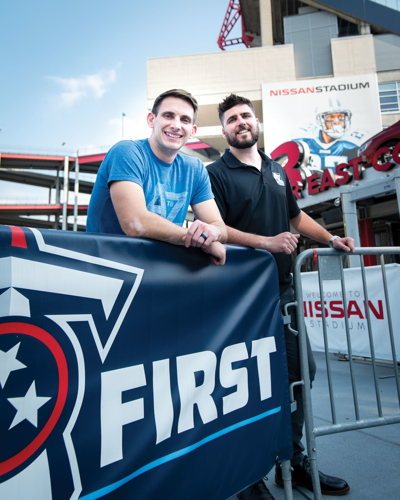
Austin Stanley (left) and Zach Bingham
Watching an AtoZ show can be a little bit like a visual assault.
A pair of former radio hosts who were fired from their morning show — stop me if this sounds familiar — Austin Stanley and Zach Bingham are surrounded by a cacophony of team logos, social media bugs, cutout photos and teasers to later show segments. The duo appears in separate boxes in front of a background emblazoned with, you got it, AtoZ logos. It’s October, so the lineup for this particular show is Titans-heavy, concentrating on Ryan Tannehill, Derrick Henry and the team’s upcoming Oct. 25 matchup with the 5-0 Steelers.
As they rate the Titans’ chances at victory on a scale of 1 to 10, Stanley and Bingham start calling out commenters from their multiple video streams. A Facebook viewer says it would be an 8, but he lost on Madden last night, so it’s now a 6. “You probably played like a 6 last night,” Bingham says. Beazy622 chimes in from Periscope, flashing on the screen with his 6.9 prediction. This is a show on Adderall, wrapped in a wave of graphics, but the hosts’ connection to their audience is very real.
“We try to have a three-way conversation,” Bingham says. “The conversation is between Austin and I — it’s A and Z — but it’s really about a lot of others feeling a part of the conversation.”
The pair discovered an audience on Facebook Live not long after being let go by 102.5 WPRT-FM The Game in 2016. They took a laptop to Birmingham for the SEC’s media days and just started doing their radio show for a camera. In time they would balloon to 50,000 Facebook fans and add a nighttime show starring Titans reporter Buck Reising. A typical daily show might get a couple hundred live viewers at a time on each of the three video platforms, but then grow to more than 8,000 over the course of 24 hours as fans continue to watch and comment. They call it “Nashville’s on-demand sports talk show.”
“I look at the radio and television industry very much like coaching,” Bingham says. “If you get into this, you’re gonna get canned along the way. Somewhere, someplace. Ours came after a firing. We said, ‘Do we want to continue to do this? We’ve got something special.’ And luckily Facebook’s livestream had just barely started. And we took advantage. Looking back at the first ones we did, they’re really, really bad.”
Stanley chimes in. “And Facebook memories pop up, and they remind us of just how bad.”
Eventually the duo got more comfortable in front of the cameras, and more importantly, they were able to sell their growing audience to local advertisers. It went well enough that they turned down opportunities to return to terrestrial radio, as Bingham was able to leverage their show into real money, in part by undercutting their former employers on classic radio sponsorship opportunities, like a pop-up show at a business.
“Radio stations sell that for like three grand, which is so ridiculous,” Bingham says. “Three grand for a radio pop-up that goes away after three hours and you can’t see anybody? So we sold it to them at a good price and it worked. It’s the whole reason we left radio — because they were taking 80 percent of the sale. I’m like, ‘I just worked my ass off for this sale and you’re gonna give me 15 percent?’ That’s what’s always on my mind.”
Will it continue to work? They’re bullish enough to embark on an expansion into the Dallas market next.




