


On Mother’s Day, Kristen Chapman watched her elderly mother through a pane of glass. Months into the global coronavirus pandemic, the nursing care facility where her mother lived could not allow visitors. This was the closest Chapman could get.
Most of our human interactions are attenuated now, taking place from behind a mask or a computer screen. For Chapman, there was an added barrier. Her mother had been living for some time with advanced dementia — a painful state of social, mental and emotional distancing that compounded the grief of what came next.
On a Saturday in late July, Chapman and her brother got a call from the facility telling them that their mother had a fever, but that she had tested negative for COVID-19. Things seemed relatively OK and remained stable into Sunday. But that evening, her mother’s condition declined rapidly. Chapman and her brother got another call informing them that their mother was being taken to the emergency room in Clarksville. Her fever had spiked, she was breathing poorly, and she hadn’t been taking fluids. The people on the other end of the phone said they needed to verify the details of her do-not-resuscitate order. If Chapman and her brother wanted to see their mother, they needed to come now.
To Chapman’s surprise, the staff at the ER in Clarksville let the siblings enter the room wearing personal protective equipment. Chapman sat by her mother’s side, held her hand, played with her hair and played her John Denver songs.
“I knew it was a risk,” she says. “But I’m from Appalachia, and you just don’t let your people go out without being touched.”
Her mom died that night. Chapman and her brother went into isolation, as they were told to assume they’d been exposed to the virus. Two days later, they found out that their mom had tested positive for COVID-19. Chapman, who had already been tested immediately after seeing her mother, quarantined for nearly two weeks before getting tested again. (Public health officials have found that tests taken directly after exposure and too early in the course of infection can produce false negatives.) She was negative. But the ordeal meant she had spent the days following her mother’s death in isolation, holed up on a separate floor of her home from her partner and three teenage children.
“That was significantly harder,” Chapman says. “Just not being able to comfort your kids when you tell them their grandmother’s dead.”
In the early hours of March 3, tornadoes tore through Middle Tennessee, killing 25 people — including two in Nashville — and leaving a trail of devastation that is still visible in some places today. Less than a week later, the city reported its first confirmed case of COVID-19. Since then, Nashville and Tennessee — like the country as a whole — have been battered by the wind of a different storm. As the virus spread, public health and the economy spiraled together into crisis.
Across the state, more than 1,300 people have died due to the virus, and more than 1,000 are currently hospitalized with COVID-19. In Nashville, 215 people have died as of this writing, and the death toll has risen at a quicker rate in recent weeks. Nashville’s first COVID-19 death came on March 20. It took 100 days for the city to surpass 100 deaths, but just 40 days after that to surpass 200. At the same time, the economic fallout has further strained the city’s finances, which were already in troubling shape. Our unprecedented spring gave way to a miserable summer — but it has felt more like one long, painful season that has fallen hardest on the elderly and the marginalized.
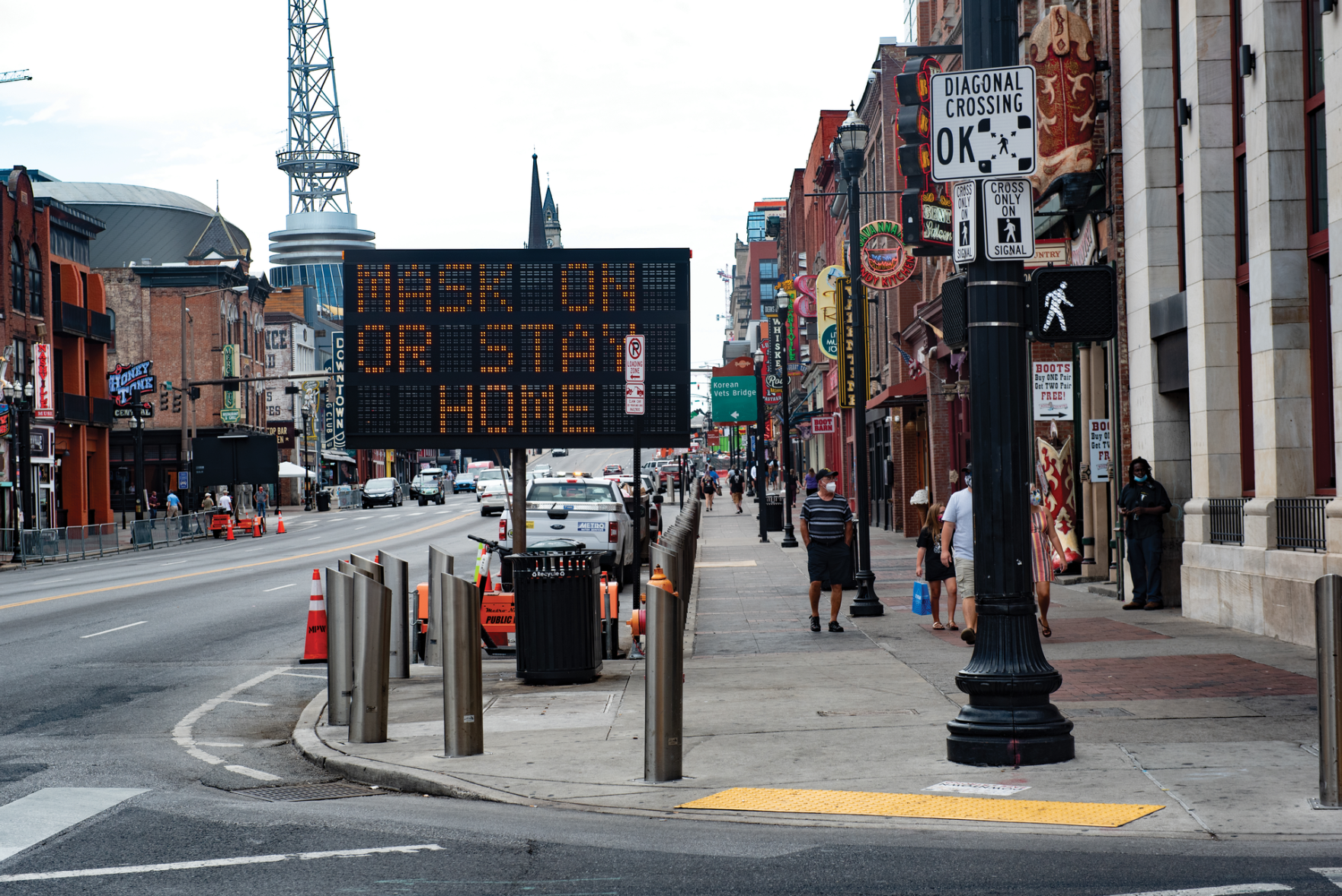
Chapman has seen the coverage of the COVID-protocol-free party at The Fashion House in East Nashville; she has seen the outrage directed at videos of maskless bar-hoppers walking the streets of Broadway; she has seen Nashville residents arguing and shaming one another over which risks they’re willing to take. It only seems to add to her grief.
“It does not do me one smack bit of good to go down to fucking Broadway and be mad and boo at people or say, ‘Y’all killed my mama,’ ” Chapman says. “All of that does not give anybody a better choice. I guess I just want to say to people, a lot of people know me, so they know somebody now who’s died. They know my mom has died from it. It’s real. I want everybody to take their judgment for everybody else and aim it at the people who put us in this damn situation in the first place.”

We all know more now than we knew five months ago, and we can safely say that thanks to the pandemic, this year was always going to be challenging. But it didn’t have to be like this. State and local officials have often been slow to act on the advice of public health officials, if they act on it at all. What’s more, the virus has been all but aided and abetted by the impotent response of President Donald Trump, a man who is utterly lacking in the competence, empathy and attention span to effectively confront a crisis of this magnitude. He has indulged delusions about the virus — saying that one day it will “just disappear” — and he regularly contradicts public health officials who are standing right beside him. Under his careless stewardship, the United States has become the world’s glowing red hotspot.
We have seen how the spread of the virus can be slowed, though. In April and May, Nashville appeared to have mostly flattened the proverbial curve. But as the city began to progress through its phased reopening, Metro’s daily updates started to contain some alarming trends. Nevertheless, with case numbers beginning to rise at an increasing rate and two of the city’s six key metrics at less than satisfactory levels, Nashville moved to phase three of the reopening plan on June 22, allowing bars and restaurants to open with some limits on capacity. Although masks were being encouraged, there was no mandate in place. What happened next was predictable, and indeed predicted by many concerned observers. Daily case numbers spiked, as did hospitalizations. Mayor John Cooper ordered a mask mandate in late June and announced that the city was returning to a modified phase two in early July.
But it takes time for the effects of such policies to show up in the data, and throughout the month it was evident that large numbers of people were ignoring the mask mandate and defying guidance against crowding into poorly ventilated bars. For the entire month of July, the city’s moving average of new cases per day was higher than at any other point in the pandemic. At the state level, the picture was largely the same, with cases rising and contemporaneous hospitalizations surpassing 1,000 people for the first time.

“The hospitalizations never reached the point where, as a state, we were concerned about a kind of New York-level overrun of hospitals,” says Dr. John Graves, an associate professor at Vanderbilt University School of Medicine’s Department of Health Policy. “But it certainly was on a trajectory that couldn’t be sustained for very much longer. We had to get it back under control.”
City officials have come under scrutiny for appearing to be beholden to the interests of some high-profile bar owners and tourism industry players, even at the expense of public health. The economic concerns among bar and restaurant owners are real, of course. But at the same time, the decision to allow so-called transpotainment vehicles to continue parading up and down downtown streets until mid-July was befuddling.
“To state the obvious, hindsight is 20/20,” Convention & Visitors Corp CEO Butch Spyridon said in a written statement. “As a city and a nation, I believe we all moved too quickly to reopen in June. Over the last six weeks, most of the Broadway bars have been closed, even though it didn’t look like it based on viral videos everyone saw. As we have all learned, mask enforcement and alcohol to-go sales were bigger challenges than we anticipated. We are encouraged that Lower Broadway businesses have seen the importance of compliance. While Lower Broad gets most of the attention, the majority of bars throughout Nashville have been eager to comply. It’s been a tightrope between controlling the spread and finding ways for small businesses to survive. We are all in this together, and we all need to act like we are in this together.”
The off-Broadway bars Spyridon refers to have indeed been complying, but they have also spoken out about the ways they say their businesses were unfairly harmed by restrictions that the city was hardly enforcing on Lower Broad. In recent weeks, that has visibly changed, with downtown bars starting a concerted campaign to encourage compliance and police stepping up enforcement of the city’s mask mandate.
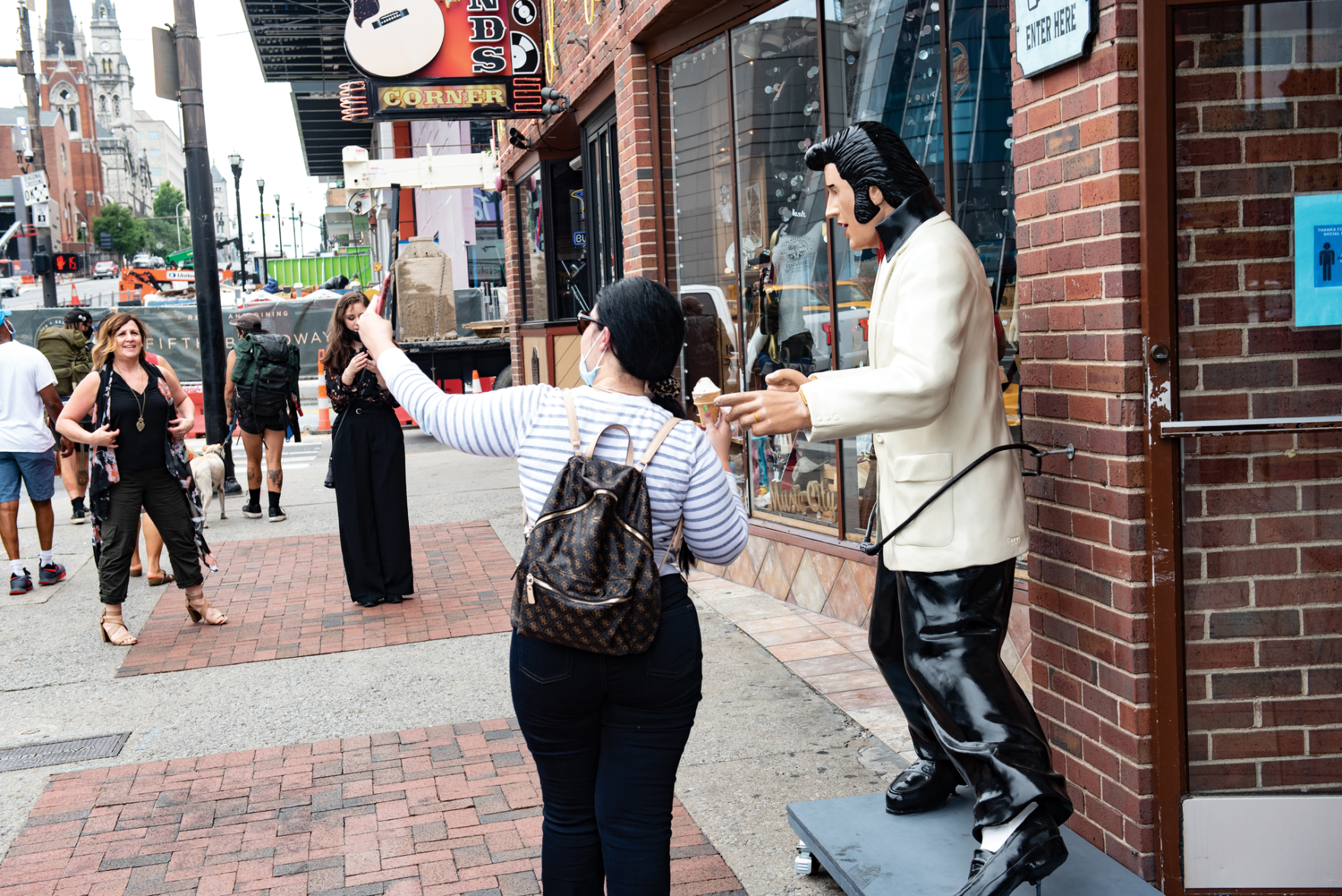
We appear to have arrested the rise in cases and hospitalizations again, but the numbers have leveled off at a much higher plateau than before. The school year is here (albeit a virtual one in Nashville until at least Labor Day), bars are opening with limited capacity, and flu season is coming.
Meharry Medical College President and infectious disease expert Dr. James Hildreth sees a mix of good and bad news in the data. The city’s transmission rate — which indicates how many people are likely to be infected by each infected person — has fallen below 1. At the same time, the number of Nashvillians infected per 100,000 is worrisome at around 28. Hospital and ICU bed capacity is not where officials would like it to be, either.
“This could all go south very quickly if we don’t keep our foot on the gas pedal,” Hildreth says. “The mask thing is just singularly important. If we can just get people to wear the face coverings consistently, that would make all the difference. But the challenge of course is that Nashville is kind of a regional hub, so if the surrounding counties don’t do the same, and people keep moving freely between Nashville and other places, we’re just gonna have these cycles of good news and bad news.”
In a letter to Gov. Bill Lee earlier this month, Hildreth urged the governor to issue a statewide mask mandate, a policy backed by data and even Trump administration officials — but one that Lee has resisted. Hildreth, who spoke to the Scene via Zoom, is visibly frustrated by the patchwork approach to confronting the pandemic.
“That’s been a problem nationally — that we haven’t had a coordinated response,” he says. “I mean, ideally, the whole country should have shut down for a couple of weeks back in February or March. That would have made all the difference. But having 50 states all doing something different at different times results in what we have right now. So the same thing applies to us as a state. It would be really great if all of us were at the same time doing the mitigation steps because, again, the virus is not respecting borders of any kind.”
Hildreth is also critical of elected politicians who have been, for instance, pushing the idea that students should return to school in person while simultaneously dismissing the warnings of public health officials.
“The people who should be protecting us seem to have a different agenda,” he says. “I’m trying to be diplomatic about it, but that’s really what it comes down to.”
While acknowledging that the goalposts have shifted, Vanderbilt professor Graves says “good news” to him would be maintaining the status quo in terms of cases and hospitalizations even as schools and cities begin to reopen. He emphasizes that hospitals are not overrun now, but he also sees winter coming.
“From a purely capacity standpoint, we seem to be well within capacity,” Graves says. “But with that said, capacity is as much an issue about staffing. Can we sustain 1,000 or 1,100 people hospitalized with COVID as we move into flu season, and the winter months where you’re going to have other viruses and things circulating in the population?”
Hildreth is similarly concerned about what the rest of this already long year could bring.
“We need to keep as many beds open for COVID patients that otherwise would be needed for serious influenza infections,” Hildreth says. “That’s one thing. As the CDC director recently [said], this fall and winter could be one of the worst in a really long time for us in terms of public health if we don’t get better control of COVID-19. If we have a really bad flu season … it’s gonna be really bad as a matter of fact.”
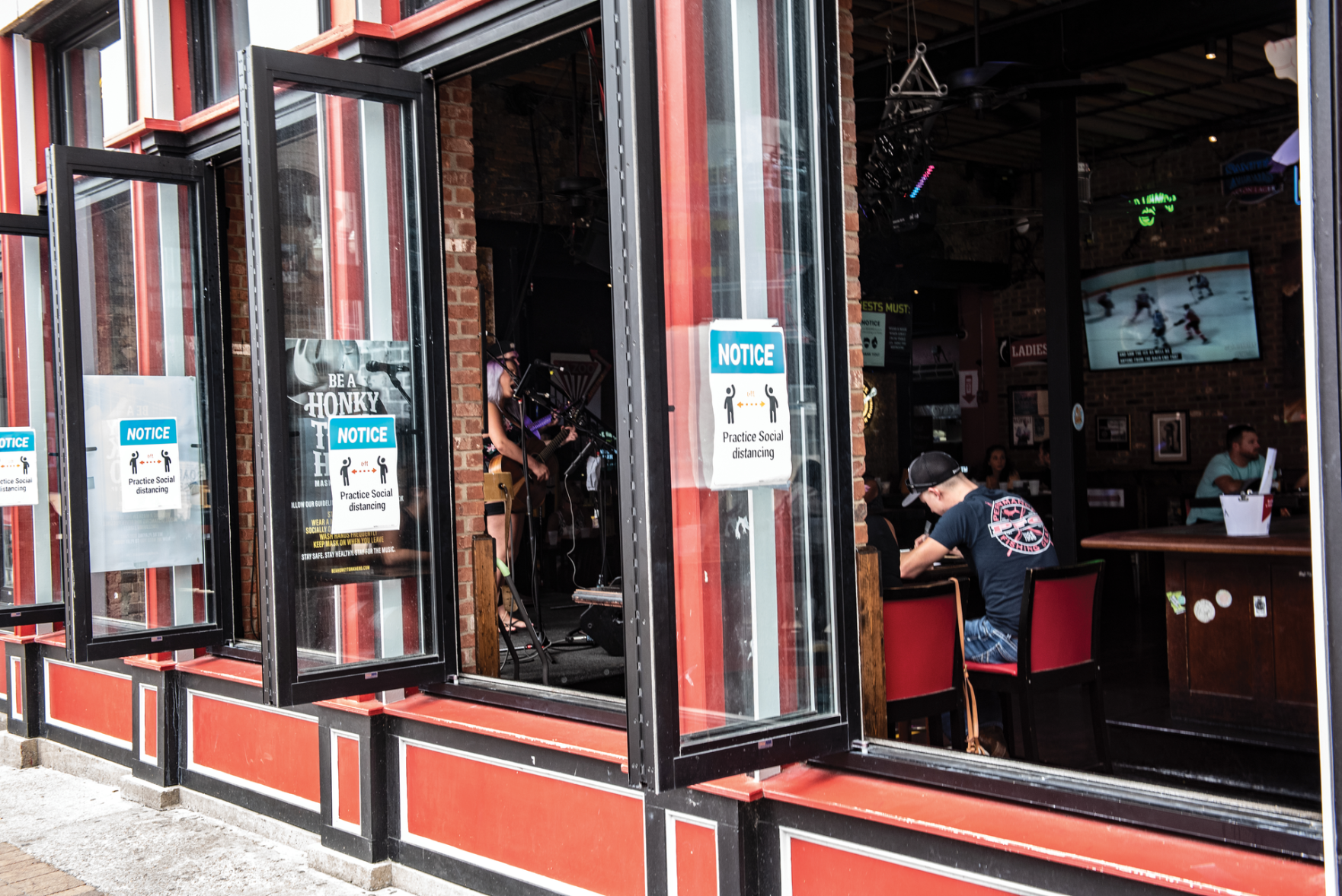
Like so many other societal ills that thrive on inequality — poverty, crime, mass incarceration — the coronavirus has had a disproportionate impact on communities of color. In Nashville, the Hispanic residents in the southeast part of the city have been hit particularly hard. In late June, Hispanic people accounted for nearly a third of all Nashvillians who had tested positive for COVID-19. That number has fallen but is still well above the group’s share of the city population, which is just more than 10 percent.
Metro Councilmember Sandra Sepulveda, who represents southeast Nashville’s District 30, has been a vocal advocate for the community, warning that the city was reopening too soon in June. She says she has noticed some progress in her district. Mask compliance has increased, Sepulveda says, although a lack of Spanish-speaking officials to talk to residents after they test positive remains an issue.
Still, Sepulveda says she has been getting fewer calls about COVID-19 clusters in her district. Recently, she’s been getting questions from constituents about another looming epidemic — they’ve been calling, she says, to ask about mortgage and rent relief.
In March, Davidson County Sheriff Daron Hall announced that his office was halting the enforcement of evictions. The federal CARES Act legislation passed by Congress also included a moratorium on evictions for renters who were part of federal housing assistance programs or lived in properties with federally backed mortgages. But that moratorium ended on July 24, and a Nashville court order suspending local hearings or trials in eviction cases expires Aug. 31.

When the courts have been open, Kerry Dietz — a Nashville housing attorney for nonprofit Legal Aid — has been masking up and going in to keep up with her clients’ cases. She has successfully prevented some of her clients from being evicted, for now. But Dietz says she has also seen judges grant default judgments in eviction cases in recent months, deciding a case for a landlord because a tenant didn’t show up for court. As Nashvillians face underemployment and unemployment, the pressure has been building. The CARES Act, Dietz explains, required landlords to give tenants 30 days’ notice before filing for eviction. That means a wave of eviction proceedings could be coming at the end of this month.
Earlier this summer — as Dietz was working to keep up with the potential housing crisis brought on by the enduring public health and economic crises — she learned that her 94-year-old grandmother had contracted the virus.
Dietz knew her grandmother as “Bubba,” and she took pride in the line of strong matriarchal figures in her family. Dietz’s great-grandmother graduated college in the early 1900s, and her grandmother, Bubba, had attended Stanford University, where she played for one of the first college women’s basketball teams. Bubba met Dietz’s grandfather at a mixer she and some friends organized for enlisted men during World War II. He’d grown up in Nashville, and that’s where they settled after they were married. Growing up, Dietz bonded with her grandmother over fashion, and in recent years she would join her mother and Bubba for breakfast at Cracker Barrel.
Bubba was experiencing dementia when the virus came; it stayed with her for three weeks before it took her. When the end was in sight, Bubba’s family got her hospice care so she could be treated at home.
Dietz says she is not typically prone to anger, but she has felt it recently. Anger at federal, state and local leaders — and, yes, the people who were hitting the Broadway bars without masks while her grandmother was in hospice down the road. She is mourning the loss of time and the loss of the four-generation picture she won’t be able to take if she has children of her own.
“The other thing that sucks is that I hadn’t seen her since February because I was trying to protect her,” Dietz says. “And she died anyway, and I didn’t get to see her for the last five months of her life.”
The pandemic swirls around all of us and, at times, reaches down to touch us directly. If you’ve been relatively unscathed by the pandemic, it has still likely altered nearly every part of your life. It has been a seemingly endless season of loss. Not all of the losses are equal, but they all compound one another and form one great cloud of collective grief — the loss of friends and family members, and legends like John Prine; the loss of jobs; the loss of beloved local businesses; the loss of spontaneous human interaction, of spontaneous anything that is not fenced in by protocols and anxieties; the loss of mornings in a coffee shop and nights at the corner bar; the loss of graduation ceremonies and wedding receptions; the loss of funerals where hugs and memories are shared as a comfort and a blessing.
This will pass. But it’s taking so much with it.




Post a comment as anonymous
Report
Watch this discussion.
(0) comments
Welcome to the discussion.
Log In
Welcome to the discussion.
Keep it clean. Please avoid obscene, vulgar, lewd, racist or otherwise abusive language. Comments featuring hate speech or threatening or violent content will not be tolerated.
PLEASE TURN OFF YOUR CAPS LOCK.
Be truthful. Don't knowingly lie or mislead.
Be proactive. Use the “report” link on any comment that violates our comment policy.
Share with us. We'd love to hear your feedback.