
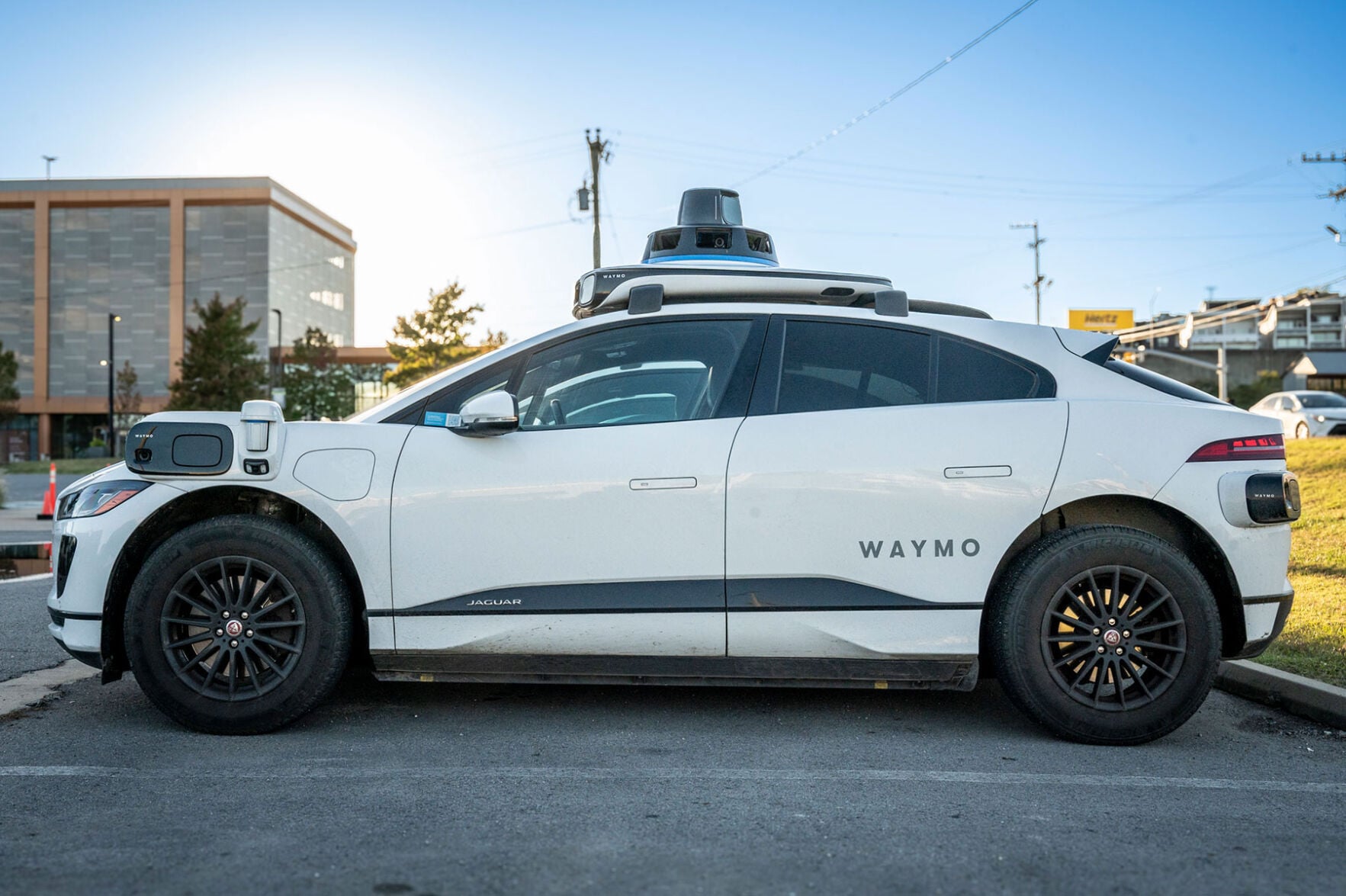

On April 7, tech giant Alphabet officially rolled out its self-driving car company, Waymo, here in Nashville. Since then, the company’s electric Jaguar I-PACE SUVs — easy to spot, thanks to their many exterior cameras and radar sensors — have been all over the city, occasionally making headlines due to awkward traffic incidents. With Waymo planning to expand via Lyft later this year, our managing editor recently did some research and took a ride in order to bring you this FAQ.
Did you ride in one?
I did. And man, it was a surreal experience: The empty driver’s seat with a steering wheel rotating on its own is plain creepy. I took a car from downtown to Wedgewood-Houston to stay within the limited service area, which currently does not include highways. The car successfully navigated by crosswalks and party vehicles, took a busy left turn and observed the speed limit.
How do these things work?
Waymo’s fleet of vehicles are rigged with a lot of cameras and radars to detect their surroundings, creating a 360-degree view around the car. I saw the technology at work during my ride: When stopped at one busy intersection, ghostly images of other cars and even a motorcycle appeared on the GPS screen. The company (owned by Alphabet, Google’s parent company) says the vehicle software uses all that data and, with artificial intelligence, calculates responses to what’s happening on the road.
Wait, AI? Like Chat GPT?
Not exactly. While there are similar “neural network” processes involved, the car is not a chatbot. The AI is dedicated to navigating traffic. In 2017, The Atlantic peeked behind the curtain to see how, in addition to crunching real-world data, engineers simulate as many as 8 million miles of traffic per day in a simulation software.
Is it safe?
As impressive as the tech is, I think it’s too early in deployment to say yes. I was pretty nervous during my uneventful trip, especially when surrounded by so many pedestrians and transpotainment vehicles. I felt more comfortable on the straightforward Eighth Avenue and the emptier side streets of WeHo. The car didn’t navigate traffic much differently than any human driver I’ve ridden with, though something about the turning felt more awkward and rigid.
According to Waymo’s numbers, its vehicles are involved in “92 percent fewer” injury-causing accidents. Skeptics point out that the safety record is based on the relatively low number of miles traveled by self-driven cars, though you could counter that the slow rollout itself is a safety measure. Still, it’s not like their mere presence has improved safety. Waymo skeptics at Streetsblog note that San Francisco and Phoenix have not seen decreases in traffic injuries and deaths since the self-driving fleets launched.
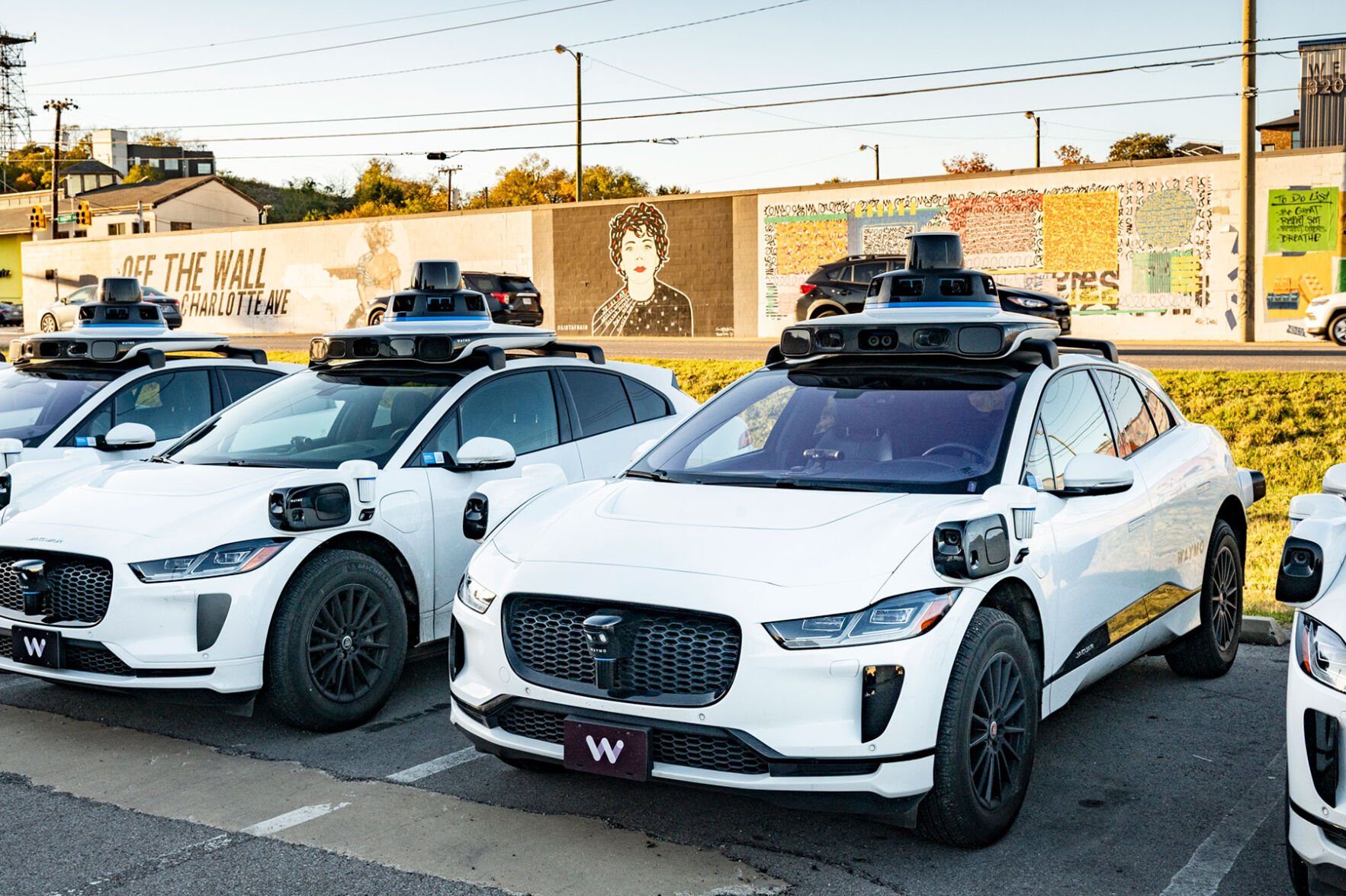
The autonomous vehicle company will partner with Lyft in Nashville next year for a full rollout of driverless robotaxis
I still don’t trust it.
You’re not alone! After I shared footage of my Waymo ride, my own mother asked if I was crazy and told me to “never do that again.” I am 36 years old. Beyond my family, only 13 percent of respondents to a 2025 AAA survey said they trust autonomous vehicles (AVs). A less scientific poll of The Tennessean’s readership found a 50/50 split on how locals feel about these cars.
Headlines don’t help. In January a Waymo hit and injured a child in Santa Monica, Calif. In Austin, they’re illegally passing stopped school buses. Locally, WSMV spoke to an anonymous test driver who experienced near-collisions and witnessed erratic AI behavior while riding through Nashville streets. It was enough to make him quit.
What if I get hit by one of these things?
The vehicles are required to be insured, and if the AV caused the accident, the company can be held liable the way a driver would be. If you’re injured, find a lawyer!
And if I see one stalled in the road?
Metro’s resident-service system hubNashville has a page dedicated to these complaints. They’ve already received more than 50 complaints since Waymo launched on April 7, according to the Nashville Banner.
Who let these things on the road? I thought we were supposed to get better buses.
Blame the state of Tennessee. Lawmakers passed a bill in 2017 that local jurisdictions can’t regulate autonomous vehicles. Nashville couldn’t stop the rollout, though Metro can still fine these cars for traffic infractions. (A Waymo representative says the company does consider local regulations when choosing a new market.)
As for public transit improvements — yeah, that’s part of the skepticism. Even if autonomous vehicles are safer than human drivers, they don’t reduce the number of human-crushing cars on the road to the massive degree that increased bus ridership would. In fact, San Francisco officials speculate that demand for these robo rides will lead to higher traffic congestion.
Will I get trapped in one forever?
Not forever ever, but there have been instances of Waymos halting in heavy rainstorms and power outages. In Nashville, we’ve already seen the cars get stuck in construction sites and in 12South. (That last one could happen to anyone.) Nashville is prone to some intense weather, including tornadoes, severe thunderstorms and ice storms. Waymo comms says the company abides by local guidance when it comes to driving conditions, in addition to the company’s own safety policies. I saw some evidence of this on Saturday during the Music City Marathon: The app informed me certain routes and pickup locations were inaccessible due to road closures.
And you’re not entirely disconnected from humanity. There are remote assistants who help vehicles get out of tricky situations — though it appears they can’t operate the vehicles. Many are based in the Philippines, which has raised safety concerns for federal lawmakers, such as the responsiveness of such distant associates.



Post a comment as anonymous
Report
Watch this discussion.
(0) comments
Welcome to the discussion.
Log In
Welcome to the discussion.
Keep it clean. Please avoid obscene, vulgar, lewd, racist or otherwise abusive language. Comments featuring hate speech or threatening or violent content will not be tolerated.
PLEASE TURN OFF YOUR CAPS LOCK.
Be truthful. Don't knowingly lie or mislead.
Be proactive. Use the “report” link on any comment that violates our comment policy.
Share with us. We'd love to hear your feedback.