


Tennessee’s highest officials and its highest courts have heard pleas for mercy, arguments pointing to systemic injustice and claims of innocence. But it took a once-in-a-century pandemic to move them to pause the state’s historic execution spree.
On Feb. 20, the state executed Nick Sutton, the seventh man put to death in Tennessee in 18 months. His electrocution was a continuation of a run of state killings unlike any seen here since the 1940s. Gov. Bill Lee has allowed four executions since taking office, just as his predecessor allowed three — with a detached, false neutrality, as if it wasn’t a governor’s place to get too involved in this ugly business. Then the coronavirus breached the borders of our country and our state, and the walls of our prisons. The death chamber, like so much else, was temporarily closed. First the Tennessee Supreme Court, which rescheduled two executions, then the governor, who delayed two more with reprieves, issued orders based on logic taken from a dark satire: A state execution is too large a gathering during a pandemic — someone might get sick.
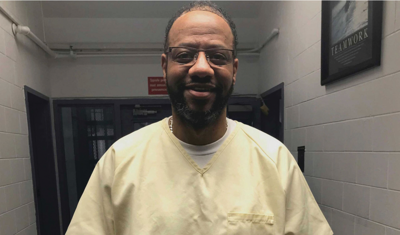
That concern is real, of course. The federal government has executed 10 men in five months, resulting in a COVID-19 outbreak on the federal death row in Terre Haute, Ind., as well as infections among attorneys, spiritual advisers and even the executioners. But the fact that only a pandemic of this devastating magnitude could slow Tennessee’s death penalty machine raises unsettling questions. Pervis Payne was set to be executed on Dec. 3 and got within a month of his date — so close that prison officials had already asked him to choose between lethal injection and the electric chair — before Lee granted him a temporary reprieve, citing the pandemic. Payne is an intellectually disabled Black man who was sentenced to death for the murder of a white woman in Memphis but has maintained his innocence for more than 30 years, and he was awaiting the results of DNA testing when the reprieve came through. The questions surrounding Payne’s case — from the role of racism in his conviction and the effects of his intellectual disability to his innocence claim — are longstanding and serious. Was the governor willing to push ahead with Payne’s execution despite all of them? We have no reason to assume otherwise.
With COVID-19 cases surging at the same time as the vaccine rollout begins, the outlook for 2021 is shrouded in a dense fog.
The temporary reprieve Lee granted for Harold Nichols in July expires on New Year’s Eve, meaning the Tennessee Supreme Court could soon set a new execution date for him. As of this writing, Oscar Smith is scheduled to be executed on Feb. 4. Byron Black’s 2020 execution date had been rescheduled to April 8, 2021, but has since been stayed due to a COVID-19 outbreak on Tennessee’s death row and the infection of Black’s attorneys. Payne’s temporary reprieve lasts until April 9. The case of Abu-Ali Abdur’Rahman is still being litigated as Tennessee Attorney General Herbert Slatery fights to have him executed despite Nashville District Attorney Glenn Funk’s move to vacate the sentence because of racial discrimination in jury selection and other prosecutorial misconduct at the original trial. And Slatery continues to seek execution dates for other men as well.
After nine months of this deadly, destructive and disruptive pandemic, it is impossible not to think of getting back to normal again. Whenever that elusive state returns, it will bring many beautiful things with it. And it will also bring the return of a grim Tennessee ritual — gatherings at Riverbend Maximum Security Institution for the methodical killing of men.



