

Eight feet tall and 47 years old, Tarra the elephant is beloved by many Tennesseans. She’s known for her famous friendship with a dog named Bella (the bestselling book Tarra & Bella: The Elephant and Dog Who Became Best Friends was featured in Dolly Parton’s Imagination Library), and was the first inhabitant of The Elephant Sanctuary in Hohenwald, Tenn. — the largest wildlife habitat for retired elephants in the United States. She is also the subject of a legal saga that has sparked serious debate among wildlife experts.
The 10-year battle for Tarra’s custody came to a close on Nov. 18, when she moved to Georgia to live with her original owner, Carol Buckley.
Tarra and Buckley met in September 1974; Buckley was 19 and Tarra was just 1 year old. At the time, Tarra was being used to advertise a chain of tire shops in California. Buckley and Tarra lived and traveled together for two decades, with Tarra performing in the circus and on TV, and briefly living at the Nashville Zoo. Then, in 1995, Buckley founded The Elephant Sanctuary to give Tarra space for a fuller, more natural life.
But in 2010, after a series of bitter management disputes, the board of The Elephant Sanctuary dismissed Buckley. Buckley says that initially, she “fully intended” for Tarra to remain at the sanctuary. “At that time I didn’t see the sanctuary changing their philosophy or their management,” Buckley says. “I knew that sanctuary was designed by me for Tarra. So it was perfect for her.”
But when she was unable to visit Tarra or have input on her care, Buckley sued TES for custody and began a legal battle that would last for years. Buckley won custody of Tarra in September of this year. Two months later, she drove Tarra from Hohenwald to Elephant Refuge North America, Buckley’s establishment in Attapulgus, Ga.
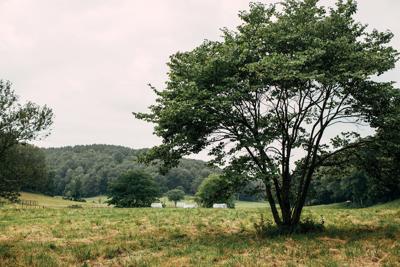
Creating a space for elephants to thrive is a complicated business. They are highly intelligent, social and curious animals — “evolved,” as Buckley describes them. They walk between 30 and 50 miles each day, spend much of their time foraging for food, and have complex and rich social lives. They need to walk on a variety of natural surfaces to wear down their nails and foot pads, and are happiest when they can live out natural behaviors like bathing, exploring, dusting and interacting with other elephants. To facilitate these needs, both The Elephant Sanctuary and Elephant Refuge North America include miles of grassland, natural streams, hills and forests.
Beyond their physical needs, every elephant who “retires” to a sanctuary or refuge comes with its own complex psychological history. Janice Zeitlin, vice president and CEO of The Elephant Sanctuary, shares the example of Nosey, a retired circus elephant who performed for 29 years before animal abuse allegations sent her to TES. Zeitlin says for most elephants who retire to the sanctuary, the first goal is to teach “natural elephant behaviors,” and to help elephants adapt to “a newfound level of choice.” To meet this goal, TES introduced Nosey to small tree limbs and positioned hay in wire cages high in trees to “entice her to reach, strengthening her neck and trunk muscles” Soon, she was “taking the initiative to push on trees in the habitat and knocking them down, like an elephant would do in the wild.”
Zeitlin says freedom of choice is a new experience for most elephants who come to the sanctuary. “It is always a much-celebrated moment when staff see an elephant recognize that they have autonomy, that they can make a choice,” she says.
Some of the debate over Tarra’s relocation centered on her ability to develop relationships with other elephants — and her relationship with Buckley. The Elephant Sanctuary has a protected contact model, which uses targeting, positive reinforcement and often a barrier to help elephants receive routine care. Crucially, Zeitlin says, “In the P.C. system, caregivers function outside the elephant social hierarchy and do not attempt to establish a position of social dominance.”
Elephant Refuge North America also uses an approach based on freedom of choice and non-dominance, and actively supports elephants in “developing the confidence and skills required to bond with other elephants.” However, its philosophy includes the option for more extensive human contact. According to the ERNA website: “Because some captive-held elephants were separated from their mother and family at a very young age, they never learned how to develop close bonds with other elephants. We will support these elephants in developing loving relationships with whomever they trust and feel compatible with, most often their caregivers. For these elephants, building and maintaining strong trusting relationships with their caregivers is key to their wellbeing.”
Buckley is recognized for her work with elephants, and founded the organization Elephant Aid International. She’s developed several innovative training models for elephant care, and works internationally with mahouts (elephant trainers) and Asian governments to improve elephant welfare. She says those who suggest Tarra would be better off with only other elephants don’t know her. “The idea that some would say that she’s an elephant and she can get all of her emotional needs met from other elephants — well, tell that to Tarra. The animals at the refuge are here in captivity. It’s our responsibility to come to them as they are, and design management programs that fit them — and not all elephants are the same.” (It’s worth noting that ERNA recently welcomed Bo, a 34-year-old Asian elephant. Buckley says she’s been approached about four more elephants, but since she feels Bo and Tarra have good potential to become close, she wants to give them a chance to bond first.)
The Elephant Sanctuary did not directly comment on Tarra’s move to Georgia, but did point the Scene to a post on its site titled “Celebrating Tarra,” which includes this statement from Zeitlin: “The Sanctuary is honored to have provided care for Tarra for 26 years, and we express gratitude for all the things she has taught us. She will be truly missed here, but will always be a part of our family and our herd.”
Buckley says that after 12 years apart from Tarra, she “actually, in all honesty, did not know how [Tarra] was going to be when she arrived.” On the drive to Georgia, she was preparing for “whatever it was going to be.”
“You know what?” says Buckley. “I should’ve known better.” Buckley says that Tarra stepped out of the trailer, saw Buckley, and “her eyes just went, ‘Bing!’ And then she just started into her Tarra chatter. And I went, ‘There you are. This is my girl.’ And that was it. No transition needed.”
“It was like not one minute had passed, between the time I last saw her and right then,” says Buckley. “I stacked the deck in my favor for her,” she adds, “because I had a dog who likes elephants, and Tarra loves dogs.”
The day of Tarra’s departure, The Elephant Sanctuary wrote on social media that staff members were “deeply disappointed in the decision to relocate Tarra from her home of 26 years and her companions, Sissy and Nosey. It has been a difficult day, and our goodbyes have been tearful.”
Both The Elephant Sanctuary and Buckley have won international acclaim for their work with elephants. The Elephant Sanctuary has cared for 28 elephants since 1995, and is accredited by both the Global Foundation of Animal Sanctuaries and the Association of Zoos and Aquariums. Buckley says The Elephant Sanctuary and Elephant Refuge North America are two of just three refuges for captive elephants in the country. (The third is PAWS, a celebrated wildlife sanctuary in California.) All three organizations continue to fight for the well-being of elephants around the world.



Post a comment as anonymous
Report
Watch this discussion.
(0) comments
Welcome to the discussion.
Log In
Welcome to the discussion.
Keep it clean. Please avoid obscene, vulgar, lewd, racist or otherwise abusive language. Comments featuring hate speech or threatening or violent content will not be tolerated.
PLEASE TURN OFF YOUR CAPS LOCK.
Be truthful. Don't knowingly lie or mislead.
Be proactive. Use the “report” link on any comment that violates our comment policy.
Share with us. We'd love to hear your feedback.