

On Nov. 25, PEN America — a nonprofit organization that works to “defend writers, artists, and journalists and protect free expression worldwide” — issued an open letter to Tennessee Secretary of State Tre Hargett. The letter demands “immediate clarification” from Hargett on an “age-appropriateness review” that, as the Scene previously reported, has raised more questions than it has answered.
“These types of reviews create immense administrative burdens for library systems and often lead to illegal censorship, which raises liability risks for local communities and the state,” the letter reads. “Many libraries, uncertain about the legal and procedural basis for the mandate, have had to redirect limited resources, with some temporarily closing branches to complete these reviews, which are implied to be necessary for future funding.”
Thirty-three other organizations signed onto the letter, including the American Library Association, Macmillan Publishers, Penguin Random House Publishing and Simon & Schuster.

Librarians ‘horrified’ as hundreds of books are at risk of removal during temporary library closures
Hargett’s office this fall issued a statewide directive that was first made public via leaks from within the Stones River Regional Library system, which includes public libraries in roughly a dozen Middle Tennessee counties (not including Davidson County). In the directive, the secretary of state told recipients to “identify any materials that may be inconsistent with Tennessee age-appropriateness laws, in violation of any federal law, including President Trump’s [gender ideology] Executive Order, or otherwise contrary to any other applicable state or federal laws.”
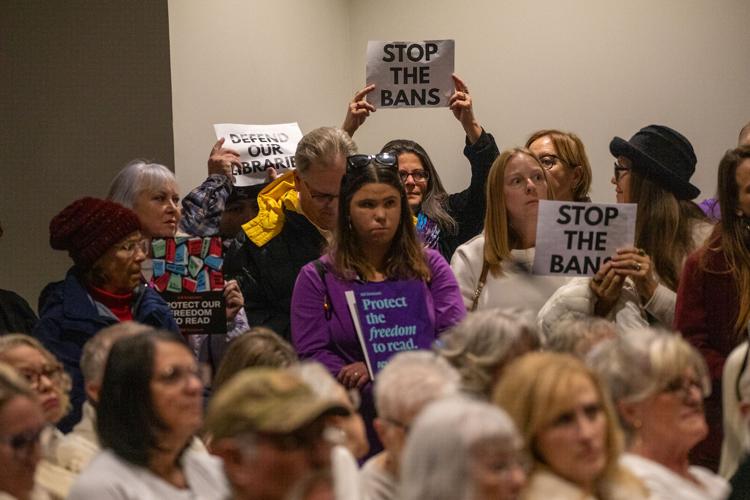
The tension surrounding the review was most evident during a Dec. 1 Rutherford County Library System board meeting that drew more than 100 people, including dozens of supporters of the review process. The review’s supporters wore white shirts and gathered for a group prayer before the meeting inside Murfreesboro City Hall.
Several RCLS staff members also attended the meeting, all dressed in black. Dozens of other attendees were present to protest the review, many of whom wore purple — the color of the Rutherford County Library Alliance, a nonprofit that supports county libraries and librarians. Some of the protesters also called for the removal of Chairman Cody York, who survived a 2-7 vote to have him removed as chair after Rutherford County Library System Director Luanne James alleged that he pressured her to begin targeting books for removal.
When questioned about her allegations by board members, James said York’s directives were verbal in one-on-one meetings starting as early as her second day on the job — meaning she didn’t have evidence in writing to prove the allegations.
“I categorically deny any wrongdoing,” York said, adding that he “never requested information that is inappropriate.” York said the data he requested was information “that you couldn’t connect a person with a book that’s checked out.”
The allegations were met with verbal outrage from protesters, who also scoffed at York’s denial and rebuttal.
York did acknowledge, as James alleged, that he said the RCLS should not participate in an annual banned books week, saying, “Our funding bodies are paying attention to what we do.”
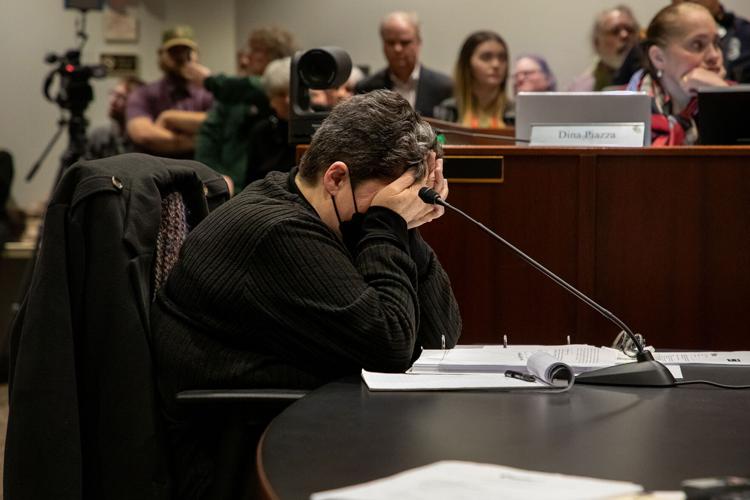
At one point, James — who was hired in July and recently passed an employment probationary period — tearfully buried her head in her hands, and asked for assurance that she would not be retaliated against for her testimony as a whistleblower.
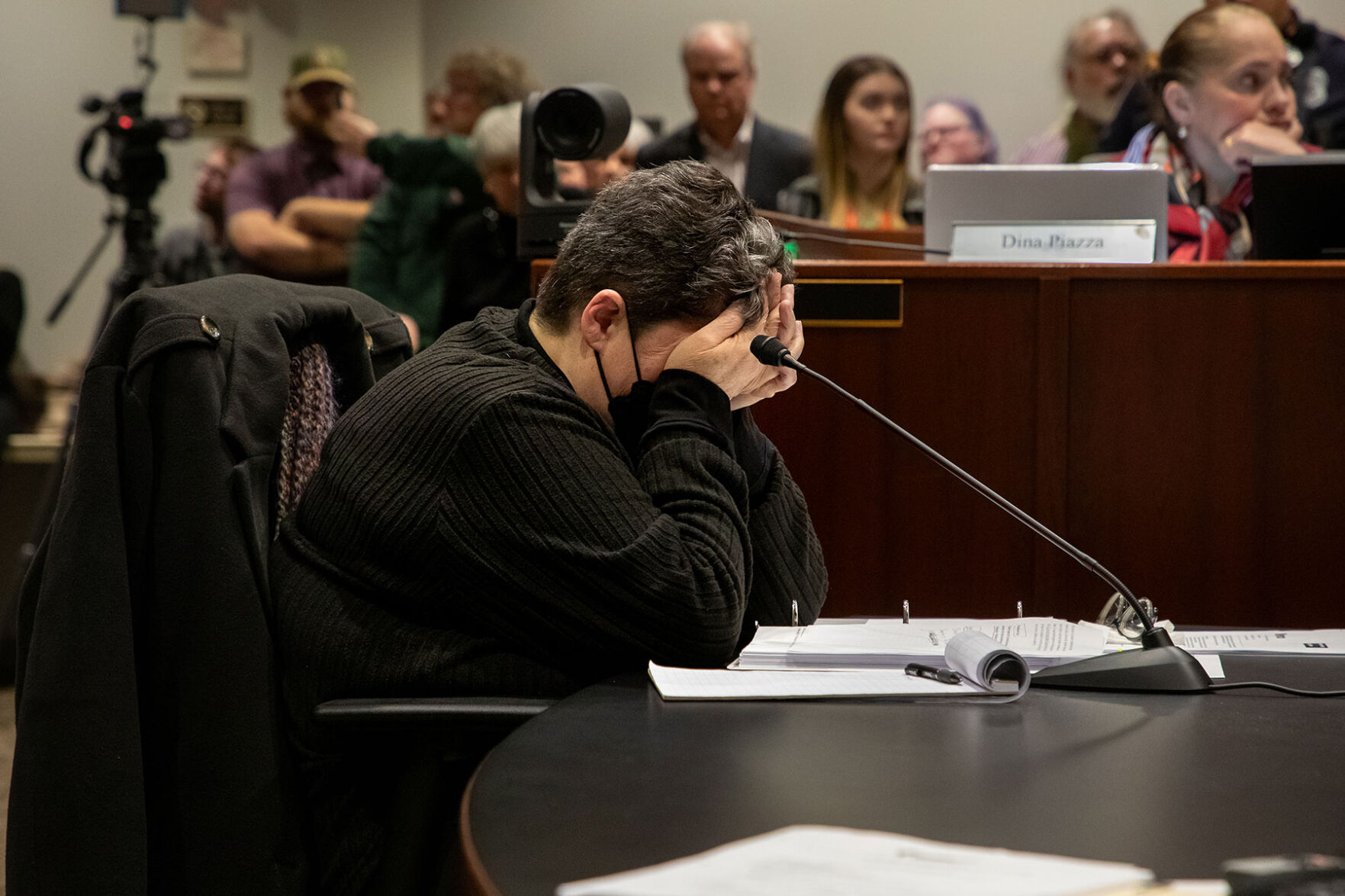
Luanne James during a Rutherford County Library System board meeting in Murfreesboro, Dec. 1
“I’m being told on the second day what my vision should be for the next year with regards to removing books, and I had the reassurance that all of you would back me up,” James said. James alleged that York personally checked out several books he wanted permanently removed from library shelves, and later named other books he wanted removed — all before Hargett’s office issued its directive in October.
In addition to York’s role on the library board, he also works as the county’s chief information officer, “where he leads initiatives in cybersecurity, infrastructure modernization, and digital transformation.” He previously worked under Hargett as the director of the Division of Publications.
She also alleged that York requested private data including library patrons’ names, addresses, and number of children and adults in households. James said York asked for patrons’ checkout history, information she said she did not give him. York also allegedly demanded to review the response to a public records request before allowing the records and response be released.
The Dec. 1 meeting saw the board, as York put it, “ratify my decision to retain [legal] counsel” for the board throughout the review process. That decision was approved in a 7-2 vote. Several protesters took issue with York’s selection of the American Center for Law and Justice, an overtly right-wing Christian evangelical organization that was “founded in 1990 with the mandate to protect religious and constitutional freedoms.”
The agreement for the ACLJ to serve as the board’s counsel was authored by the group’s senior litigation counsel Abigail Southerland, who in a promotional video described some of the organization’s clients as “the hands and feet of Jesus.”
Hours before the Dec. 1 meeting, the National Coalition Against Censorship sent an open letter to the RCLS Board. The letter reads in part: “We urge you to remember that the First Amendment prevents a library from making viewpoint-based removals and trumps any federal or state law to the contrary. Any legal counsel advising the Board on its obligations should remind the library of the First Amendment’s supremacy over other laws, and certainly over partisan or political fights.”
The RCLS is still conducting a physical review of 2,200 books that could be recommended for permanent removal from library shelves, but more titles could be added to that list for review. The Rutherford County Library System was granted a two-week extension by the secretary of state’s office to complete the review, with board members set to review the content of the books and issue their recommendations to the state during a Feb. 3 meeting.



Post a comment as anonymous
Report
Watch this discussion.
(0) comments
Welcome to the discussion.
Log In
Welcome to the discussion.
Keep it clean. Please avoid obscene, vulgar, lewd, racist or otherwise abusive language. Comments featuring hate speech or threatening or violent content will not be tolerated.
PLEASE TURN OFF YOUR CAPS LOCK.
Be truthful. Don't knowingly lie or mislead.
Be proactive. Use the “report” link on any comment that violates our comment policy.
Share with us. We'd love to hear your feedback.