

Street View is a monthly column taking a close look at development-related issues affecting different neighborhoods throughout the city.
Shortly after Winter Storm Fern, Nashville started the long process of rebuilding. Power came back on slowly, in stages across the city. People who’d been displaced by the power outages returned to their homes. Inquiries into Nashville Electric Service’s response began.
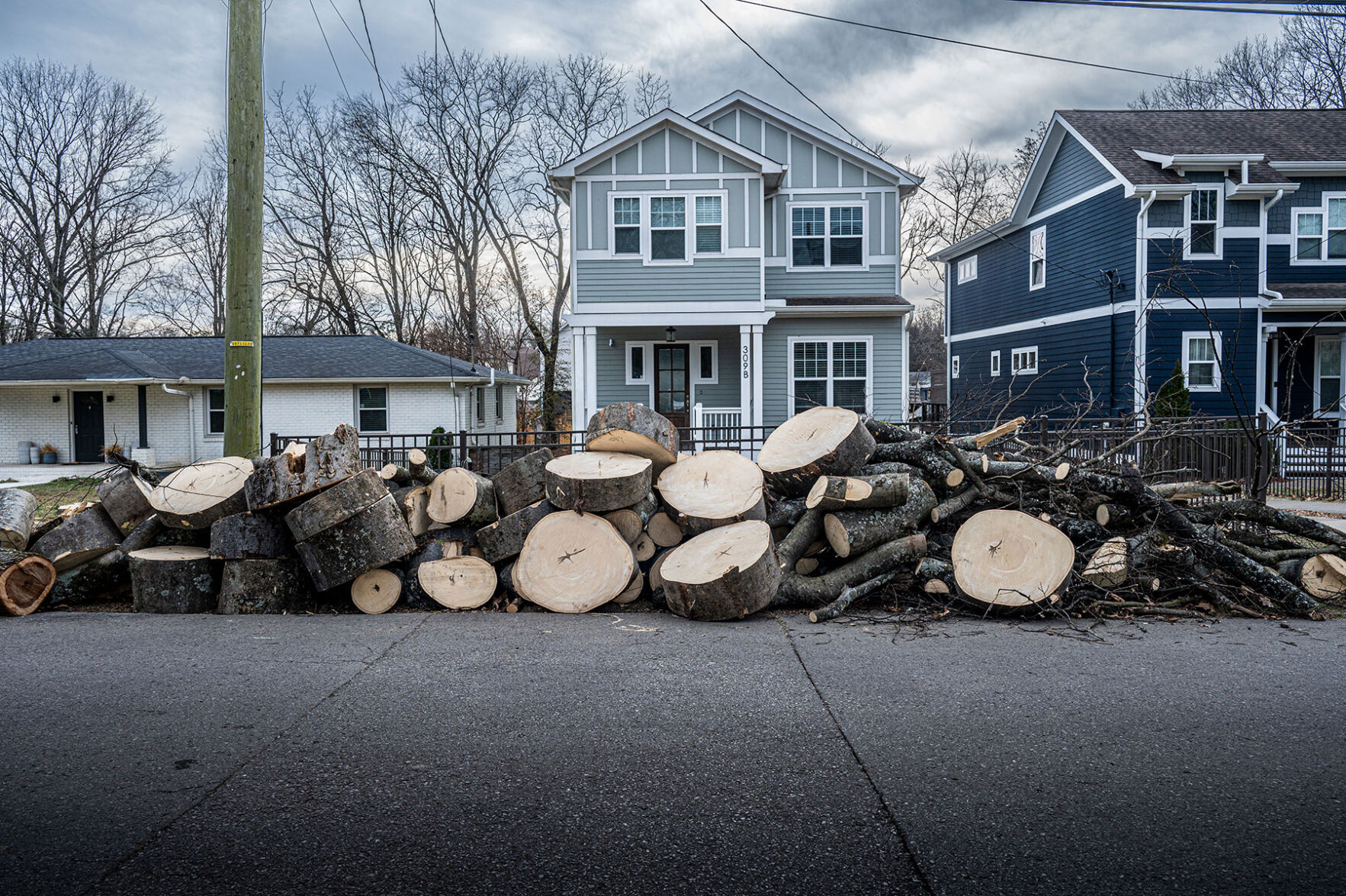
But as weeks went by and the city recovered, a major piece of the restoration puzzle loomed large in Nashville’s leafy streets: What happens to all the tree debris?
There’s certainly a lot of it. At the time of this writing, the Nashville Department of Transportation and Multimodal Infrastructure tells the Scene they’ve picked up more than 933,000 cubic yards of material. (For reference, a cubic yard is about the size of a small washing machine.) This figure includes just downed trees and other vegetation — not other material like construction debris.
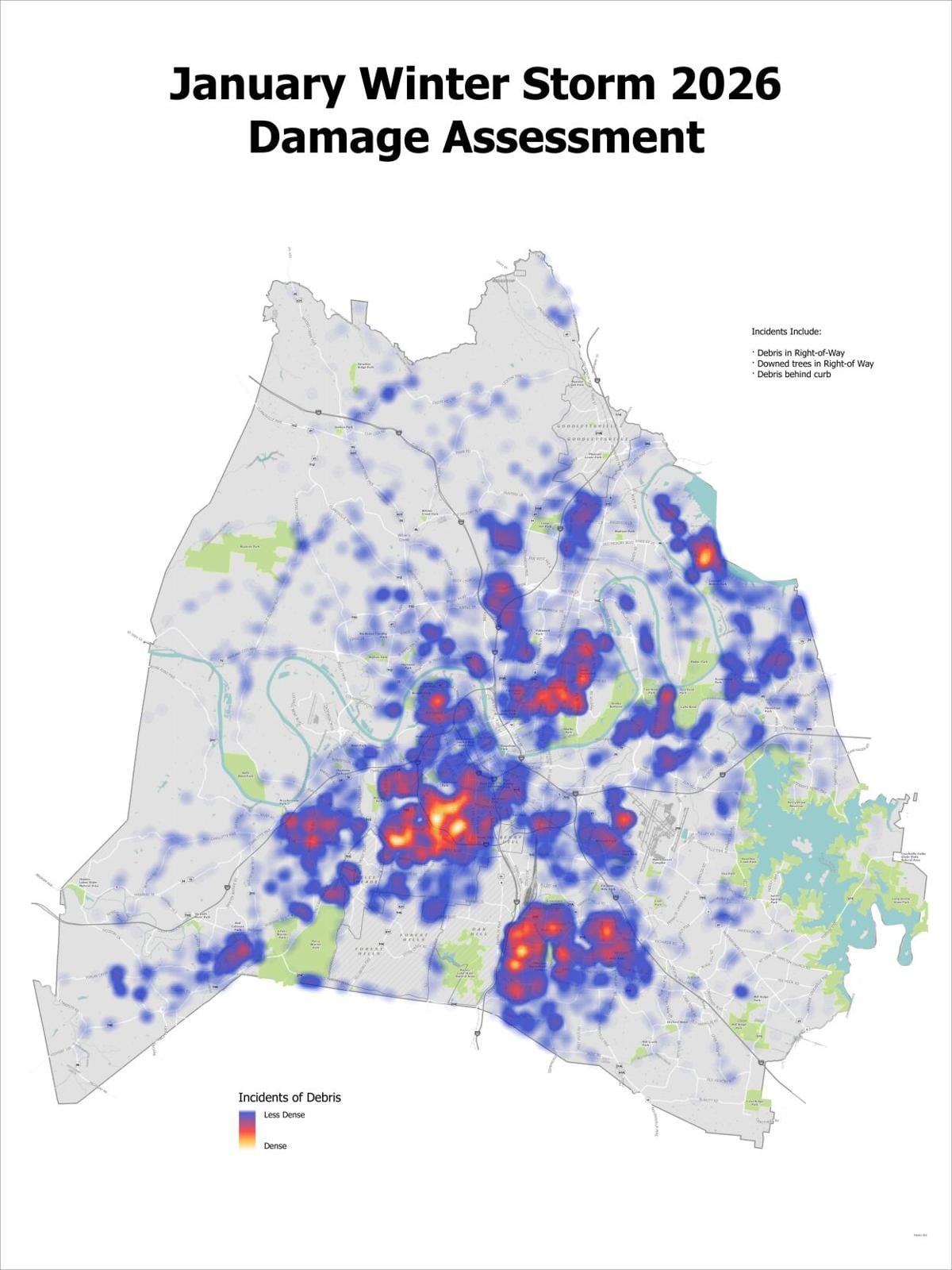
NDOT representative Brendan Scully tells the Scene that the department completed two countywide assessments of storm damage and debris blocking streets and sidewalks; this informed how they phased debris collection across the city. NDOT also produced a heat map of areas hit hardest by the storm. According to their website, many streets will receive multiple rounds of collection.
All the debris is being tracked too. As crews collect materials, Scully says an “embedded monitor” rides with them. A crew member “documents the location of the debris collection as well as the grinding and weighing process at the four transfer locations.” This approach means that after the cleanup, the city can be reimbursed by FEMA. Right now, NDOT is operating four transfer sites: one near the Nashville International Airport, one off County Hospital Road in Bordeaux, one off Coley Davis Road in Bellevue, and one close to Myatt Drive in Madison. The locations are not open to the public.
At these transfer sites, crews grind up the vegetation from NDOT. Then it’s brought to Living Earth, a center that turns organic waste into mulch and other useful garden materials. Nashville’s Living Earth locations are part of a larger network of sites; the original Living Earth is a compost manufacturer in Texas that’s been in business since 1985. At sites across Texas and Tennessee, they help divert more than 1 million tons of material from landfills every year.

Our coverage of January's severe ice storm
But before a downed backyard tree becomes mulch, it represents a significant effort from both NDOT crews and processing employees. Scully says NDOT currently has more than 100 crews collecting debris during 12-hour shifts, seven days a week.
Individual households can also drop off debris at one of Living Earth’s locations. But like NDOT, they’re busy: When contacted by the Scene, a Living Earth employee said they’ve had a nonstop influx of customers every day since cleanup began.
While the downed trees and limbs have a clear pathway to becoming something new, the future of Nashville’s remaining trees isn’t quite as certain. In early February, officials estimated that Winter Storm Fern had damaged or destroyed approximately 6,000 trees in Metro Parks. Countless more have been damaged across the city. In the coming weeks, a specialized team of urban forestry experts will assess the storm’s damage on Nashville’s urban tree canopy and make recommendations to the city government about replanting.
While a single downed tree can mean habitat loss for thousands of organisms, it doesn’t always signal the end of a tree’s useful life. In fact, there are significant environmental benefits to leaving some debris alone if you can. Dead trees and logs play a vital role in forest and suburban ecosystems, providing food and places to hide for wildlife, supporting biodiversity and enriching soil health.
But if people still need to clear brush, Scully says there’s help available. If you can’t get debris to the curb, you can call 211 or visit nashvilleresponds.com for resources. And if you require special accommodations, you can also request them through Hub Nashville by visiting hub.nashville.gov or calling 311.
In the meantime, storm cleanup efforts are still ongoing. But one thing is certain: NDOT has already moved a lot of mulch.



Post a comment as anonymous
Report
Watch this discussion.
(0) comments
Welcome to the discussion.
Log In
Welcome to the discussion.
Keep it clean. Please avoid obscene, vulgar, lewd, racist or otherwise abusive language. Comments featuring hate speech or threatening or violent content will not be tolerated.
PLEASE TURN OFF YOUR CAPS LOCK.
Be truthful. Don't knowingly lie or mislead.
Be proactive. Use the “report” link on any comment that violates our comment policy.
Share with us. We'd love to hear your feedback.