
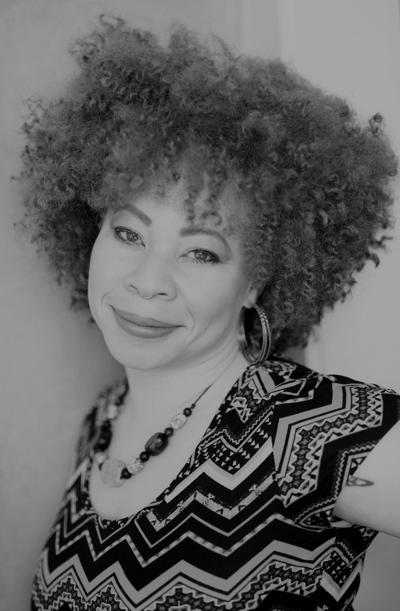


Destiny O. Birdsong
I fell in love with Nashville the moment I arrived at Fisk University as a freshman in January 2000, and for many years, I thought it would always be my second home. But the past 10 months have given me pause. While Nashville’s frenetic pace of gentrification has certainly committed acts of economic violence against people who can neither afford to keep living here nor move elsewhere, it has also created another phenomenon: instances of microaggressions, threats and physical violence that have made it difficult for many of us to want to stay. This city is systematically eliminating historic neighborhoods and businesses, but it’s also driving away one of its most valuable assets: young Black residents like me.
About two months ago, when I walked into Bellevue’s Value Vet location, I had no idea I’d be ticking battery and racism off of the day’s bingo card. I spent most of my half-hour visit seated in the chair farthest from both the door and the service window, watching news stories about the COVID-19 Delta variant and half-listening to a white woman in blue scrubs berate the receptionist for being unable to find her dogs’ vaccination records. As she grew more irate, I grew more anxious, tapping my phone’s PopSocket. I hadn’t planned to be in such a small public space for so long, but my elderly dog needed her eye medicine. Suddenly, I felt someone standing over me. It was the customer.
“Stop fucking tapping!” she screamed.
I yanked out my earbuds and stared in disbelief. A second employee emerged from the back of the office, and I turned to her, hoping she would intervene. Instead, she turned on her heel and walked away. Neither she nor the receptionist said a word.
I looked up at the unmasked woman towering over me.
“No,” I said. “You’re looking for records that don’t exist. You need to lower your voice, and you need to leave me alone.”
She stomped back toward the service window. “I can’t take this,” she sobbed, dramatically and disingenuously. “Just give me whatever receipts you have for my visits so I can go.”
While her false tears weren’t surprising, what she did on her way out of the door certainly was.
“You’re an asshole!” she hissed as we passed each other. Then I felt a hard thump on my lower back. It was my very large and very full tote bag, which the woman either struck or kicked on her way out. After asking the receptionist to call the police, I followed the customer to her car, recording both her and her license plate number. Then I returned to the office.
“Did you call?” I asked.
“No,” the receptionist said flippantly. “I’m not getting into whatever that was.”
As I waited on hold with the non-emergency number, something else hit me. I was a Black woman in an all-white space, and there wasn’t a single person there who was interested in my safety. While my money was welcome, I was not. As I took the tiny $50 tube of medication from her, I shook my head.
“White people,” I said ruefully before walking away.
One week later, I received a sloppily taped envelope containing 14 years’ worth of my dog’s medical records and a letter. “It has come to my attention that you have indicated displeasure with our services,” it read. “You became hostile with our staff and used words we do not tolerate in our clinic.” It was allegedly written (though strangely, not signed) by Dr. Robert Watts, the practice owner. I — the person who’d sat quietly and watched a customer treat a worker so badly that I’d felt sorry for her — was labeled “hostile” and unfit to receive services. To say that I was enraged would be an understatement. But the far more familiar feeling, the one as familiar to me as the white woman’s tears, was exhaustion.
When I first moved off campus to Bellevue in 2001, it was a diverse enclave. White people lived alongside Asian families whose elderly grandfathers did tai chi outside in the mornings, and Black college students jogged past South Asian mothers pushing toddlers in strollers on evening walks. But the Bellevue I returned to in 2018 has lost much of that cultural verve. The frenzy of progress has many longtime residents shook. They eye everything that “looks like it doesn’t belong” — whether it’s a sign advertising new condominiums or a person of color — fearfully and in many cases with hostility. Message boards on apps like NextDoor are rife with reports of “suspicious” individuals who a few years ago would have simply been perceived as doing what they most likely are doing: trying to get through the day, trying to do their jobs — trying to live.
This phenomenon of over-policing isn’t unique to the suburbs. Danyelle Valentine, a recent Vanderbilt Ph.D. graduate who now works at the university as a full-time lecturer, has been stopped several times, both in local stores and on campus, and questioned. One night, a Vanderbilt University Police Department officer pulled her over to inquire where she was headed, only driving away after she showed her student ID. In another instance, a security guard who’d waved a group of white students through the doors of the locked library scrutinized Valentine’s ID before asking incredulously if it was really her. Valentine viewed both instances as more than simple affronts to her safety — she felt they were also threats to her sense of belonging. “To be questioned and scrutinized, that my presence is valid, that my identity is valid because I look like a different Black person in my student ID than I did in that moment?” she says in disbelief. “That always triggers that sense of self-doubt [about my] validity: Do I belong in this space? Do I deserve to be in this space?”
I’ve recently begun asking similar questions about Nashville. I still love this city as much as I did during my college years, when I witnessed my first snowstorm and drove my first car (and ran out of gas) on I-40. But I’m older now and have concerns not only for my safety, but for my emotional well-being. As Valentine points out, the psychological impact of such racism can be profound. “I have a genuine underlying fear that even though I’m now a faculty member, I’m still young, I’m still Black, I can still be questioned,” she says. “It wears on you.”
In many ways, I came of age here, but my recent encounters have made me unsure how long I can stay. Joshua Moore, a Black podcast host and audio producer who grew up in nearby Hendersonville and still has family in the area, articulated a feeling I’ve been grappling with for months. “I would like to live in a city where I feel safe in my body,” he says. “Where I feel at home inside that sense of safety. That is not anything that I’ve ever felt in Nashville — both at home and safe.”
I am a hopeless optimist; I believe that my second hometown could be that kind of place. But in spite of all Nashville’s progress, the realist in me questions whether some of its residents are willing to let it be.



