
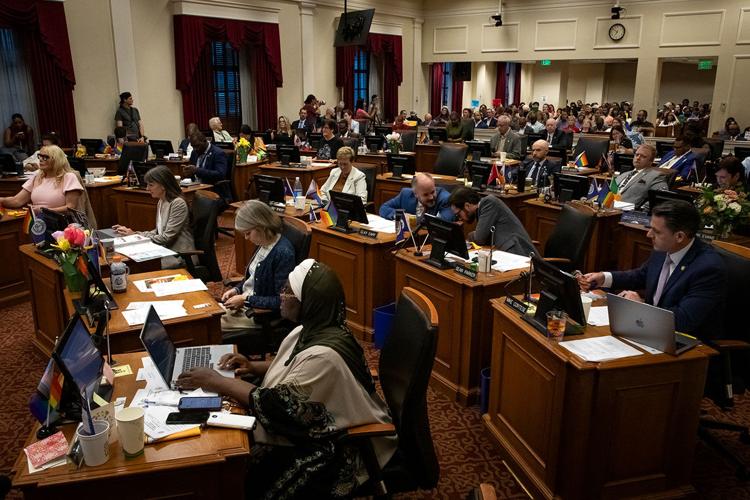

Split Nashville into 35 districts, and pretty quickly neighbors become councilmembers. Enjoy zoning quirks enough, start regularly attending weeknight neighborhood meetings and raise a few thousand dollars, and suddenly an after-hours hobby turns into a part-time job. For a little more than $25,000 a year, 40 members (35 district representatives plus five at-large members elected countywide) legislate twice a month — in between, there are emails, community meetings and the regular chilling fear that you and your loved ones face existential danger.
“ You have to believe in democracy, and you have to believe in local government’s ability to make life better for people,” says Councilmember At-Large Quin Evans Segall, an attorney who won her seat in 2023. “But don’t think for even a second that it is gonna be easy, that you’re going to have any privacy, or that you’re going to feel safe.”
Routine zoning bills and land acknowledgments have led to death threats, doxxing and heated public confrontations, driving at least one councilmember to temporarily live with a friend and others to have tearful conversations with their spouses and children. Many councilmembers can directly quote descriptions of violent personal attacks directed at them via emails and social media. District 14 Councilmember Jordan Huffman — who says he’s had four death threats against himself and others against his wife and young child — started carrying his firearm at community meetings and other public appearances midway through his term. Huffman and another member have had their homes’ floor plans posted on social media without their knowledge.

Metropolitik: A pending opinion from the Tennessee Supreme Court could define 2027 elections
At a public meeting over the summer, constituents joined District 20 Councilmember Rollin Horton to discuss a specific plan development project in The Nations. Partway through, after Horton had left for another meeting, a disgruntled opponent wove details about Horton’s recent divorce into a larger tirade against the specific plan. According to several members of the Metro Council, local politics have become increasingly personal this term, punctuated by disturbing violations of members’ privacy.
“ My constituents aren’t random people flung out across a congressional district or an entire state,” Horton tells the Scene. “They’re my neighbors. I know them, they know me, and we see each other at the park or a restaurant or a coffee shop. But as soon as you’re elected to office, some people seem to think that no rules apply.”
Councilmembers must adhere to the Metro Charter’s code of ethics. Plenty have faced formal ethics complaints from constituents, and sometimes these complaints advance to hearings or disciplinary measures. When constituents’ behavior crosses a line, officials have only their skills of diplomacy and legal recourse.
Elected officials must also weigh the political impacts of a public criticism or formal proceeding against a citizen. Was it merely annoying, politically obsessive and personally inconvenient, or was it potentially dangerous? What separates a strongly worded email from a threatening paper letter sent to one’s home, pasted together like a ransom note? These boundaries vary among chamber colleagues. Some councilmembers spoke to the Scene on background, worried that publicly acknowledging hate mail — and the psychological toll it takes — would only encourage harassment. Speaking out can be construed as provoking or complaining. Drawing a line too soon might impose a chilling effect on both the democratic practice and the accessibility prized in neighborhood politics. Members come back to some version of the Golden Rule.
“At the end of the day, we’re all human — I think that’s easy to forget for some people,” says District 30 Councilmember Sandra Sepulveda. “ We should always be held accountable to our constituents, but there needs to be respect through it.”
Sepulveda says her partner — a military veteran — significantly contributed to a sense of safety that she especially sought as an outspoken critic of ICE activity in Nashville.
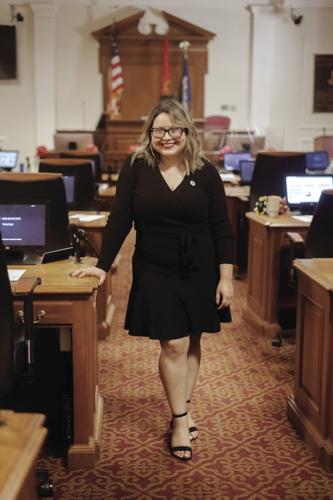
“Some councilmembers only deal with political and policy disagreements — I also deal with the racial side of it,” Sepulveda tells the Scene. “ I am the only Latina on council, so I don’t think I have the privilege to be silent. And my part is very small compared to other community folk who are out there putting their bodies on the line.”

Metro Councilmember Sandra Sepulveda in 2023
Metro Council action on big issues has made the local body a lightning rod for national attention, putting the spotlight on some members. Both Huffman and Councilmember At-Large Delishia Porterfield remember taking threats and harassment for publicly rebuking Morgan Wallen in 2024. For Porterfield, who is Black, this included racial slurs. A few articulate a distinct shift in 2025 that followed Trump’s second inauguration.
“Donald Trump has done this — he has charged politics to an extra level and instigated fear and violence among his supporters,” says Huffman. “But I think both the far left and the far right need to do self-reflection, because the far left has taken tactics from the far right — a crude, mean style of politics they see working for Trump.”
But the intense partisans aren’t the ones who worry Huffman the most. Mental health issues, both diagnosed and undiagnosed, could precipitate the worst situations he imagines.
“Councilmembers in Nashville are average people who have decided to run for office, but many see us on the same level as the president and Congress,” Huffman says. “The more noise you make as a public official, the more attention you get, and you can’t make change if you don’t make noise. Politics will always make people angry, and it just takes one person to have a bad day and decide I’m the cause of it.”
Throughout 2024, Evans Segall fielded intense public backlash over housing-related bills, known collectively as NEST, aimed at the city’s zoning code. Raucous meetings and emotional public hearings were not always fun, but they were “mostly what I would call debate,” Evans Segall remembers — the real crowded rooms of democracy. A few personal details — the price she paid for her home, her address — and general vitriol drove her and her husband off Nextdoor, a message-board platform that uses controversial posts as flywheels for engagement. Evans Segall says it was last year, after the housing debate, that something changed in the tenor and content of public feedback. She no longer reads and responds to every email.
“ The national tenor just really started to bleed down into local government politics, but it is people on all sides of all issues,” Evans Segall says, broadly describing verbal attacks that have increasingly flooded her inbox. “ I engage with people a lot like I parent, which is: ‘I’m open to being wrong, but you can’t do it with a temper tantrum.’”



Post a comment as anonymous
Report
Watch this discussion.
(0) comments
Welcome to the discussion.
Log In
Welcome to the discussion.
Keep it clean. Please avoid obscene, vulgar, lewd, racist or otherwise abusive language. Comments featuring hate speech or threatening or violent content will not be tolerated.
PLEASE TURN OFF YOUR CAPS LOCK.
Be truthful. Don't knowingly lie or mislead.
Be proactive. Use the “report” link on any comment that violates our comment policy.
Share with us. We'd love to hear your feedback.