

Joy Andal
It’s no secret that getting around in Nashville if you’re not in a car is often a nightmare. Last year set a new record for pedestrian deaths in the city at 49. Even for a non-disabled individual, navigating some of Nashville’s busiest pikes can be harrowing. For someone in a wheelchair — or someone who’s visually impaired, or has one of any number of other disabilities — a trip of just a few blocks can present dozens of challenges.
“Not everyone identifies the dangers we face if they’ve never experienced them, such as when an incomplete, poorly maintained, poorly designed sidewalk becomes an obstacle to one’s mobility,” says Joy Andal.
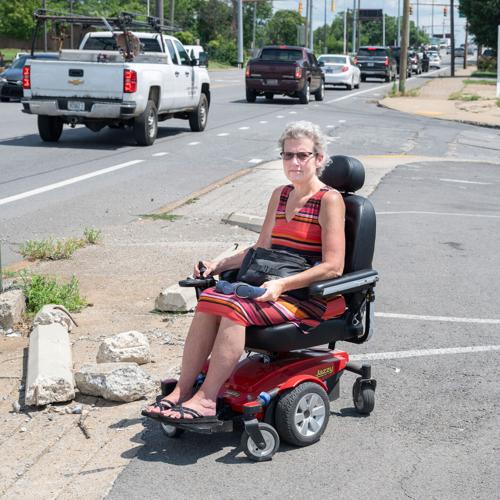
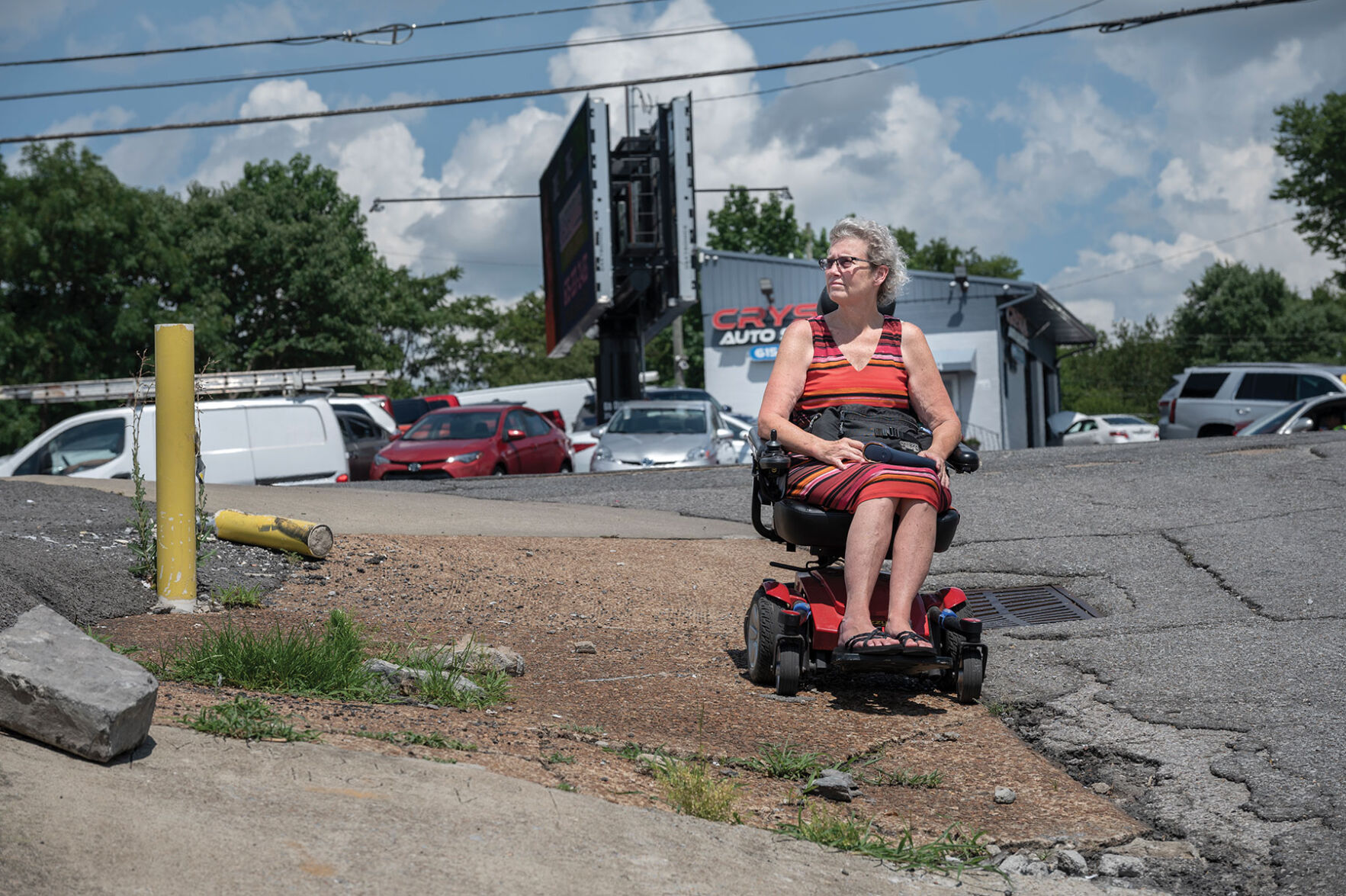
Andal lives near Nolensville Pike, a street that ranks as one of the most dangerous in the city for pedestrians. She uses a wheelchair to get around, and consistently has to risk her life just to go down the street for dinner.
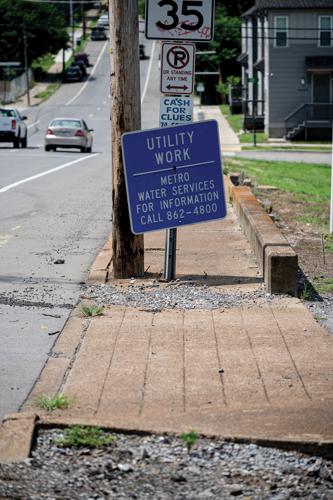
Many of the problems Andal faces are issues that a non-disabled person might never encounter. Nashville’s sidewalks are inconsistent, often randomly stopping and picking back up again. The sidewalks the city does have are often laden with debris. On a recent trip down Nolensville Pike, Andal points out a small crack in the ground — one that a non-disabled person would likely step over, possibly not even noticing.
Joy Andal
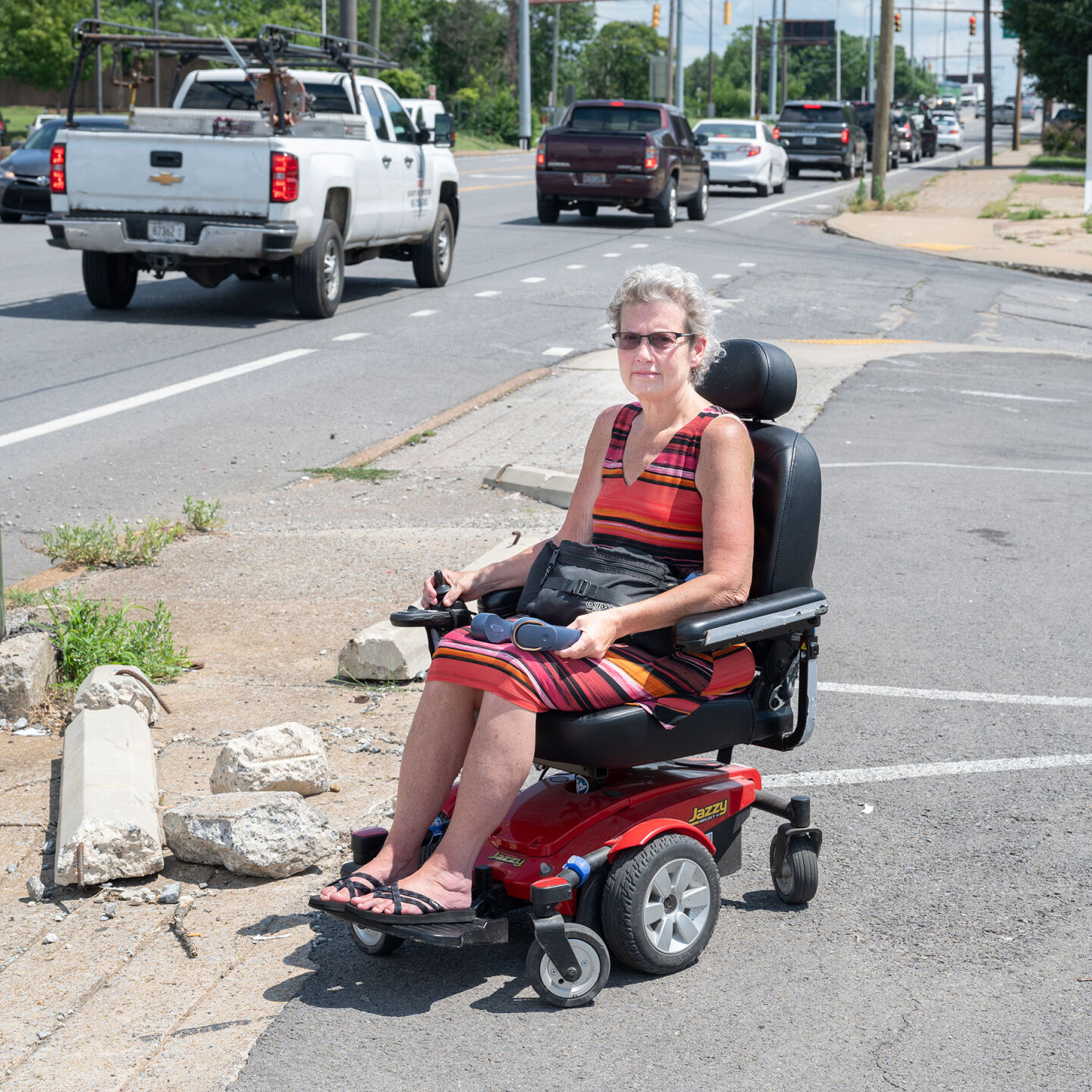
“Something like that could catch one of my front wheels and launch me into the right of way,” says Andal. Even on well-connected sidewalks, she’s at frequent risk of being hit by cars as they pull in and out of parking lots. Crossing the street, not only does Andal say the signal doesn’t give her enough time to cross, but because she is lower to the ground than someone who is standing — she points out, around the same height as a child — in many cases someone in a car cannot see her.
And while fixing these issues would definitely make Andal’s life better, the positive impact on the lives of non-disabled Nashvillians could also be immense.
“It wasn’t until I had small children and was pushing them in a stroller that I even grasped how crucial some of these things are,” says Peter Robinson. He and Andal both serve on Nashville’s Vision Zero Advisory Committee, where they make recommendations to the Metro government on how to achieve the goal of eliminating traffic-related deaths in the city. “I started benefiting from some of the same infrastructure improvements like curb cuts and things like that, that are just absolutely necessary for somebody who has maybe a mobility issue or whatever else.”
The Vision Zero Advisory Committee is made up of Nashvillians from all different walks of life. While they don’t have much power outside of making recommendations, in a city like Nashville — a city that is in major need of pedestrian-focused infrastructure — their voices can play a huge role in shaping the city’s future. Robinson says Andal’s voice has been vital in ensuring they can make recommendations for accessible infrastructure.
Although any new infrastructure has to be ADA compliant, the Americans with Disabilities Act didn’t come around until the 1990s, and even following that, enforcement has been an issue. Andal says that on top of having to retrofit old, inaccessible infrastructure to make it ADA compliant, even something that is compliant isn’t necessarily safe or easy for her to use.
Natasha Wilkins, a Nashvillian who is blind, has had similar experiences.

“A lot of the ADA compliance standards are unfortunately the floor, and not the ceiling,” Wilkins tells the Scene. One example she gives is the chirping at crosswalks that is meant to let people who are visually impaired know when it’s time to cross. “That is technically ADA compliant … but that is woefully inadequate, woefully inefficient, exceptionally unhelpful.”
One of the first pedestrian deaths in Nashville this year occurred when a visually impaired woman was walking her dog in Madison. Wilkins says the woman was on a street that did not have a sidewalk — a standard in Nashville. For someone who is blind, not only can sidewalks be lifesaving, they can also greatly improve quality of life.
“If you have vision loss, nine times out of 10 you’re not able to drive,” says Wilkins. “If I can walk somewhere, then that’s going to improve my quality of life as a Nashvillian.”
Members of the Vision Zero Advisory Committee leave the board in intervals. Andal says she has volunteered to be the next person to roll off in hopes that someone could join who is visually impaired. She hopes that by including more Nashvillians who are disabled in conversations, the city can begin to become a safer, easier place for everyone to get around.
“We have to have people who are already at the table open and willing to create a seat at the table … for people with disabilities,” says Wilkins. “But then we have to have people with disabilities willing to step up and take those seats at the table so that we can ensure that perspectives, ideas and concepts that only a Joy or myself will be able to understand are included in the discussion and hopefully etched into the policymaking.”



