
Brentwood-based CoreCivic reported its first-quarter 2026 earnings on May 7. If you’re an investor in the massive private prison operator, the staggering revenue growth is a cause to celebrate. If you’re virtually anyone else, the finer details of the earnings call might nauseate you. Revenue from U.S. Immigration and Customs Enforcement, the company’s largest government client, grew roughly 96 percent year over year and was $261.3 million compared with $133.2 million during the first quarter of 2025. CoreCivic attributes this increase to the activation of four previously idle prison facilities and the acquisition of the Farmville Detention Center in Virginia.

Following a heated town meeting, one elected representative is calling for an investigation into the conduct of other officials
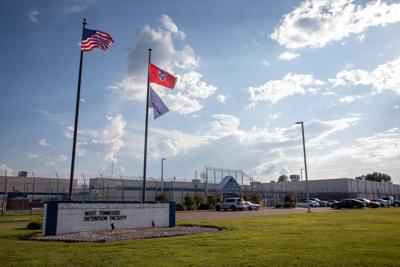
The company restarted operations at the 2,400-bed Dilley Immigration Processing Center in South Texas in the first quarter of 2025. CoreCivic also received new contract awards to reactivate the 600-bed West Tennessee Detention Facility; the 2,560-bed California City Detention Facility; and the 2,160-bed Diamondback Correctional Facility in Oklahoma. As of March 31, 2026, CoreCivic’s leaders reported in the earnings release filed with the SEC that they “cared for” 1,817 individuals at the California City Detention Facility and 735 individuals at the Diamondback Correctional Facility.
Despite the recent revenue growth, on a Feb. 12 earnings call covering the fourth quarter of 2025, some Wall Street analysts had a complaint: ICE wasn’t arresting enough people. “One of the big questions or concerns for investors out there has been the pace of detention by ICE, which has been below what the investors had thought was going to be,” Joe Gomez, analyst at Noble Capital, said on the call. “I think people thought we’d be at that 100,000 level. We’re at a little over 70,000. What is your kind of viewpoint here? What are you seeing in terms of the pace of detention?”
CoreCivic’s president and CEO, Patrick Swindle, responded to Gomez’s question by answering through “a couple of lenses.”
“When you’re looking at the way that ICE approaches enforcement action, nothing occurs immediately, and I think, maybe you or someone else noted, the organization had not fully ramped up its team until really the end of last year,” Swindle replied. He went on to reassure Gomez that “it does take time because it is a very complex ecosystem, and as that ecosystem grows, it’s going to result in additional bed demand.”
“It has been slower than I think some thought might occur,” Swindle continued. “But certainly when you look at, take a step back at the 30,000-foot level and look at the magnitude of scale that’s already increased, as well as the timing of when the additional enforcement infrastructure was put in place, one can reasonably expect you would see continued growth.” After the reassurance from Swindle, Gomez thanked him and said, “Congrats on the quarter.”
At the time of that call — a little shy of four months ago — ICE detention populations were roughly 68,000 nationally across 425 active facilities, according to Vera, a national organization that advocates for prison reform. Using data from the Data Deportation Project, Vera has tracked the growth of ICE detention populations from October 2008 through March 10, 2026. ICE detention reached a peak of about 70,000 in late January 2026 — well above the previous high set during the first Trump administration, when detention numbers hit roughly 55,000 in 2019. When Trump took office in January 2025, roughly 40,000 people were being held in immigrant detention. By the end of 2025, that number had increased by 70 percent, with more than 68,000 people held in ICE detention, according to the American Immigration Council. In late 2024, Tom Homan — whom Trump appointed as his “border czar” — told CNN that the administration would need a minimum of 100,000 beds to detain undocumented immigrants. That’s the same number Gomez, the analyst at Noble Capital, referred to on the CoreCivic earnings call.
CoreCivic did not respond to the Scene’s request for comment.

A look at one of the country’s largest for-profit private prison companies — and the politics, money and institutions that have contributed to its power
Bianca Tylek is the founder and executive director of Worth Rises, a nonprofit advocacy organization dedicated to dismantling the prison industry. While some people may be shocked by the private prison industry’s callousness and their close ties to the Trump administration, Tylek says she is no longer surprised by it.
“In the moment we are in our nation’s history, it just seems like corruption is part of the game,” Tylek tells the Scene. “I would say there are probably some people who would say there’s always been corruption, and there’s some truth to that. But I think the brazenness of it is what has changed. So nothing feels out-of-bounds at this point.”
“These corporations are full of people who are making decisions every single day to destroy the lives of others,” says Tylek. “And they are in your community.”



Post a comment as anonymous
Report
Watch this discussion.
(0) comments
Welcome to the discussion.
Log In
Welcome to the discussion.
Keep it clean. Please avoid obscene, vulgar, lewd, racist or otherwise abusive language. Comments featuring hate speech or threatening or violent content will not be tolerated.
PLEASE TURN OFF YOUR CAPS LOCK.
Be truthful. Don't knowingly lie or mislead.
Be proactive. Use the “report” link on any comment that violates our comment policy.
Share with us. We'd love to hear your feedback.