

After 12 years of serving some of the most vulnerable people in Nashville, The Little Pantry That Could is closing down March 31. The nonprofit has offered not just a food pantry to the North Nashville community, but also a variety of outreach services, including assistance with housing, food stamps and health care.
Founder and director Stacy Downey says the nonprofit served an average of 230 to 240 families a week, though at the beginning of the COVID-19 pandemic they saw as many as 300 per week. But when the lease expires on The Little Pantry That Could’s building at the end of the month, it all comes to an end — the nonprofit has nowhere else to go.
Downey says the experience is a bit of déjà vu. The Little Pantry That Could moved to the center of North Nashville after losing the lease on its West Nashville location, where the organization spent the first six years of operation. However, Downey says she knew the North Nashville space was always going to be temporary — it was a five-year lease, and the landlord had plans to sell.
Downey searched for a new property over that time, but prices continued to soar in Nashville. The pandemic exacerbated financial issues, with operating costs increasing as fewer donations rolled in and fewer volunteers came through their doors. The money that the nonprofit had saved up “wouldn’t buy some storage shed” in the current housing market, says Downey, noting that families and small businesses are struggling to stay in place as well. “We are one of thousands of casualties of this new city.”
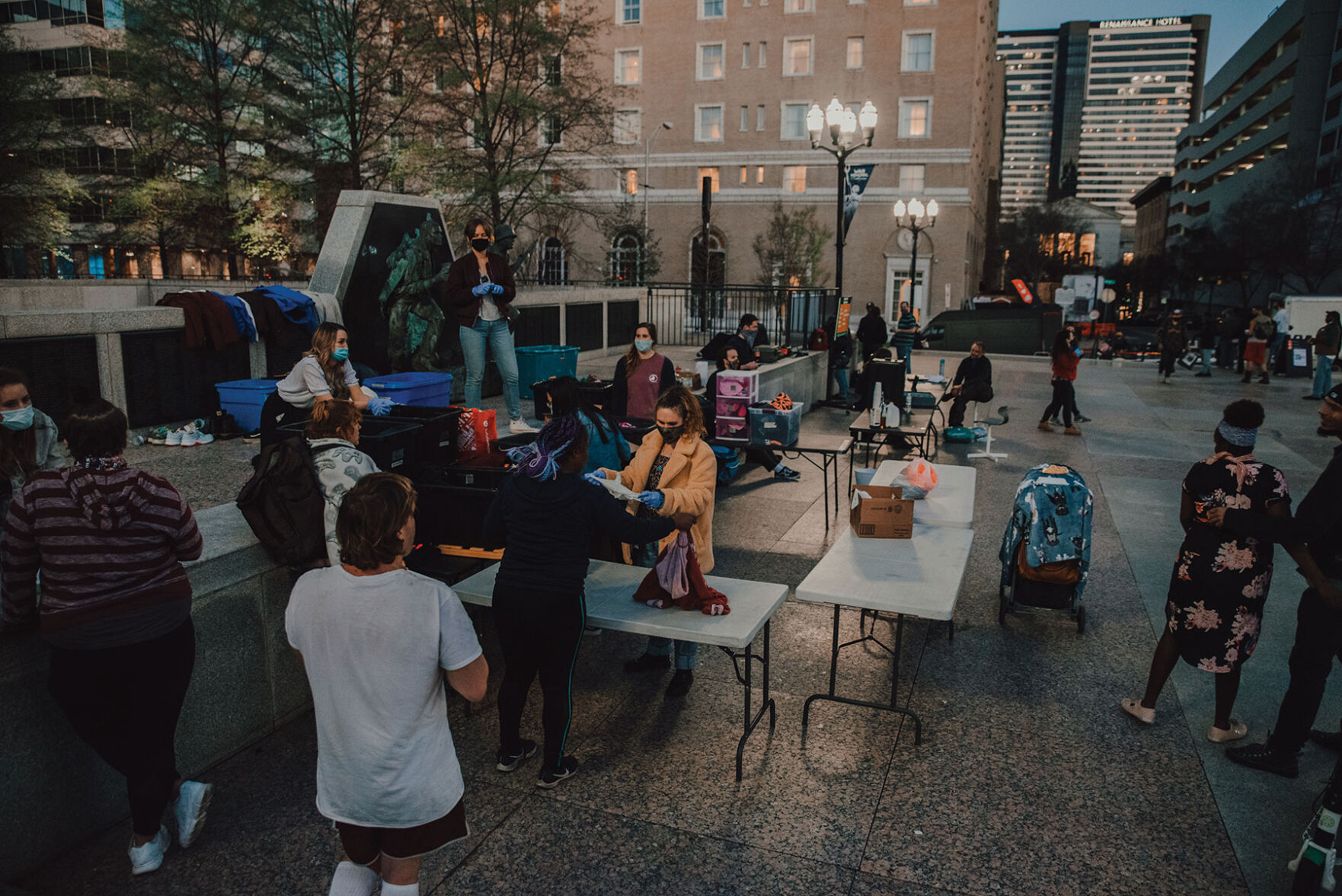
Another nonprofit, People Loving Nashville, was facing a similar situation. People Loving Nashville focuses on outreach to people experiencing homelessness, providing weekly meals to feed the unhoused population downtown. It’s currently based at an old church on Russell Street in East Nashville, but the owner has sold the building to develop a hotel. Ryan Lampa, founder and CEO of People Loving Nashville, says the location was meant to be a temporary spot, and the landlord had been helping the organization search for a new home.
Whitney Pastorek is an advocate for several local causes who also works at World Central Kitchen, an organization that provides meals in response to crises. She felt the need to do something after learning about the two nonprofits losing their homes. Pastorek, speaking as a citizen and not on behalf of WCK, brought a proposal to the Metro Council meeting on March 15, during a public “pre-budget hearing” that let Nashvillians share what they wanted the city to prioritize.
Pastorek’s pitch was to create a community care center that could house several nonprofits and offer services to Nashvillians in need. The place would allow people to walk in and find services ranging from help with unemployment benefits and housing applications to navigating health care and child care services.
Pastorek sees the McGruder Family Resource Center in North Nashville as a good model for the proposed center and thinks the Buena Vista Elementary campus, slated to be used for public school administrative offices, could be a great fit.
“Instead of asking people to run around in circles trying to track down the resources they need to help them solve their problem, there’s just a welcoming, bright, warm building where they can walk in the door, get a cup of coffee and someone to say, ‘Hey, what do you need?’ ” Pastorek tells the Scene.
At the pre-budget council meeting, Pastorek was proposing that federal American Rescue Plan dollars fund the effort in some way, which she believes could cost somewhere between $9 million and $30 million. Pastorek says she has reached out to all councilmembers individually and that the response has been positive. She is also trying to secure a meeting with Mayor John Cooper’s office.
One councilmember, Courtney Johnston of District 26, offered an alternative use for the ARP funds that Pastorek appreciated: loans similar to the ones offered to small businesses.
The loans wouldn’t solve all the organization’s woes, says Johnston, but they would “allow these nonprofits to breathe until we can get to a better place.”
Johnston serves on the committee overseeing the ARP funds, and believes Pastorek’s plan needs a lot more details before it could be placed on the agenda. She also says getting the mayor’s office to back the plan may be the better option. But she shares Pastorek’s sense of urgency, and says the idea of using an old school is “fantastic.”
Pastorek is eager for more feedback and is seeking input from as many advocates and officials as possible. She has also been working with Lampa from People Loving Nashville on reaching out to local nonprofits. Lampa says other nonprofit leaders are interested in the idea, but there are concerns about how much they would need to ramp up their services at the new location, on top of the work they’re already doing.
As for People Loving Nashville, Lampa says a new space has been found, and the details will be made public within the next few weeks. That’s welcome news, although rent is going to affect their operating budget. “It’s market rate … and we’re gonna feel that,” he says.
The struggle to pay rent isn’t limited to nonprofits or small businesses — the city is facing an affordable housing crisis, as Nashvillians struggle to find places to live within the city limits. Just as nonprofits struggle to remain close to the communities they serve, Nashvillians are fighting to stay in their own neighborhoods. The issue is not lost on people like Lampa.
“Although there’s awesome things that come from growth in the city,” he says, “it’s also inevitable that it’s going to affect those who are falling through the cracks.”


Post a comment as anonymous
Report
Watch this discussion.
(0) comments
Welcome to the discussion.
Log In
Welcome to the discussion.
Keep it clean. Please avoid obscene, vulgar, lewd, racist or otherwise abusive language. Comments featuring hate speech or threatening or violent content will not be tolerated.
PLEASE TURN OFF YOUR CAPS LOCK.
Be truthful. Don't knowingly lie or mislead.
Be proactive. Use the “report” link on any comment that violates our comment policy.
Share with us. We'd love to hear your feedback.