

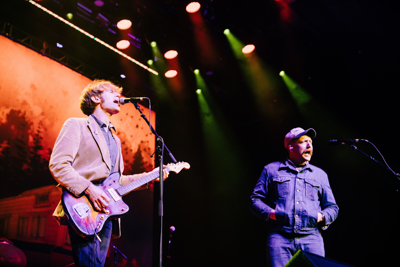

Tyler Childers
Writing about country music over the past decade, I’ve talked to a fair number of old-school producers, songwriters and singers about country as an art form. For the most part, that has proved somewhat counterproductive. When I’ve mentioned the small — but very big — word “art” to great figures who populated Nashville’s country landscape in the 1960s and ’70s, they have tended to ignore the question entirely. They were, they told me, craftspeople who had definite ideas about quality control, but they didn’t consider themselves artists. How this applies to Tyler Childers, who is the current torchbearer for so-called authentic country, is simple: Childers is an artist, but his artistry is completed by his relationship to his audience.
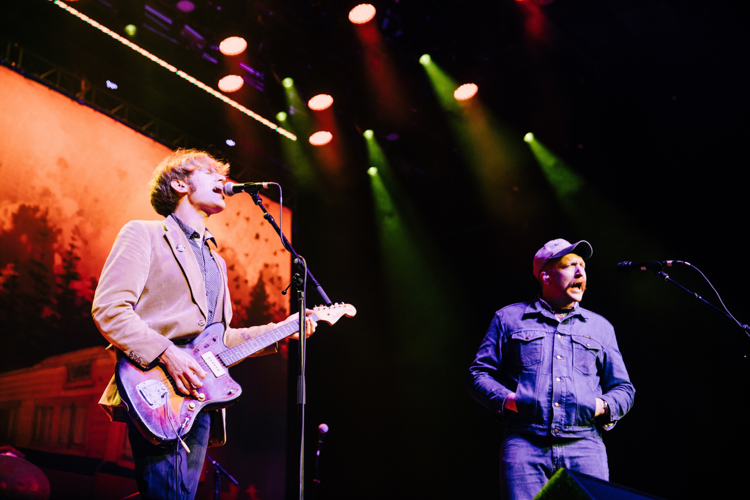
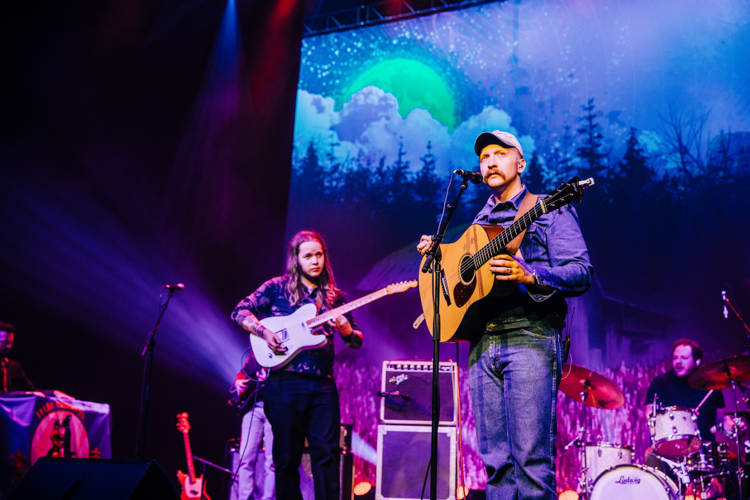
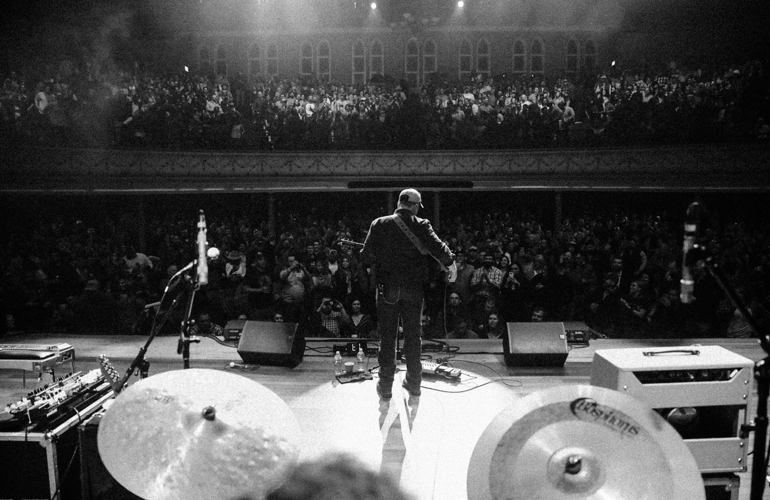
That relationship — loving, raucous, shot through with pain — was on display Sunday night at the Ryman. Childers wrapped up a four-night stand at the Mother Church with an impeccable performance that was augmented by the sold-out crowd’s participation. Responding to Childers’ world-class songwriting, they sang along and stomped in the pews almost loudly enough to rouse Captain Ryman himself.
Like any significant country artist, Childers speaks both for himself and for his audience. He does this through his songwriting, which is pithy, self-deprecating and, you might say, honest. A native of Lawrence County, Ky., Childers lays out the many snares, traps and unsavory side roads that country life offers. Again, like all great country artists, Childers has a light side that coexists with a darker part of his personality. In many of the songs he played Sunday night, he presented himself as a stranger in his own skin, and — to allude to blues and R&B songwriter Percy Mayfield — a stranger in his own hometown. Like, say, George Jones, who often sang material that suggested he was painfully aware of what you could call his dual identity, Childers is a consummate artist who seems to understand the value of that duality.
Childers describes this hardscrabble landscape brilliantly on his 2017 full-length Purgatory and the equally trenchant 2019 Country Squire. As pure writing, these critically and commercially successful albums hold up to repeated listening, as Childers’ version of the Country Squire track “Creeker” demonstrated at the Ryman. Similarly, “Nose on the Grindstone” and “Bottles and Bibles” had the air of casual masterpieces. Childers’ writerly skills make his songs models of narrative concision that are catchy and dense with detail.

Tyler Childers
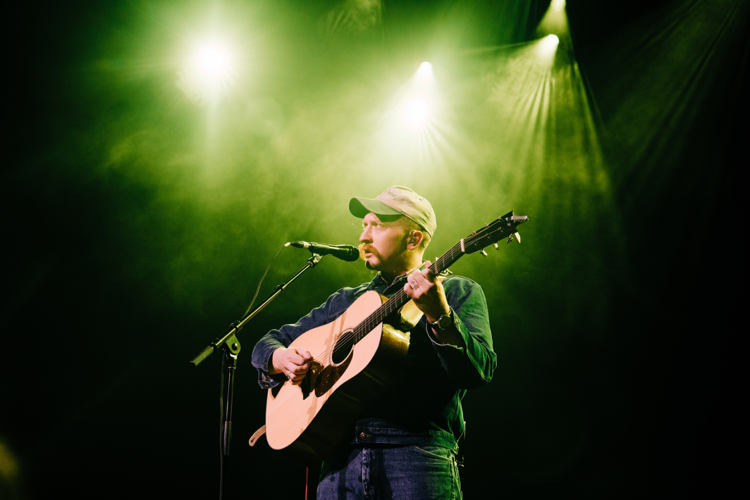
Following an opening set from Daughter of Swords (aka Alexandra Sauser-Monnig, whose trio Mountain Man opened for Kacey Musgraves at the Ryman in 2019), Childers kicked off his performance with a 30-minute set of songs he performed solo. Childers is a superb guitarist with a finely calibrated sense of time, and his style amounts to a canny post-bluegrass solution to the problem of solo self-accompaniment. Every song was anchored by his rock-solid picking, which included licks you might think you’ve heard before. But one of Childers’ great virtues is his originality as a musician — his conception of country includes a deep respect for the pop virtues of brevity, compression and chord changes that turn out to have been subtly tweaked.
During his acoustic set, Childers sang “Matthew,” another brilliant song from Country Squire. He did Utah Phillips’ “Rock, Salt and Nails,” perhaps most famously covered by proto-outlaw Steve Young in 1969. (I heard Kentucky-born singer and songwriter Jim Ford’s crazed 1969 recording of “Harlan County” in the pre-show music. It’s a song that seems key to Childers’ aesthetic.) Again and again, Childers varied the shading of his vocal performance, from conversational aside to high-and-lonesome bluegrass wail. Childers didn’t merely sing his songs — he acted them.
It was, quite simply, one of the finest performances I’ve seen by a country artist. What I found fascinating about Childers’ artistry is its relationship to what you could call showbiz. The acoustic set was an amazing example of pure musicality and smarts. His full-band set, on the other hand, drew upon Childers’ strengths as a singer and bandleader, and it demonstrated how savvy a performer he is. His band played basic two-steps and shuffles that sometimes had subtle touches of the Grateful Dead and The Allman Brothers Band. In this sense, Childers does exemplify what’s usually called outlaw country.
Of course, Childers most exemplifies what you might call the Good Fight in modern country. He upholds the verities, and he writes in a populist tradition that pop country usually ignores. But he understands country as entertainment that provides a release. He’s one of the finest minds working in pop music at the moment. But when he and his band covered Charlie Daniels’ 1970 hit “Trudy,” I had a moment when I didn’t give a damn about art at all.
See our slideshow for more photos.

Tyler Childers



Post a comment as anonymous
Report
Watch this discussion.
(0) comments
Welcome to the discussion.
Log In
Welcome to the discussion.
Keep it clean. Please avoid obscene, vulgar, lewd, racist or otherwise abusive language. Comments featuring hate speech or threatening or violent content will not be tolerated.
PLEASE TURN OFF YOUR CAPS LOCK.
Be truthful. Don't knowingly lie or mislead.
Be proactive. Use the “report” link on any comment that violates our comment policy.
Share with us. We'd love to hear your feedback.