
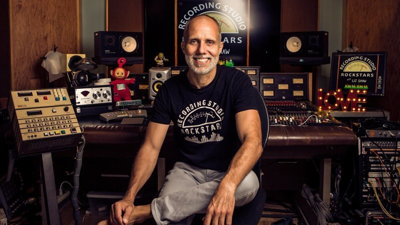


Lij Shaw
Sometimes you read about antiquated laws on the books that are just kind of goofy — like the Metro ordinance that requires establishments to pay a licensing fee if they’re going to have dancing, which contributed to Five Points bar Duke’s to make “No Dancing” its slogan. But there are plenty of far more serious issues related to updating local laws, of course, and one of them is getting looked at carefully in 2020.
Section 17.16.250.D of the Metro Code, which dictates that businesses operated from a home may not serve clients or customers in the home, has been something of a bugbear for years. Back in 2011, then-Councilmember Mike Jameson proposed an amendment to the code that raised alarms because it would seemingly specifically prohibit people from operating a recording studio in their home. As you’d expect, operating a home studio is a very common practice in a town whose nickname is Music City. The amendment didn’t become law; neither did a proposal made in 2012 by then-Councilmember Megan Barry.
Enforcement of this ordinance has operated essentially on a don’t-ask, don’t-tell basis. There’s no one from Metro going around and staking out home businesses to see whether or not they’re illegally serving clients on site — if you’re a business owner and you cultivate a good relationship with your neighbors, chances are you’ll be fine. But that’s not always the case.
In 2015, longtime local audio engineer Lij Shaw received a Grammy in the mail for his work on Mike Farris’ album Shine for All the People, which won Best Roots Gospel Album. Shaw had mixed the record at his East Nashville home studio, The Toy Box. Not long after, he received a cease-and-desist letter from Metro, based on an anonymous complaint, which disrupted the operation he’d been building for a decade.
There’s a major difference between setting up a professional recording environment and having band practice in your garage (or play a show in your living room). Despite Shaw taking care to be on good terms with his neighbors — he got signatures from 40 of them on his application for a specific plan zoning permit, which was still denied — he found himself in a legal mess that made it impossible to do his work. With help from the Institute for Justice and the Beacon Center, Shaw filed a lawsuit against the city in 2018, which was dismissed by Davidson County Chancery Court in October.
“I think that the home-music-work environment, whether it’s recording, writing, rehearsing, supporting the visual aspect of the music industry — I think that we make up the very roots of the music industry here in Nashville,” Shaw tells the Scene. “It’s the incubator for the music to be born. The very place that the artistry begins, and the safe place to be able to learn how to make the music from the start and create music on a roots level, is in the home studios.
“If you don’t give the independent artists and the local music community a safe place to create music — and succeed or fail with the music itself — then there won’t be any new music born that can grow to the level of operating in the arena of the bigger, more expensive commercial studios and record labels, submit their music for Grammy awards, and all that kind of stuff," he continues. "I think that you have to have that entire ecosystem from the ground level right up to the high-profile music industry. If you tear up the roots, then the entire tree dies.”
Now Shaw is rallying support for his cause. He launched a Change.org petition over the weekend that has already gathered more than 12,000 signatures. He's also set up a website, savehomestudios.com, as a home base for more concerted efforts. And he’s got reason to be optimistic — there’s concrete action that’s actually being considered.
Metro Councilmember Dave Rosenberg, who represents District 35 (on the southwestern side of the county), is sponsoring a proposal to amend Section 17.16.250.D. That is set to be evaluated by the council this spring. Rosenberg tells the Scene that his goal for BL2019-48 has mostly to do with making life easier for tutors, hair stylists, folks who telecommute and so on without changing the character of neighborhoods. After all, many of these business owners already operate in residential areas, bothering no one and offering residents options for making ends meet in our market — where residential real estate is enormously expensive, not to mention commercial property.
The amendment creates specific guidelines for home businesses to serve clients in a limited capacity, prohibiting things like commercial vehicle traffic and signage. It will receive a public hearing at the first council meeting of the year, which happens at the Davidson County Courthouse at 6:30 p.m. tonight. (The meeting will also be broadcast online right here.) The amendment is being referred to the Planning Commission, which is set to hear it on Feb. 20 after changes to the language have been made. Then it’ll be back to council, ideally, for two more readings.
Rosenberg is also optimistic about the possibility of the legislation passing this year, citing the strong focus on equity and cost of living among residents. He’s also very aware of how spooked constituents can get when the specter of short-term rentals rears its ugly head.
“I understand that a lot of folks feel burned by what happened with short-term rentals,” says Rosenberg. “This [law] could not be more different from short-term rentals. Short-term rental legislation introduced a whole new industry into neighborhoods, suddenly, and into the city. It created a situation where you had a team of high-priced lobbyists dragging people in to talk about how this was going to be the greatest thing for Nashville — really skew the conversation, because there was so much money on the other end. Anything where there’s going to be a huge profit opportunity, you’re going to have scores of lobbyists.
“There’s nobody lobbying for this, because there’s no opportunity for an industry to go in and just make money wholesale," Rosenberg continues. "You’ve got investors buying up properties for short-term rentals. That’s not something that can happen with this, because there’s such tight limitations on what you’re allowed to do. … This is saying these businesses, these small side gigs these folks are running out of their homes, they can do in the light of day — instead of in the shadows, with a wink and a nod.”
Additionally, the audio-production-focused SAE Institute is hosting an event across its Music Row-area campus on Saturday, Jan. 11. Save Music City: Home Studio Expo runs from noon to 3 p.m. and is set to include a panel discussion with Shaw and a representative from Mayor Cooper's office. Admission is free but you do have to register.



Post a comment as anonymous
Report
Watch this discussion.
(0) comments
Welcome to the discussion.
Log In
Welcome to the discussion.
Keep it clean. Please avoid obscene, vulgar, lewd, racist or otherwise abusive language. Comments featuring hate speech or threatening or violent content will not be tolerated.
PLEASE TURN OFF YOUR CAPS LOCK.
Be truthful. Don't knowingly lie or mislead.
Be proactive. Use the “report” link on any comment that violates our comment policy.
Share with us. We'd love to hear your feedback.