
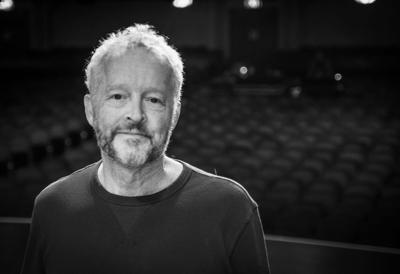


Pete Finney
Pete Finney, a revered lap-steel and pedal-steel guitarist and longtime Nashvillian who worked with everyone from Patty Loveless, The Chicks and The Judds to Michael Nesmith, Doug Sahm and Bonnie “Prince” Billy, died Saturday, Feb. 7. Born Sept. 9, 1955, Pete, a musician I knew well, spent most of his childhood years in Accokeek, Md., surrounded by a thriving folk music scene that included renowned folk singer and musicologist Joe Hickerson as well as Pete’s first guitar teacher John Dildine. When Pete was around 11 or 12 years old, his brother Dave Finney tells the Scene, Dildine took Pete to see old-time string band The New Lost City Ramblers. Pete got to meet the band backstage, which sparked his lifelong passion for music.
By junior high, Pete was playing electric guitar in a band. The nascent country-rock scene that started to explode after The Byrds’ 1968 album Sweetheart of the Rodeo soon had Pete hooked on the sound of the pedal steel. On the way back from a trip visiting Dave in New Mexico in the early ’70s, he stopped in Nashville to buy a single-neck pedal steel, and the seeds of his prolific career were sown. The day Pete turned 18, then the legal drinking age in Maryland, he got onstage with a local country band for his first roadhouse gig.
Pete’s musical development got a big boost when he fell in with a steel-guitar community that revolved around Buddy Charleton, known for his work with Ernest Tubb and His Texas Troubadours. Charleton lived and taught pedal steel in the Washington, D.C., area in the 1970s, and six of his students became pals who each went on to distinguished musical careers. In addition to Pete, the gang included Bruce Bouton, Tommy Hannum, Bucky Baxter, Tommy Detamore and Robbie Flint.

Pete’s first big break came in the late 1970s, when he got to sit in with late, legendary Austin, Texas, musician Doug Sahm of Sir Douglas Quintet fame. Sahm was playing Washington, D.C., club The Cellar Door, and the night before the show, Pete was at a party where he got the invitation to sit in with Sahm’s opening act Kinky Friedman. Pete had met Sahm briefly at a show a year or so before, and after Friedman’s set, Sahm asked him to stay and play a few tunes with his group.
“It was fun, and we hung out a little bit afterwards, and I went home, and that was that,” Pete told Otis Gibbs in 2016, on Episode 129 of Gibbs’ podcast Thanks for Giving a Damn. “And three or four days later I got a call from Doug. He was in New York. … ‘Man you gotta come down,’ and, ‘Man, it’s just a stone groove,’ and, ‘Man, it’s really happening in New York. We had Dr. John play last night, and Paul Simon was here, and Johnny Winter is gonna be here. You should come up and play.’”
Pete and a friend hopped in a car, headed up to NYC and double-parked outside the Lone Star Cafe just before showtime. Pete struggled to load his 80-pound pedal steel and 40-pound amp through the revolving door into the already-packed club — “it is just wall-to-wall assholes and elbows,” as Pete recounted.
“I played with Doug that night, and it was great,” Pete told Gibbs. “The end of the night, Doug came up and said, ‘Man that was a stone groove. … If you ever want to come to Austin, you’ve got a gig, come on down.’ And that was exactly what I wanted to hear.” Before long, Pete was headed to Texas.
Pete’s first Austin gig with Sahm was at the legendary Soap Creek Saloon. “I was totally unknown in a new city,” Pete continued. “Marcia Ball opened for us the first night. [The Fabulous Thunderbirds] opened for us the second night. Alvin Crow opened for us the third night. … For me it was just like the perfect introduction. I was on top of the world. … Talk about instant credibility.”
Though a seminal moment in Pete’s career, the Doug Sahm gig didn’t last long. Beloved as he was, Sahm was notoriously unreliable. A tour from Texas to the East Coast fell apart after a few dates, and soon Pete was on a Greyhound bus back to Austin.
In 1983, Pete began working with mononymous country-pop artist Sylvia, which led him to move to Nashville. One of the first artists Pete worked with when he got to town was Vince Gill, and they became good friends. In 2017, Gill performed the George Jones hit “Walk Through This World With Me” at Pete and his wife Carol Tully’s wedding.
“So many good memories with Pete back in the ’80s,” Gill recalls. “He played in my band, and he played with Radney [Foster] and Bill [Lloyd]. This was before he started doing [the Patty Loveless] gig. He came out with me whenever I’d get a band and go travel. The consummate road dog, you know, and a good hang. He was just one of those people who would always put a smile on your face and you were glad to see.”
Pete’s gig with country star Loveless was his longest. “He was so much more to me than a great musician,” Loveless tells the Scene. “I can’t begin to tell you how much I will miss my dear friend and brother in music. His steel solo on ‘Blame It on Your Heart’ is a classic and what great records are made of. I loved him and I will miss him.”
One of Pete’s peers in his early Nashville days was Kenny Vaughan, longtime guitarist with Marty Stuart and His Fabulous Superlatives and — like Pete — a veteran sideman and studio wiz.
“Pete and I spent two years together on the road with Patty Loveless,” Vaughan says. “We, along with Carmella Ramsey, commandeered the back lounge of the bus, where he and I played our Fender guitars and Carmella played her alto sax.
“I learned so much about music from Pete during those two years,” Vaughan continues. “Pete was a great guitarist and a well-learned musicologist. I learned as much talking about music with him as I did playing music with him. He reshaped a lot of my ideas about playing, a thing that I’m eternally grateful for. He would regularly crack me up with his wicked, dry humor.”

Bringing It All Back Home
Pete’s musicologist side was something that Michael Gray, vice president of museum services at the Country Music Hall of Fame and Museum, knows well. Given Pete’s encyclopedic knowledge of music history — particularly the subject of Bob Dylan’s time in Music City — the museum enlisted him to co-curate the 2015-16 exhibition Dylan, Cash, and the Nashville Cats: A New Music City. Pete also wrote the main essay in the accompanying book and helped compile the CD.
“Pete was with us every step of the way,” Gray says. “He instilled the staff with his passion for understanding Dylan’s ties to Nashville, and the way Dylan and many of his folk and rock contemporaries ushered in a musical era whose influence still resonates here today. Dylan’s career has been analyzed extensively, but with Pete we found a unique angle on the story.
“We told it through the lens of the Nashville musicians — The ‘Nashville Cats’ — and Pete knew the musical intricacies of each one of those players,” Gray continues. “Pete shared his knowledge graciously and enthusiastically, and he worked many hours to assure that the exhibition and its related book, compilation album and educational programs were the best they could be.”
Pete’s career also included work with Justin Townes Earle, Beck, Jim Lauderdale, Jon Langford, Candi Staton, Chris Scruggs, Ron Sexsmith, Shemekia Copeland, Allison Moorer and many others. He was a member of Reba McEntire’s band when a 1991 plane crash killed eight of her band members. Pete, another musician and some crew members were flying on a second plane.

Remembering the ‘Quiet Monkee’ and country-rock innovator
In recent years, Pete kept busy, playing with a wide range of folks, from Hank Williams Jr. to Leftover Salmon’s Vince Herman to The Monkees on their final tour. He was especially excited to work with Michael Nesmith, who had transitioned to country music after his Monkees days with his group The First National Band.
In November, Pete performed as the featured artist in the Hall of Fame’s Musician Spotlight series. It was a mix of musical performance and storytelling, peppered with his dry and often self-deprecating wit. Nashville fixture and BR549 co-founder Chuck Mead performed a few tunes with Pete that day.
“He was one of those guys who came up in the old school,” Mead says. “He was the last link to a lot of the old-time players. He played with everybody from Danny Gatton to Patty Loveless, but you’d also see him at a bar playing with [local country music stalwart] Jon Byrd. He went with what he liked, what he thought was good and important music.
“He played with my band some and went on a couple of the country music cruises with me,” Mead continues, “and I had him in the studio several times on stuff that I was producing, because he had a special touch for a certain thing. He was versatile and could play just about anything. The crux of his biscuit was pedal-steel country, and he understood rock ’n’ roll too. He was a great guy to hang out with. … Whenever he asked me to do something with him, I felt blessed. If he respected you, you always felt like you were on the right track.”
Friends and family are invited to a remembrance for Pete Finney with a reception to follow. It’s scheduled for this Sunday, Feb. 15, at 5 p.m. at the Country Music Hall of Fame and Museum's Ford Theater.



Post a comment as anonymous
Report
Watch this discussion.
(0) comments
Welcome to the discussion.
Log In
Welcome to the discussion.
Keep it clean. Please avoid obscene, vulgar, lewd, racist or otherwise abusive language. Comments featuring hate speech or threatening or violent content will not be tolerated.
PLEASE TURN OFF YOUR CAPS LOCK.
Be truthful. Don't knowingly lie or mislead.
Be proactive. Use the “report” link on any comment that violates our comment policy.
Share with us. We'd love to hear your feedback.