
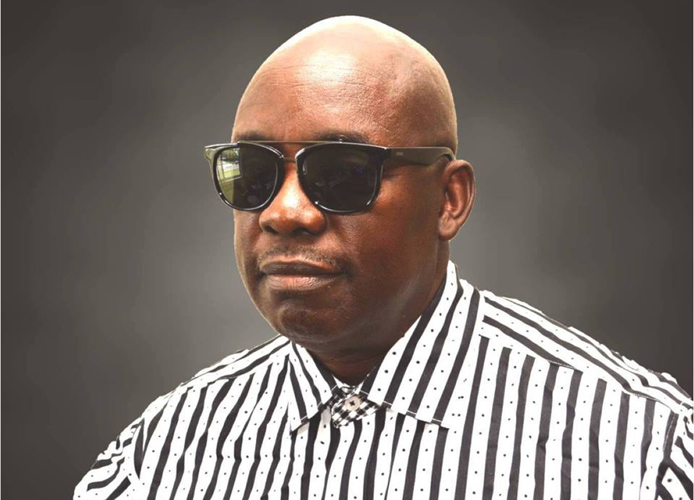
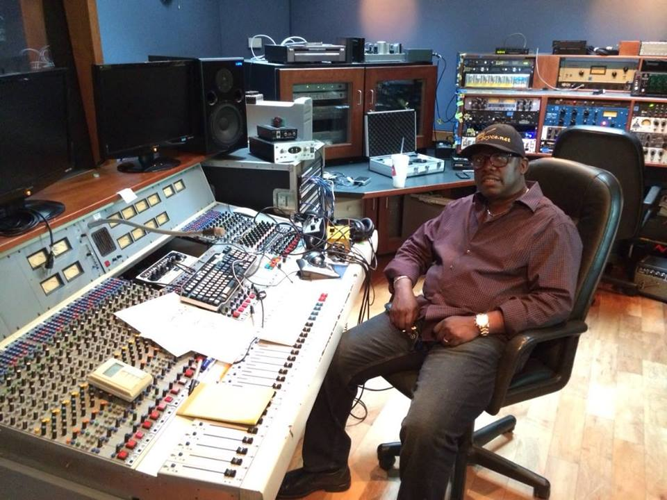


Jesse Boyce was a shining example of the qualities by which Nashville lives up to the name Music City. Boyce, who died Aug. 17 at age 69 after a long fight with cancer, excelled as a vocalist, songwriter and instrumentalist, but he also enjoyed equal success as a producer and major player in Nashville's secular and spiritual music communities for more than four decades. His passionate, energetic personality was evident in his interactions with top stars, superb session players and youngsters he mentored, as well as in his music.
Boyce was born in North Carolina in 1948. He made his first visit to Nashville after graduating from high school in Greenville, S.C., where he honed his talent as a singer and multi-instrumentalist and developed exceptional skill on piano, organ, bass, guitar and drums. He earned a degree from American Baptist College, and then built a reputation as a topflight session musician.
As seen in Greg Camalier’s 2013 documentary Muscle Shoals, Boyce joined The Fame Gang, the third iteration of the legendary house band at Muscle Shoals’ FAME Studios, performing primarily as a bassist. Some of the stars he backed during the late 1960s and early 1970s included Wilson Pickett, Bobbie Gentry and Clarence Carter. Boyce was equally masterful whether the session was soul, country or pop. The Fame Gang also had releases of their own, though cuts like "Grits and Gravy" and "Soul Feud" are generally best-known among serious music fiends.
Boyce’s next move was to join forces with guitarist and producer Moses Dillard in two different groups, first The Dynamic Showmen and then The Tex-Town Display. The latter featured an emphatic and not-yet-well-known vocalist named Peabo Bryson.
I don't own any Copyrights.
Upon settling in Nashville, Boyce began to establish a place in the changing landscape of black music in the ’70s. His first Music City group was called Bottom & Co. They signed with Motown in 1973, making them the first African American band from Nashville to sign with a national music label. They had a couple of singles that were passable, though Boyce's writing and singing talents were consistently sharp. Achieving commercial success was just a matter of finding the right formula, and that turned out to be in another related idiom.
70s Motown Soul
Boyce’s old partner Moses Dillard relocated to Nashville, and the pair had an impressive chart impact in 1978 with a string of disco co-writes and co-productions. Bill Brandon’s “We Fell in Love While Dancing,” Saturday Night Band’s “Come On, Dance, Dance,” which featured an exuberant Boyce lead vocal, and “Perfect Love Affair,” released by Constellation Orchestra, all made appearances on Billboard’s National Disco Action Top 40 chart, with “Come On” reaching the No. 2 spot.
Saturday Night Band -- Come On Dance, Dance Disco 1978 HQ Audio...well we all known what we are talking about...a great band...
Billed as Dillard & Boyce, the pair began the 1980s with an LP titled We're In This Thing Together. Boyce provided the lead vocals, and either wrote or co-wrote nearly every song on the album. He continued to feed his writing and production talents into a variety of dance and R&B projects, including the disco group Frisky, the more conventional soul and R&B trio Spunk (for whom he was also lead singer) and Linda Clifford’s dance-chart-topping 1982 single “Let It Ride.”
But Boyce was too good of an instrumentalist to let that dimension of his talent go untapped. He cemented a reputation as a top Nashville session musician, and was honored with a Super Picker award from the National Academy of Recording Arts and Sciences (the organization behind the Grammys) for work in various Music City studios through the ’80s and beyond. The list of players he backed ranged from Dr. John to Shirley Caesar, Albertina Walker to Lonnie Mack and Millie Jackson — even The Osmonds.
During this period, Boyce began an association with the great Little Richard that spanned three decades, and in 1991, he teamed up again with Dillard to co-produce an LP for the group New Faith. Boyce co-wrote four selections, and was a background vocalist on this unique session that featured inmates serving life sentences at the Tennessee State Prison, alongside special guests like Sam Moore and Teddy Pendergrass. He resumed his education as well, studying at Vanderbilt's Divinity School and the Memphis Theological Seminary, and becoming an ordained minister. Gospel became an increasingly important part of Boyce’s musical life, as he lead the music program at North Nashville's Gordon Memorial United Methodist Church and composed soundtracks for religious documentary films.
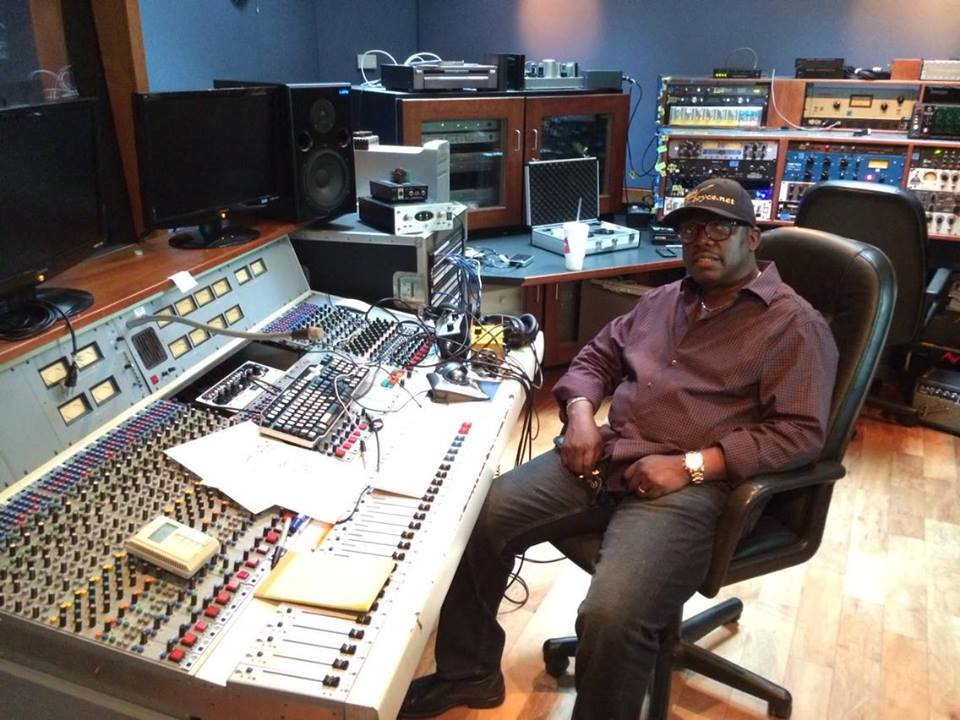
Boyce underwent surgery to treat advanced prostate cancer in 2003, but he never stopped working. He established the entertainment firm Sovereign Music Group and spearheaded the effort to found Midtown Music Academy for at-risk children, and he released what would be his final album — The Messenger, credited to Jesse Boyce and Vision — in 2013. The story of Boyce’s courage in the face of ongoing treatment and an eventual terminal diagnosis was featured in the documentary short "Intentional Healing," which screened at this year’s Nashville Film Festival. He's shown working his song “Dance Again,” backed by Phil Hughley, aka Gtar Phil, and the duo Black Violin.
Boyce's legacy of singing, playing, writing and producing in styles from soul to country to disco had an enormous positive impact in a city that prides itself on musical diversity, and it lives on in the hearts and minds of those who've heard him as well as his family and many friends. He is survived by his wife, Asieren R. Boyce, a sister, a brother, three children and many grandchildren and great-grandchildren.



