
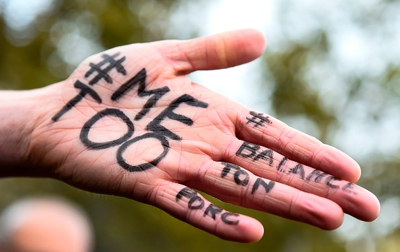

Wherever men have power, it seems, at least some of them are abusing it in the form of sexual harassment and assault. Women have always known this, and the rest of us no longer have a plausible excuse for being surprised. Since the New York Times broke the dam by exposing Hollywood titan Harvey Weinstein's decades of abuse — and the ruthless system that enabled and protected him — the stories have hardly stopped pouring forth, from women (and some men) in any number of industries.
Those stories have started coming to light here as well, in our very own industry town. And although they've been hard to miss, one can sometimes miss the scope of the thing when all the news comes separately. The country music industry is as rife with sexual harassment, assault and bad male behavior as any other, it seems. And the evidence has come from all corners of business.
In October, the Scene reported on allegations of sexual harassment and assault against public relations giant Kirt Webster, whose client list included names like Dolly Parton, Kenny Rogers and Kid Rock. Former staff and aspiring singers recalled a toxic work environment where harassment would sometimes escalate to unwanted physical contact, but noted that Webster's prominence effectively allowed him to get away with it.
One woman tells the Scene that Webster PR had “the most toxic work environment” she’d ever been in. Staffers were drawn to Webster’s firm, she says, by his hall-of-fame client list.“He has amazing clients, and you do get to have once-in-a-lifetime experiences with him,” she says. “He knows that, and he uses it.”
Webster denied some allegations and declined to comment on others, but he stepped away from his firm (which also rebranded).
Just as aspiring singers and young people looking to get into the business side of the industry were vulnerable to abuse, artists can find themselves in the same position, asked to put up with harassment and worse in order to promote themselves and their work. Earlier this month, Marissa Moss reported for Rolling Stone Country on the harassment and misconduct that is prevalent on the country radio circuit.
Over the course of four months, Rolling Stone Country spoke with more than 30 sources, including artists, managers and radio reps, who confirmed a climate of harassment and misconduct in the world of country radio. They reveal an environment where artists and other music professionals – especially women – are expected to be overly accessible and use sexuality as currency when visiting stations and meeting with certain program directors, or attending industry events, in the hope of having their song added into rotation. But unlike in Hollywood, where the #MeToo movement quickly caught fire, few have been willing to speak publicly for fear of professional repercussions. As a result, some sources have chosen to remain anonymous.
This morning came a new report from Emily Siner at WPLN about female songwriters who have faced harassment, unwanted advances and even demands for sex.
But in WPLN's reporting for this story, several women mentioned circumstances in which they'd agreed to a co-write, thinking it would help them professionally, only to realize their male writing partner had ulterior motives.Some women ran into experiences like Sorenson's, where a male co-writer seemed to assume a writing session was a date or even an invitation for sex. One woman had a co-writer who kept placing his hand on her knee, even though she kept moving it away. Another said a collaborator started calling in the middle of the night to talk.
All this takes place, of course, in an industry that is still dominated by men and generally in thrall to the songs they sing, despite comparable — and in many cases, better — work coming from female artists. That being the case, we haven't seen the last of these stories.



