
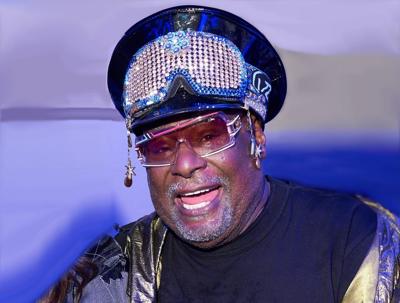

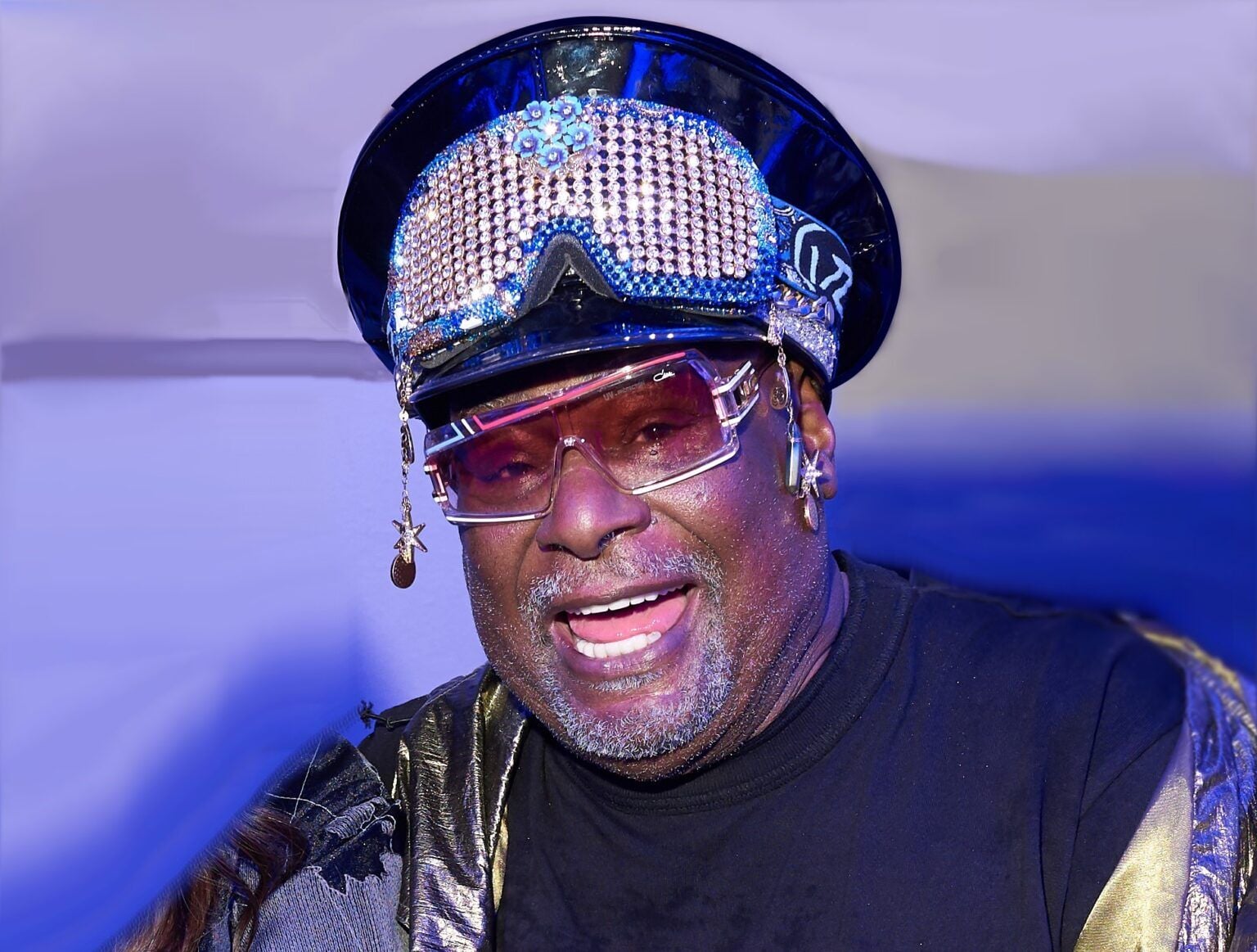
George Clinton
Numbers seldom tell the whole story. And when it comes to a seminal cultural figure like George Clinton, they don't even scratch the surface in terms of accurately documenting his importance. As a vocalist, songwriter, producer and bandleader, he's been a pivotal figure in the landscape of popular music since the early 1970s. Conceptually — both in terms of his bands like the immortal Parliament-Funkadelic and as a solo performer — he's helped introduce and popularize cutting-edge music that seamlessly blends elements of R&B, soul, funk and rock with an adventurous, improvisational jazz-influenced edge and an imaginative lexicon and fashion sense that remains influential. He's also been a champion for creative control as an artist, and at various times had both band and individual deals with at least seven record labels. (And he's still involved in court battles over royalties.)
Clinton has certainly had his share of big records, including many singles that made R&B charts (some of which crossed over onto the general pop charts), two singles and one album that each went to No. 1 on Billboard’s R&B charts and three albums certified platinum by the RIAA. That’s not counting the presence of songs from the Parliament-Funkadelic catalog and Clinton’s solo work that have appeared in film, television and video games, and have been sampled by multiple hip-hop artists, becoming a fundamental influence on the sound of the genre. Among many other honors, Clinton has been recognized with a Grammy Lifetime Achievement Award and induction into both the Rock and Roll Hall of Fame and the Songwriter Hall of Fame.
Despite his prolificacy, he's never been interested in cranking out material. The creative process, and the quest for what's next, keep Clinton going into his mid-80s, while he leads the latest incarnation of Parliament-Funkadelic. He was in Nashville on June 3 for a day's summit at the National Museum of African American Music, where he participated in a live podcast taping. The Scene was fortunate enough to get a few minutes alone with the funk maestro. Here’s a portion of our conversation.
You were once a staff songwriter at Motown. Would you credit that time as being influential on your career that came after?
Without a doubt. There is no question that it all started there, and I learned so much about so many things: the basics of how to write a song, how to present it to others, the politics of what's involved in selling your music. Being around the greatest songwriters in the world — people like Berry Gordy, Smokey Robinson, seeing what he did with Stevie Wonder. I came in there from a background in doo-wop and had to learn how to make that transition to soul. That helped me then to absorb lessons from all the other music that was happening at the time. Jimi Hendrix was doing something different on the guitar, Sly was doing his thing with funk. I started listening to all that and then finding ways of bringing it into what I wanted to do.
The Parliament-Funkadelic thing came out of wanting not to get pigeonholed into any one thing. We could do soul music with Parliament, we could bring rock into the mix with Funkadelic — it was a way to break out of any notions about limitations. But if I hadn't had that time at Motown and learned the importance of having open ears, then we wouldn't have been willing to take the chances that we took. We followed what the young people were listening to, and that's been kind of my guide ever since.
The term Afrofuturism wasn’t common when P-Funk got started, but you're now widely credited as one of the pioneers in the movement. Where did the inspiration for that come from, and did you even think at that time about anything futuristic?
Well, there were jazz guys who were doing some “out” things — Sun Ra and Pharoah Sanders. When we came up with Funkadelic, that's one of the things that we wanted to push, taking things out and trying experimental things. The whole “free your mind and your ass will follow” came out of that notion, and the Mothership Connection later was another result. It was really a matter of just stretching the imagination and reaching out, thinking about what might be possible. Then we were influenced by the psychedelic things that were happening, the stuff that Jimi Hendrix and The Beatles were doing. We wanted to bring all that into our base, but keep it anchored in the blues, keep the soul in it too. That was the inspiration behind “One Nation Under a Groove,” bringing all the different rhythmic concepts together with the other things.

Grooves From the Deep and the Space Math of George Clinton is on view through July 31 at Cëcret by Cë Gallery
You're an amazingly creative person, but you've had to deal a lot with bottom-line types in the music business. How much of a struggle has that been?
Well, that's the history of the music business in this country, and one of the things that I always set out to do was make sure that I was providing a future for my family. It's the reason that I'm still in some of the battles I'm in now — because ownership of your music remains a struggle in this country for a lot of musicians, and even more so for Black musicians. I never really looked at this as a strictly money thing. Making music was and is a very creative thing, it's my life force. But you also have to constantly be willing to stand up and fight for yourself, your rights and your music.
You've had an incredible array of great musicians in all your bands. Who would be some of your favorites?
My God, there have been so many great players. Eddie Hazel. Billy Bass [William Nelson], Glen Goins. Bernie [Worrell], Junie [Morrison]. Gary Shider, Boogie [Cordell Morrison], Michael Hampton, Bootsy [Collins], Fred Wesley. Man, I know I'm going to leave some out. All the great vocalists we've had. The Horny Horns. Parlet. There are just so many. Author’s note: There’s a detailed timeline and a deep dive into the P-Funk family tree on George Clinton’s website.

With ‘Mothership Connected,’ the son of Mallia Franklin gives the women of Parliament-Funkadelic a long-overdue spotlight
How about favorite albums from your catalog?
Certainly the One Nation Under a Groove album. That first Bernie Worrell album All the Woo in the World. We had a lot of fun with that one — it brought back Bootsy and Eddie Hazel, Fred Wesley and Maceo Parker, some of The Brides of Funkenstein. It was very spontaneous, really enjoyable. Maggot Brain was one where I got to do some engineering as well as playing. The engineer didn't understand what I wanted on that record and he just threw up his hands and said, “You do it.” So I got to put in the echo and psych effects that I wanted. Later, when people started praising it, he wanted to take credit for it. The live Mothership Connection album [The Mothership Connection: Live From Houston] was a great one too. That one came out on both CD and DVD.
I noticed you're wearing a Sly & the Family Stone sweater today. Is he among the people you admire in the business?
Without a doubt. He was an innovator, and someone that we paid a lot of attention to in terms of song presentation, staging and sound. Jimi Hendrix, even though he only had three studio albums. But the live shows and the things he was doing, those were fantastic. James Brown for organization and presentation. We greatly admired The Beatles. When they came out with Sgt. Pepper, and the things that they were doing in the studio, the adventurousness — that's what we admired. But someone who people truly don't understand just how great he was and the amount of incredible music he made is Prince. Prince has so many magnificent shows and after-concert dates that he recorded and put in his vaults. He was amazing live as well.
For me, whether it was with the bands or as a solo performer, the thing that I didn't want to get funneled into was the whole thing of making a 45 every month and cutting an album every six, nine months. I wanted to focus on the live shows, because that's where the music really develops. Playing to crowds rather than just coming into the studio and cutting something to fill a quota. Not that there's not something rewarding in making an album, but not when you're under the gun. When you've worked on something and you've got it done and want to put it out, that's rewarding.
The new Mothership Connection stage is also being showcased on this tour.
Yes, we're really thrilled about it. The old one's now in the Smithsonian. They built this new one at TAIT/Gallagher in Nashville to commemorate the 50th anniversary of our 1976 tour. We're really looking forward to the Essence Festival [July 3-5 in New Orleans, where the rebuilt Mothership will be unveiled] and we're having a great time so far on the current tour.
I've not seen or heard anywhere the word “retirement” being mentioned in connection with you to this point. Are you thinking about that in the near or long term?
What is that?! No, I'm still having a great time, and we're getting new fans mixed in with the old-timers every show. My wife records our concerts and puts them out on our YouTube page, and they're still streaming a lot of our songs, so we're out there more now than ever. There's not really a music business the way it used to be, but that hasn't slowed us down. We're still out there, and I'm happy and healthy.
Update, June 8: A previous version of this story incorrectly listed the location where the new Mothership is being built.



Post a comment as anonymous
Report
Watch this discussion.
(0) comments
Welcome to the discussion.
Log In
Welcome to the discussion.
Keep it clean. Please avoid obscene, vulgar, lewd, racist or otherwise abusive language. Comments featuring hate speech or threatening or violent content will not be tolerated.
PLEASE TURN OFF YOUR CAPS LOCK.
Be truthful. Don't knowingly lie or mislead.
Be proactive. Use the “report” link on any comment that violates our comment policy.
Share with us. We'd love to hear your feedback.