
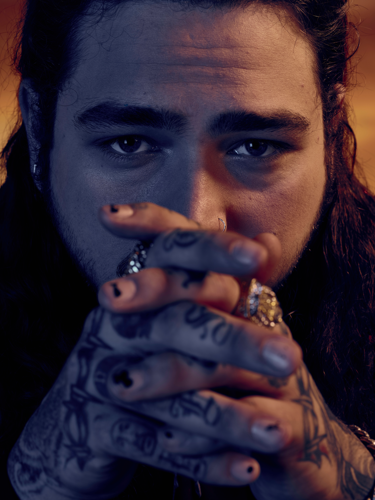
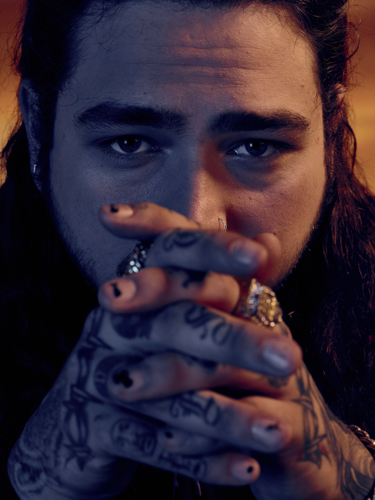


Post Malone, the very popular R&B-pop-rap artist who sold out Marathon Music Works well in advance of his show last fall, is swinging back through Music City on a national tour. He shares the bill with rapper 21 Savage, his collaborator on the 2017 hit "Rockstar," and SOB X RBE, whose "Paramedic!" you heard on the Kendrick Lamar-curated Black Panther soundtrack. The show goes down at Municipal Auditorium on Tuesday, May 8, and tickets go on sale on Friday, Feb. 23 right here.
Here's why you should care about Post Malone whether "Rockstar" is up your alley or not: He embodies some big concerns about celebrity, youth culture and cultural appropriation. The 22-year-old is a white man born Austin Post in Syracuse, N.Y., who grew up in a suburb of Dallas before moving to Los Angeles to pursue music. There are many influences mixed into his work, but he clearly loves a lot of music made by black people, judging from his trap-tinged production and smoothed-out, downcast R&B-flavored vocals. He also frequently works with popular black artists: Two of 2017's most popular songs were the aforementioned "Rockstar" and "Congratulations," which features Migos' Quavo.
All the same, Malone draws a lot of fire for the ways he interacts with African-American culture without engaging with it. Following Malone's breakout hit "White Iverson" in 2015, radio host Charlamagne tha God questioned him about whether he perceived himself as a "culture vulture" and whether he was doing anything to help the Black Lives Matter movement, which he had a difficult time answering. In a 2017 interview with Rolling Stone, done in the wake of the chart success of "Rockstar," Malone expressed his continued exasperation with Charlamagne and called him a "hater," during a sit-down that also involved showing off his gun collection to writer Jonah Weiner.
The Root's Michael Harriot responded to the interview with an open letter in which he called out Malone for his privilege — the way he's able to use popular elements of black culture to create a highly marketable product, without facing the consequences of institutionalized racism and while seemingly being very dismissive of the issues. A profile of Malone written by Bijan Stephen published in January's GQ doesn't show that Malone's attitudes have changed much, though it strikes a more conciliatory tone in its analysis:
And as I watch him struggle with the question — struggle to find an answer that he believes, but one that he doesn’t think will damage his brand or his relationship to his fans; something that might fit neatly within all of the numerous concerns of his label, his management, his publicity team, and his peers in the industry — here’s what I realize. First, that it’s impossible to find an answer that can satisfy everyone; and second, that attempting to appease everyone is, paradoxically, what people don’t like. (See: Taylor Swift’s last album.) I believe he’s sincere. I don’t know if he’s wrestled with what it means to be black in America, but it seems to me that nobody’s asked him to do that, or held him accountable for that. At least not yet. I do, however, think he’s ready to listen, ready to learn. That’s the Post I’m waiting for.
On the one hand, Malone is a 22-year-old kid who's grown up in a time when R&B and hip-hop, music born of black American culture, dominates the sound of pop, and he's quickly become very famous. On the other, the stance he takes in his interview with Stephen — "It should just be music, you know?" — comes off as a corollary to fans who want their favorite artists to "shut up and sing." He wants to be left alone to make his music the way he sees fit, which isn't necessarily an unreasonable request from an artist, but
he doesn't seem to be willing to confront the social and political dimensionsthat are an integral, intimate part of the music he's borrowing from.
How does Malone reconcile the two? How much leeway does he deserve to make a shift? What does the end result look or even sound like? Our current social and political crises are forcing us to deal with questions like these instead of ignoring them in favor of just listening to the music. In that respect, the way Malone handles these questions will define his career going forward, and may determine whether his forthcoming album Beerbongs & Bentleys is his last.



