
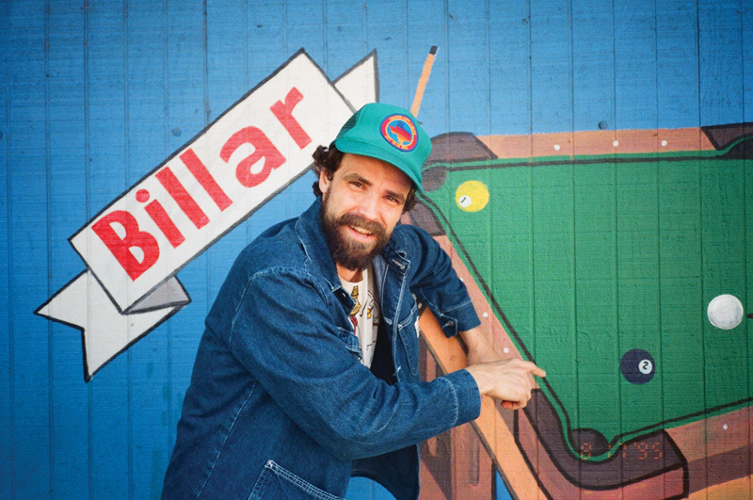
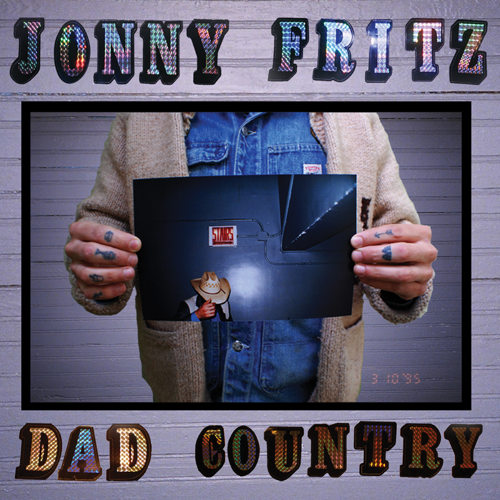

Listening to Jonny Fritz's new full-length Dad Country, you could get the idea that the Nashville singer and songwriter finds something lacking in the trappings of fame and fortune — he may sound diffident about stardom, but he seems enthusiastic about such humble pleasures as waffles, birthday parties and meeting married women at the local Holiday Inn. A poet of the quotidian who couches his insights in music that reveals his debt to such forebears as Michael Hurley and Norman Greenbaum, Fritz specializes in woozy retro-country. In less sensitive hands, the songs on Dad Country might have come across as hipster irony — complete with trucker's cap and arched eyebrows. But Fritz is a special case, which may have something to do with his enthusiasm.
Since the release of his 2011 full-length Down on the Bikini Line, Fritz has undergone a metamorphosis. Last year, he shed his longtime moniker, Jonny Corndawg, and now performs under his real name. His new music reflects the change: Dad Country sounds more confident than Bikini Line, and Fritz's musings on fame have been given a sharp edge by his adventures alongside the show-business elite.
"I was in Los Angeles, and we were going to a lot of parties when we were recording," says Fritz about the period that produced Dad Country. "We hung out at Kid Rock's house in Malibu one night, for a crayfish boil. And I was like, 'Who the hell am I? This isn't me; this isn't my world.' When you're in conversations at parties, everybody's looking around to see who's more important they should be talking to."
Fritz writes about his uneasiness with celebrity on Dad Country's "Suck in Your Gut," in which he rubs elbows with beautiful people at a high-toned party. "Success ain't never had nothing to do / With no song anyhow," he sings. "So grease up them elbows / And slide them on in."
"Ain't It Your Birthday" finds Fritz driving through the night to an old friend's birthday party. He finally arrives, only to find the doorway blocked. His intentions are sincere, but Fritz wants to show off for the people who knew him before he made it: "I want to lie to everybody about the star I am / And the big-city life that I'm living / All of the money that they're trying to give me / Just to sign a couple compact discs."
Elsewhere, Fritz tells the story of an assignation with a married woman in "Goodbye Summer" and takes pride in his sexual prowess in "Holy Water," which features a woman who "makes a party out of loving" and scribbles her phone number on candy-bar wrappers for the truckers who clamor for her favors.
Dad Country doesn't portray Fritz as a badass — he's post-countercultural and post-country. "I'm not an outlaw, but I am more like somebody's weird dad," he says. "I'd rather go for a run or drink tea and read a book and go to sleep than go out for the night in bars and stuff like that."
Fritz has indeed been influenced by '80s and '90s country ("I love Clint Black and John Conlee and Keith Whitley"), but the spirit of those countercultural folkies Hurley and Greenbaum pervades the atmosphere of Dad Country like the funky smell of a late-'60s communal farm. The road to self-definition may have changed since Greenbaum recorded his 1972 concept album about the joys of country life, Petaluma, but that's a sign of an age that views stardom as the inevitable consequence of self-definition. That fame and fortune stuff may have its drawbacks, but it beats being stuck out on the farm.
Email music@nashvillescene.com.



