

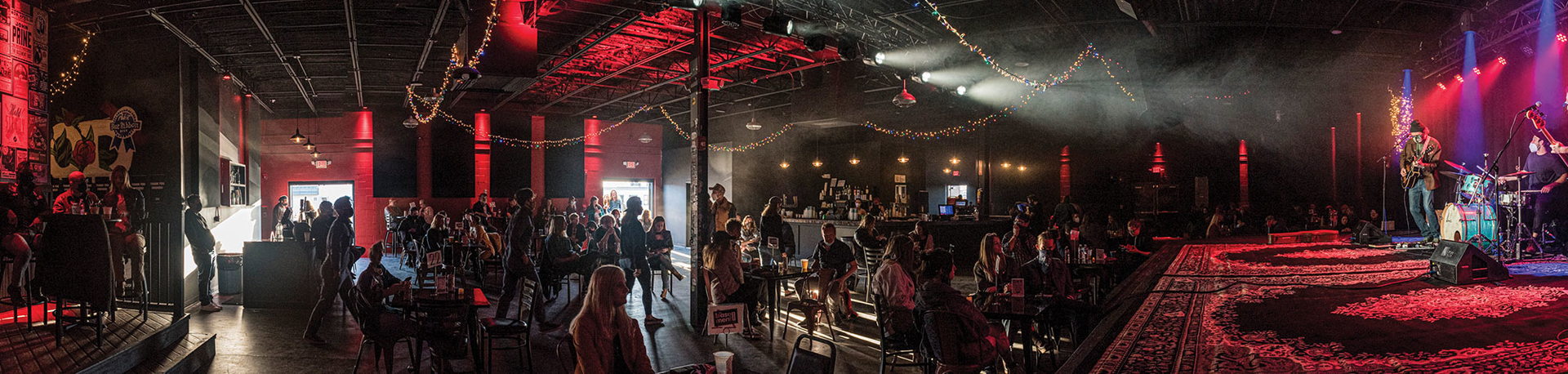
Around this time last year, a string of deadly tornadoes tore across Middle Tennessee, followed a week later by a global pandemic that has killed more than half a million people in the U.S. alone. Much-loved East Nashville music venue The Basement East, co-owned by Dave Brown and Grimey’s co-owner Mike Grimes, suffered significant structural damage in the storm. Staff members on site during the tornado were later commended for getting people who were still inside, as well as folks at neighboring businesses, safely to shelter in the building’s basement. Though COVID-19 has kept The Basement East shuttered, slowly but surely the building has been repaired.
Thursday through Saturday, the Beast hosted audiences for the first time since March 2, 2020, in a series of reduced-capacity, socially distanced events. It would be a great time to see an unqualified win for a business that’s been hit so hard, in an industry that remains in an uncomfortable state of limbo as venues wait for promised federal financial aid. However, per a statement posted Sunday by The Basement East on Instagram, a staffer who was working on Saturday has tested positive for the coronavirus. The venue notes that the individual, who is asymptomatic, had limited contact with patrons and remained masked for their entire shift. Though there were plans for this to be the kickoff for a series of similar events on Fridays and Saturdays, Grimes confirms that those have been put on hold for at least a week or more while the venue is resanitized and the rest of the staff gets tested.
“All staff members were screened before working,” the note reads. “We did our best to open as safely as possible, but unfortunately this pandemic is not over.”
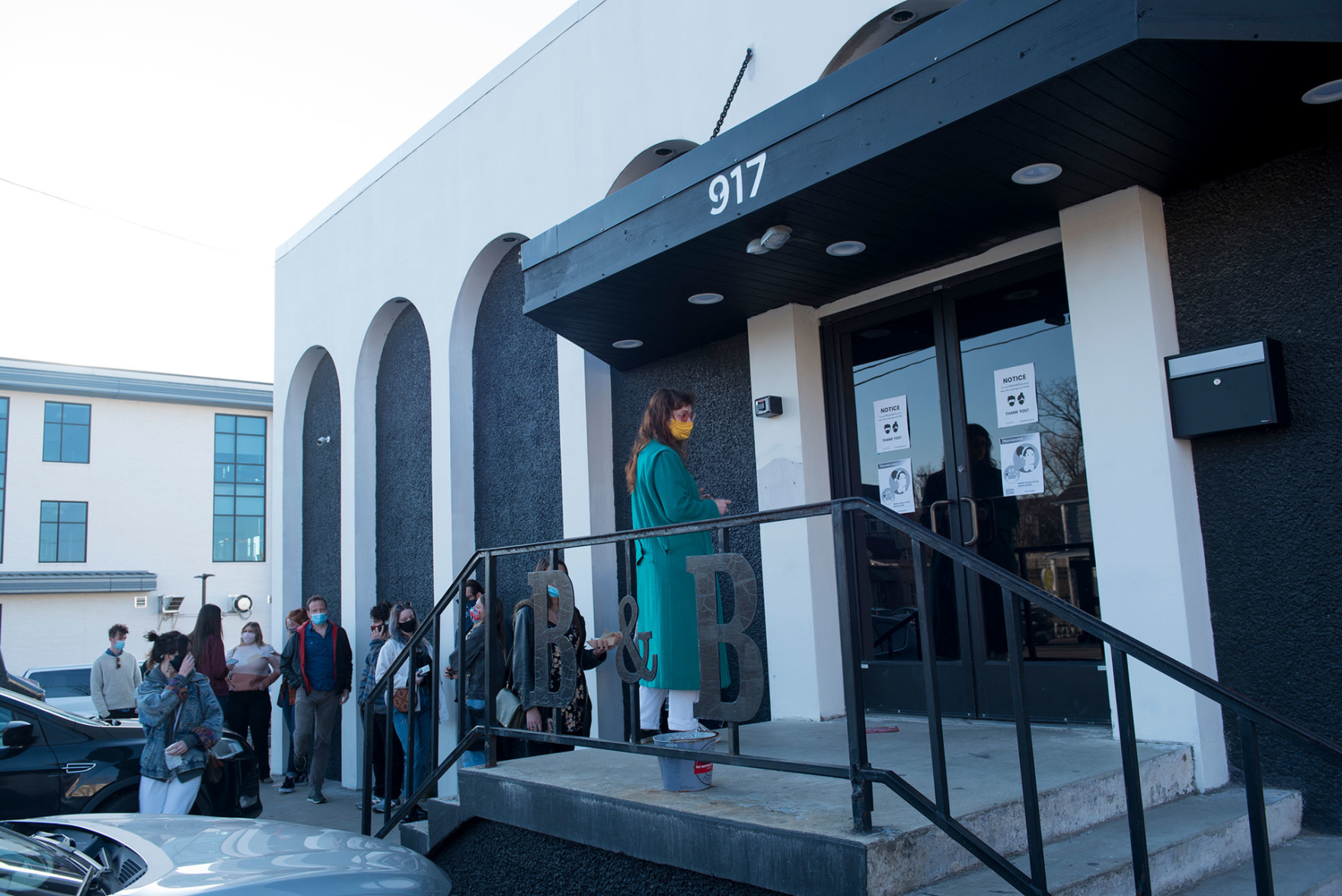
While Thursday and Friday featured only DJ sets, Saturday offered short performances from bands and solo musicians. The Basement East is far from the first venue in town to bring small audiences in, but it’s among the first since the vaccine rollout began. I went to the Beast that afternoon to see for myself what the experience was like, as an example of the next tentative step toward a return of our bustling pre-pandemic live music scene. There was about a half-hour wait to get in, pretty much as I’d expected — the venue restricted itself to 24 percent capacity, or about 144 of the 600 people it accommodates under normal circumstances.
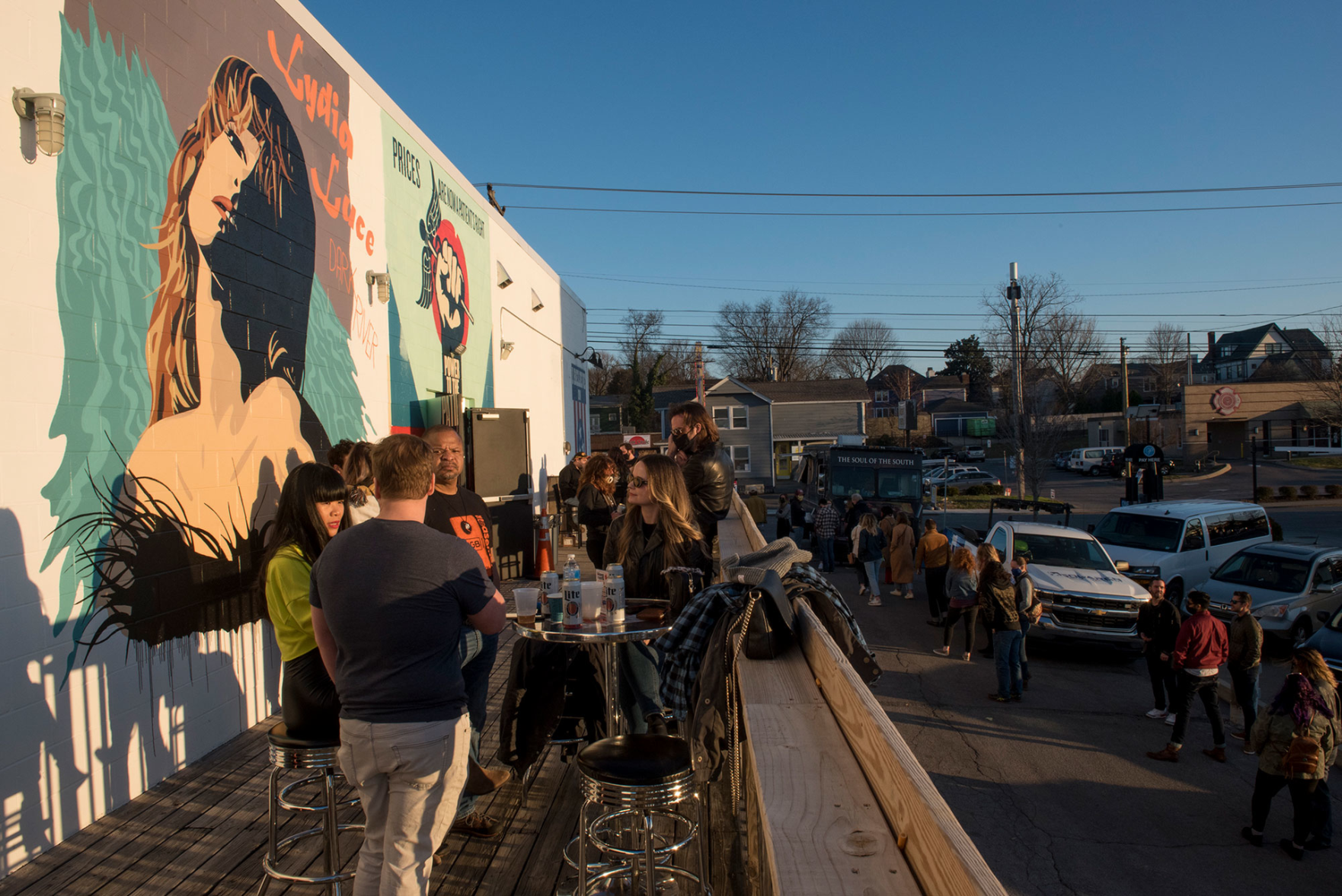
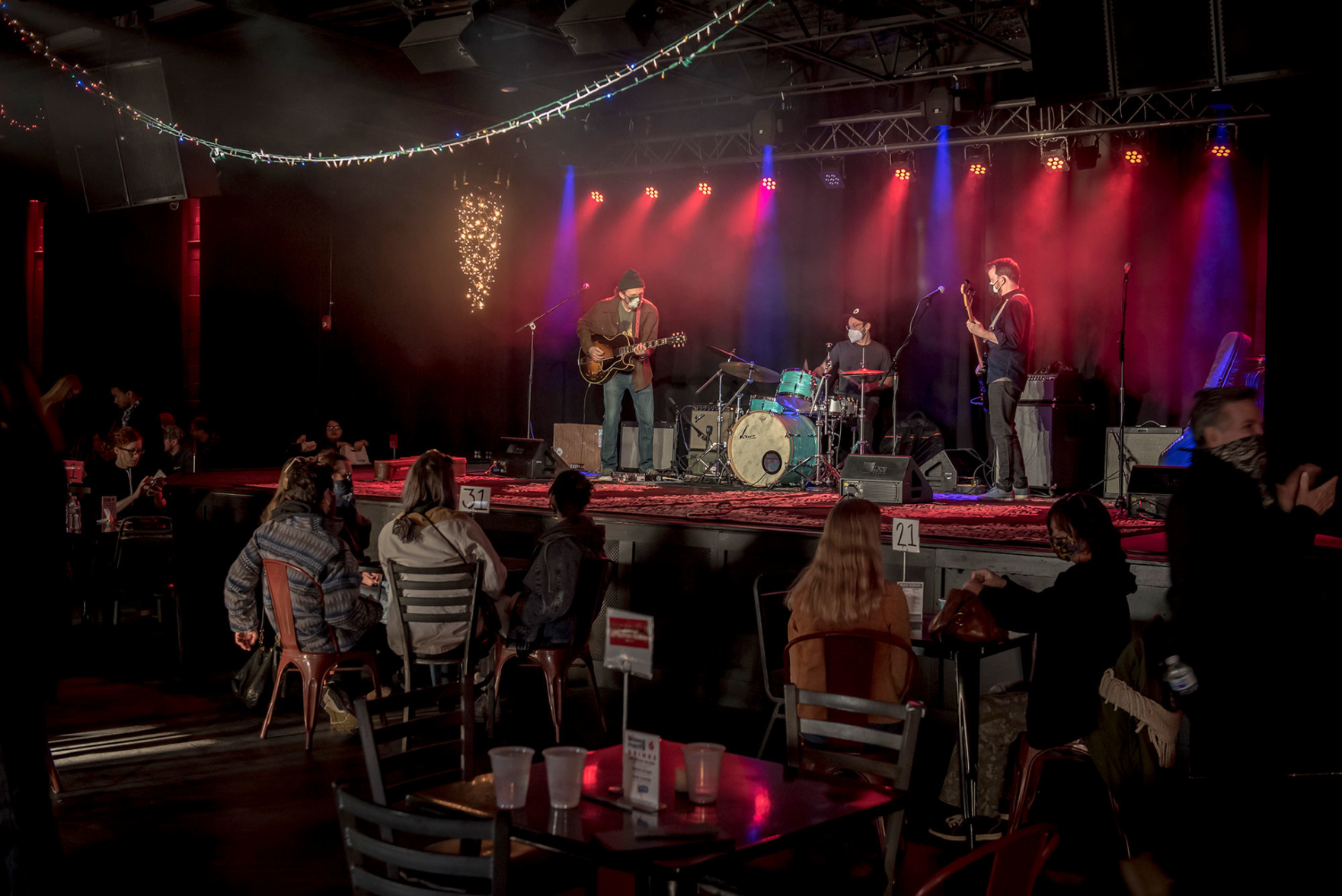
Seating was in groups of two or four at tables spaced well apart, and there was table service, eliminating the chance of people inadvertently crowding together at the bar. The doors to the deck were propped open, and I took up a perch outside. By and large, patrons I saw kept their masks on, even at their tables, unless they had something to sip.

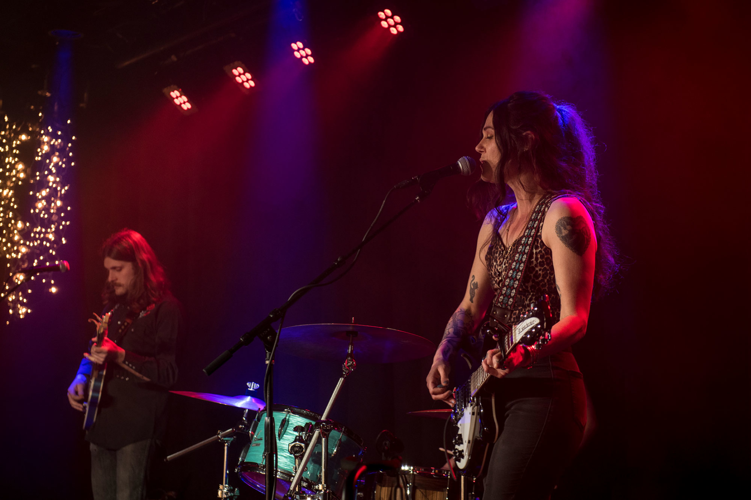
Lilly Hiatt at The Basement East, March 2021
I got to hear limber soul-jazz from Adams Street Trio and watch toes tap to ace rock songsmith Lilly Hiatt’s love song to Nashville “Some Kind of Drug.” It didn’t feel quite like the shows I’ve gotten used to over 20 years of visits to small and midsize clubs, but it was still heartwarming — especially in a place that, right after the tornado, looked like a semi truck had driven through one wall.
I felt reasonably safe behind two masks, outside an open door and about 10 feet from the nearest person. In terms of size, The Basement East is right in the middle of the range of Nashville’s independent music venues, meaning that it’s able to serve more patrons using CDC-recommended precautions than many fellow clubs — and that puts it a tiny bit closer to becoming financially viable again. But Sunday’s note was a reminder that even diligent, good-faith adherence to guidelines doesn’t eliminate your chances of coming in contact with someone carrying the virus in a public setting like this.
I badly want to go to concerts again, even with a limited scope like Saturday’s show. But what I want more than that is for service-industry workers and musicians to have the relief they need, reducing the pressure to host more public events. And I want to see venues get access to the aid they’ve been promised, part of which will pay their staffers until they can work a regular gig again. The road back to anything like a “normal” live-music industry seems a little less rocky than before, but it’s far from a straight shot.