

Tape Deck Mountain formed in San Diego in 2008, when the BlackBerry was the phone of choice and scrappy punk-pop duos like No Age and Wavves were all the rage. The mantra then, remembers singer-songwriter-guitarist Travis Trevisan with a laugh: “Who needs a bassist when you’ve got a Line 6 Delay Modeler?”
That was the blueprint Trevisan followed on Ghost, Tape Deck Mountain’s ’09 debut with original drummer Paul Remund. “I was just writing lyrics in a journal, waiting around for the guy from [San Diego club] The Casbah to leave a message on the answering machine at my parents’ house telling me he got my demo,” he tells me. He’s taking a break from doing yard work at his place in South Inglewood — that’s East Nashville, not Los Angeles — on a recent Sunday afternoon.
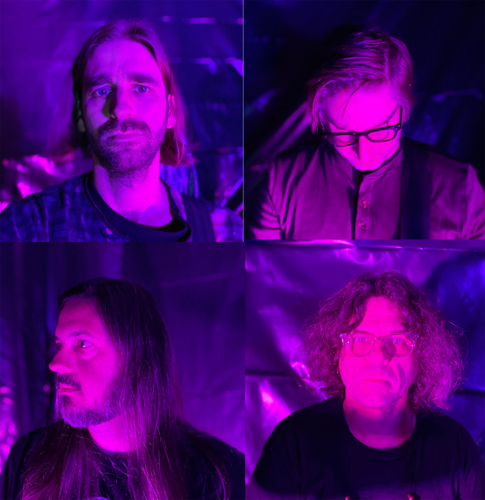
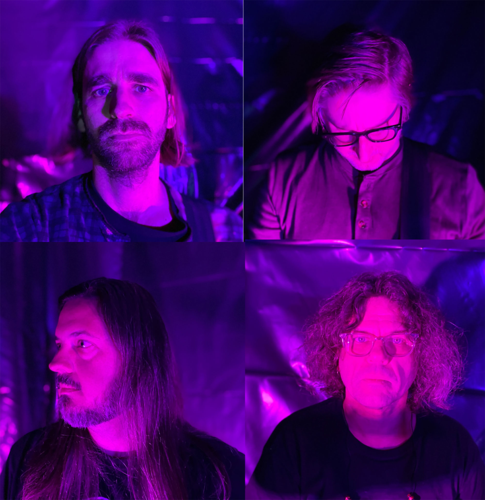
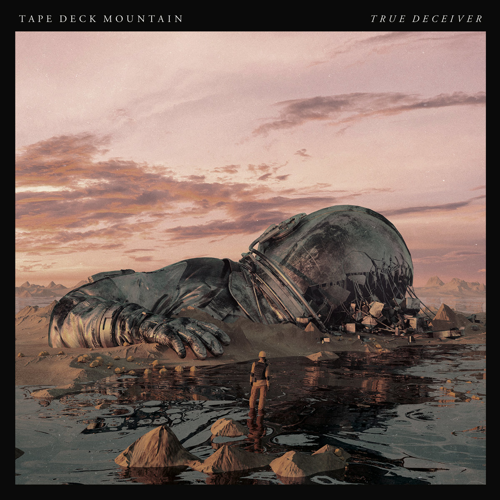
These days, Tape Deck Mountain is a robust four-piece gearing up to release its fourth LP, True Deceiver. From the project’s nascency to now, its sonic touchstones — Smashing Pumpkins, L.A. alt-rock combo Autolux and Northwest indie torchbearer Phil Elverum of The Microphones and Mount Eerie — have stayed consistent. But its route has been circuitous, spanning four cities (Trevisan has also lived in Austin, Texas, and New York) and many more bandmates.
That revolving door closed when Trevisan landed in Music City in 2015 and connected with drummer Andy Gregg via a Craigslist call for collaborators. Gregg is a native of the musically fertile college town of Lawrence, Kan., home of The Get Up Kids, The Appleseed Cast and Kansas (the band) among many others. Gregg also did a stint in Seattle during the halcyon ’90s, and he brought a lot to TDM’s table: a patient yet powerful playing style well-suited for Trevisan’s slow-burning songs, a home studio to record and rehearse at — and a bass-playing buddy, Nashvillian Sully Kincaid, to fill out the lineup.
Gregg and Kincaid joined for the third Tape Deck Mountain album, 2018’s Echo Chamber Blues, and their shared love of heavy, complex rock — from Rush and Yes to Soundgarden and Helmet — fortified the band’s sound. The rhythm section also convinced Trevisan to bring on free-agent guitarist Greg Harp, who cut his teeth in Maroon, a touring act out of Monroe, La., from the late ’90s and early 2000s.
The Scene named the newly minted foursome Best Shoegazers in our 2018 Best of Nashville issue, though Trevisan admits he has “a bit of a love-hate relationship” with the shoegaze designation. The new record, which follows two solid years of gigging and jamming for the band, justifies his reluctance to be pigeonholed. Trevisan treasures My Bloody Valentine’s Loveless as much as the next Jazzmaster player; you could say Harp is that next player, since he also uses one of these guitars, so closely identified with shoegaze, in the band. While True Deceiver’s wall of sound is formidable, more careful listening reveals a melting pot of influences, from prog and psych-pop to post-hardcore and alternative metal. Its eight songs are cohesive yet freestanding — dreamy (“Ceremony”) and eerie (“Apocrypha”), mathy (“Pyramid”) and grungy (“Hush”).
Trevisan’s main grievance with the shoegaze tag is its purveyors’ tendencies toward lyrical obfuscation. “They’re either singing about clouds, or you can’t understand what they’re saying,” he says. He cites the late John Prine and Father John Misty’s Josh Tillman (the 2012 album Fear Fun, specifically) as wordsmiths who speak to him. “They’re funny and satirical, but smart.”

Questioning whether a life lived in a state of technological overload is really a life is an overarching theme of the new record. “You should go to bed,” suggests Trevisan on “Screen Savior,” a PSA to night owls engaging in pointless comment-thread warfare. “Are you staring at your phone, pretending you’re not alone?” he asks on “Nomo” — short for “nomophobia,” a 2019 addition to the Oxford English Dictionary defined as “anxiety about not having access to a mobile phone or mobile phone service.” Trevisan then deadpans: “Your username is ‘Sad Trombone.’ ”
Digital dependence takes its toll mentally but also physically, as the 40-year-old musician can attest. “About a month ago I started having back problems from sitting at my computer all afternoon at work,” he says. “I feel like I’m always fighting against technology and myself. I hate it and I love it at the same time.”
As he’s continued to write songs, Trevisan has had to come to terms with the understanding that the internet lives forever. It’s made him feel a bit more self-conscious.
“That isn’t necessarily a bad thing. I try to add wit to the lyrics but not in a way that’s preachy or overly specific — I think if you tell people what to think they’re going to react against it, so I don’t want to do that. Although I do get some joy from conservative family members nodding along to some song or lyric that might subversively contradict their beliefs.”



