


At its best, pop music reflects the culture that it’s created in. Marvin Gaye’s “What’s Going On” was a direct response to police violence against anti-war activists. Janet Jackson was partially inspired by the 24/7 IV drip of news about racism and poverty when she wrote Rhythm Nation 1814. Even the Spice Girls’ girl-power anthems reflected a facet of ’90s feminism.
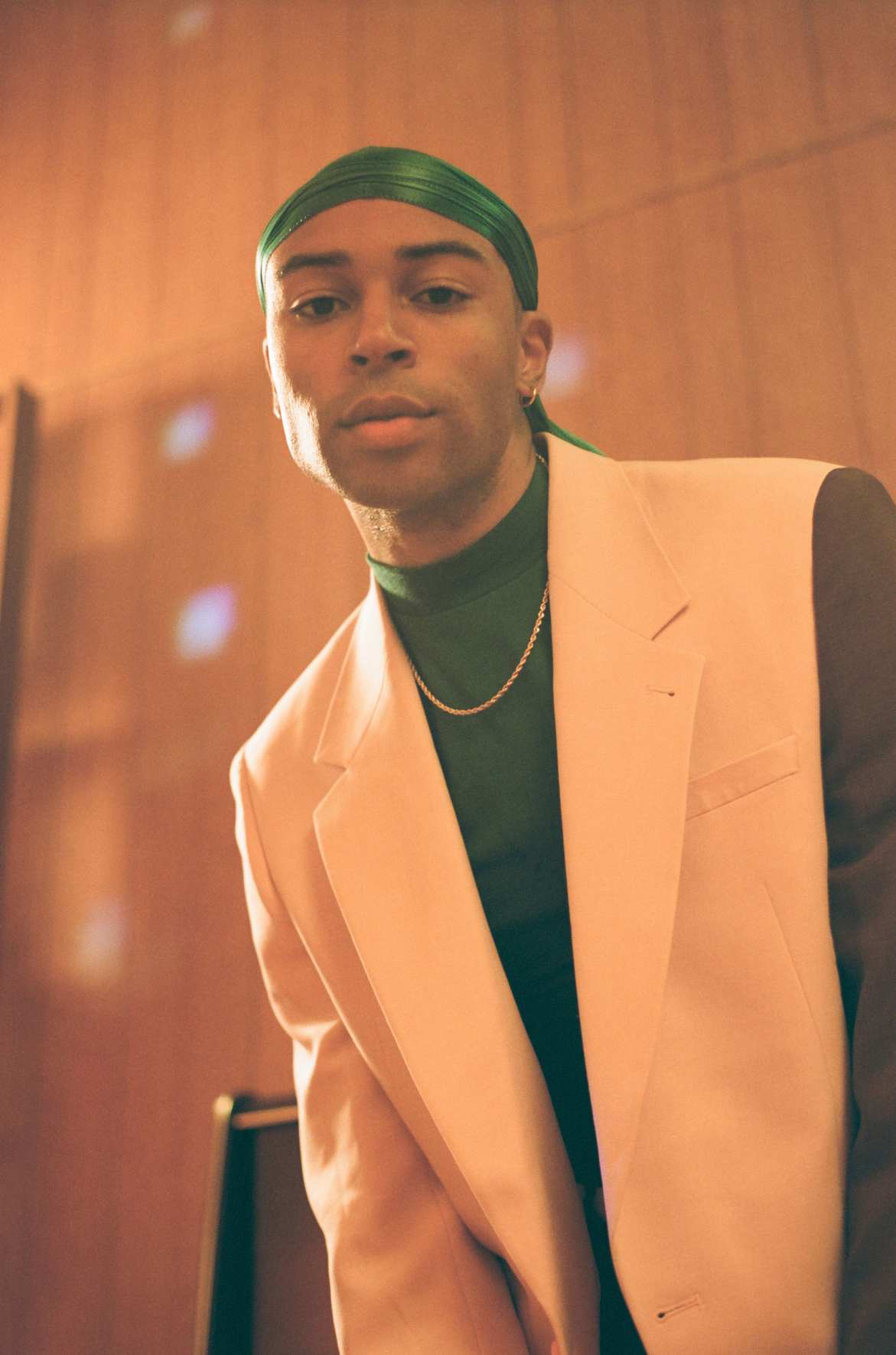
But what does pop music sound like when culture is put on pause? On his debut full-length album Small Infinity, 25-year-old Nashville singer and rapper Houston Kendrick grapples with the kind of introspection that comes with spending a year in isolation.
“The process of making the album in the beginning of the world just going crazy, made everything just feel a little bit more dire and … I felt like I had to go extra hard,” Kendrick tells the Scene. “I’ve always felt that our responsibility as artists is to be a mirror to society. And not necessarily just show people who they are, what they look like, but be a mirror in that you can reflect back what your interpretation is, and possibly teach somebody a lesson.”
Small Infinity is a window into the world through Kendrick’s eyes. On “Good Evening, Tennessee,” Kendrick asks the listener to enter his life, singing: “Good evening, Tennessee / Tuned into my TV / I’m a new kind of royalty / I’m a beautiful travesty.” That tension, between the highs and lows of unabashedly being your authentic self, pushes and pulls throughout the record. “Ugly Vybes,” an anthem for introverts everywhere, bounces Kendrick between self-assured cool and anxious self-medication. “Look at Us” takes the good with the bad, lifting up “the beauty and the mess that we choose.”
Kendrick’s character-driven songwriting presents flawed, complex voices that feel eminently relatable. These characters take you into their own small infinities, a phrase that Kendrick defines as the “vast expanse that exists within everybody of experiences, knowledge and emotions,” all filtered through Kendrick’s own prism.
“Every single song doesn’t necessarily have to be about, ‘I’m in isolation, I’m sad, the world’s falling apart,’ and what’s going on,” Kendrick says. “Because even when we’re going through those things, those are not the only emotions that we feel. That’s not the only thing that we experience.”
The expanse also comes through in Kendrick’s playful sense of genre, which shifts effortlessly throughout the 11 tracks on the album, from lo-fi R&B (“Love Games”) to Americana-tinged soul (“American Spirit Blues”). Kendrick’s voice cuts through each of these songs, his consistent croon contrasting with an ever-changing environment around it.

With Small Infinity, Kendrick sets the bar for pandemic albums. He does it not by leaning into the angst of a life put on hold, but by digging into the rich details of emotion teeming under that malaise.
Removed from the events of 2020, Small Infinity also succeeds as a compelling evolution of Kendrick’s artistic vision. He’s come a long way since “Mine,” a 2014 single that saw a high school Kendrick pining for a girl in his class with Boyz II Men balladeering. Compare that with “The Suburbs,” a song that directly comments on Kendrick’s experience wrestling with his sexuality and, ultimately, freeing himself from the constraints of his suburban home in Birmingham, Ala. Others have found Belmont University, where Kendrick studied commercial voice before leaving to pursue music full time, equally confining.
“There’s lots of contrasts between where someone starts to where they currently are and then to eventually where they finish — and I have a really great deep appreciation for all the steps that it’s taken to get to this moment,” he says. “And even though I’m not pretending to be some straight kid who’s going out for some girl in high school anymore, I’m just like, ‘You know what? If I had to do that to learn how to be authentic and learn how to be exactly who I am, I mean, then damn it, I had to do that.’ ”
Ultimately, that’s what Small Infinity is about and what makes it successful — deftly articulating the winding path toward self-actualization and the imperfections that make people unique. The record culminates with the title track. It builds and builds upward until the music drops out, leaving the listener with Kendrick’s raw vocal refrain, singing, “I got me, I got me, I got me.” Because when everything goes to hell, the one thing you can count on is yourself.



Post a comment as anonymous
Report
Watch this discussion.
(0) comments
Welcome to the discussion.
Log In
Welcome to the discussion.
Keep it clean. Please avoid obscene, vulgar, lewd, racist or otherwise abusive language. Comments featuring hate speech or threatening or violent content will not be tolerated.
PLEASE TURN OFF YOUR CAPS LOCK.
Be truthful. Don't knowingly lie or mislead.
Be proactive. Use the “report” link on any comment that violates our comment policy.
Share with us. We'd love to hear your feedback.