


“No, Pumpkin — let’s go!”
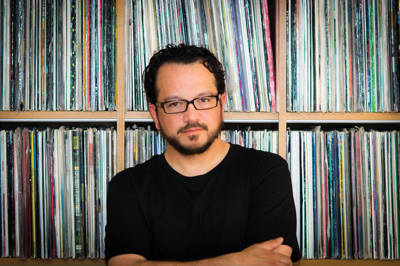
It’s midweek and early in the day. DJ and producer Mark Farina, a legend for his late-night groove, is on the phone when we’re suddenly interrupted. “Sorry, my dog is — No! My dog is complaining. She wants a treat. Let me tend to her before she barks all over this.”
Farina has been visiting Nashville since the days when Mushroom Jazz, a series of downtempo dance-music collections, came only on cassette, and the Bass at Maximum crew was promoting the best curated outlaw raves around. A pioneer of deep, downtempo, jazz-inflected dance music, Farina displays a smooth and progressive musicality that has always been a perfect fit for Nashville’s discerning listeners.
“I think it’s best to bring up a lot of new up-and-coming producers, DJs,” Farina tells the Scene. “I think it’s crucial for the music scene.”
“I’ve been fortunate to be in this scene for quite a long time,” he continues. “Mushroom Jazz started even before the rave scene, so I found that there was a period of time when the rave scene sort of fizzled out due to legal problems. After that kind of died down, that mid-’90s of the rave scene, there weren’t a lot of all-ages shows going on across the country. Now that’s come back around with the EDM thing, and there are a lot more festivals where under-21 people can hear DJs, which is great. I think that’s a positive change.”
The cyclical nature of music has always been at the heart of Farina’s style. His flagship mix series Mushroom Jazz — which has evolved across media, outside of trends — embodies a wide-eyed and optimistic approach to dance-floor conflagration. His selections and productions have Cinemascope-size sonic breadth, the seamless interplay of organic and digital instrumentation creating lush, earthen grooves. Farina channels broad vistas of other worlds, John Ford-like panoramas that capture the great beauty of the musical landscape. But before Mushroom Jazz, there was the harsh darkness of the ’80s industrial scene.
“Starting off in Chicago in that late-’80s period, I was fortunate there was a lot of teen clubs,” says Farina. “When I started DJ-ing, I was 16, 15, and we would go to these under-21 clubs — a place in Chicago called Medusa’s, which was sort of a famous venue in that mid- to late-’80s era. It was closely affiliated with Wax Trax! Records from Chicago. That whole industrial, New Wave-y sound of Wax Trax!, Ministry, Revolting Cocks, Front 242, that kind of stuff. So the first DJs that I gravitated to were there, going there as a teenager.
“I went to Columbia [College] in Chicago,” he continues, “and then started hanging out with [dance music pioneer] Derrick Carter in around ’89. ... He was a big influence early on. You had to meet with him, and he was working at a record store at that time. It was right when a lot of house was coming out, so it was a good thing to be around. And then I was into all that early-’90s hip-hop from New York.”
All of these influences informed a sound that ensured Mushroom Jazz wasn’t just another mix: It was a secret handshake. When you looked through a stranger’s music collection and found Mushroom Jazz slipped into a sleeve in their Clinton-era CD binder — or better yet, an actual cassette dub in their tape deck — you knew you had found a new member of the crew. You had found the party people who didn’t hit their stride until 4 in the morning, who would dance until dawn and beyond. As aggro-electronica was hitting its commercial peak — lest we forget, The Prodigy and their ilk were markedly not chill — here was a mix that made a virtue of dialing it back. Mushroom Jazz was an invitation to an underground within an underground.
“It was kind of a cool era back then, when things were a bit more limited, and things could be more sort of special,” says Farina. “You’d know only a couple of people [who had] this record, when Lil Louis’ ‘French Kiss’ was just on a white label, before it was out on any label. And if you got one of those, you could have a track for weeks or months before anybody else.”
Revisiting the series after eight installments and two decades of breakneck evolution in electronic music, you can take in the whole of the harmonic narrative, and it’s easy to see how the concept has held up so well. Farina created a sonic universe where the most significant advances in American culture — jazz, hip-hop and electronic music — were essentially the same concept, existing beyond linear concepts of time and location. Mushroom Jazz floats through hazy galaxies and distant futures were the compression of evolutionary memories has made the dance floor one smoldering, funky crater.
Email music@nashvillescene.com



