
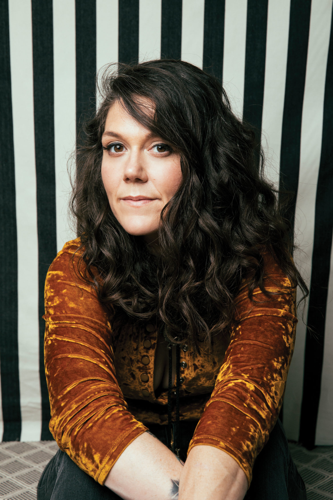
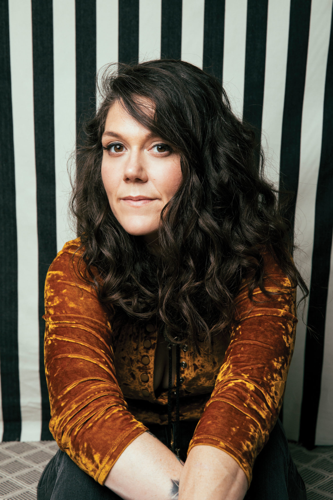


“I think before anything else, first and foremost, I’m a songwriter,” says Lilly Hiatt, talking with the Scene from her Nashville home near the thoroughfare that lends its name to her new album, Trinity Lane. “I identify with other songwriters deeply, but at the same time I’m a band person, and I like to be part of a band. I like to rock. I think my dad is the same way.”
Hiatt’s father is famed Nashville songwriter John Hiatt, and the tension she speaks of is close to the heart of Trinity Lane. As you can tell from the ease with which Hiatt settles into the homages to rock that mark the album, there’s no need for innovative tunesmiths in the Americana era to limit themselves to what is traditionally accepted as roots music. The record’s sonic palette, shaped with help from Shovels & Rope’s Michael Trent at his Johns Island, S.C., space Studio Bees, marries the approaches of country music and singer-songwriterdom to the rock of Liz Phair, Roxy Music and David Bowie. Hiatt creates music that matches the scope of her songwriting, which is at a peak throughout Trinity Lane. It’s a confessional album that never gets solipsistic, which means she may know more about pop than she lets on.
Hiatt was born in Los Angeles on April 26, 1984. Her father had established himself as a songwriter in Nashville in the 1970s before moving to California near the end of the decade, and his subsequent music combines the approaches of Music City singer-songwriters and soulful rock singers such as Graham Parker and Elvis Costello. In the wake of Lilly’s mother’s suicide (three days before Lilly’s first birthday), John and Lilly settled in Nashville, and John toured heavily during his daughter’s childhood. Lilly makes peace with her family history and its emotional fallout in the Trinity track “Imposter,” marked by economical, resonant lyrics worthy of such laconic tunesmiths as Dan Penn and Guy Clark. Lilly sings: “I could try to make it better / I could pray it won’t get worse / I could wish you would forget her / I could hope you break this curse.”
The younger Hiatt is a gifted wordsmith with an expressive voice that often registers as country, and early on she mastered a conversational tone that complements her ability to combine lyricism and narrative drive. She attracted notice for her 2012 debut full-length Let Down and 2015’s Royal Blue, both recorded in Nashville with a band called The Dropped Ponies that featured pedal-steel guitarist Luke Schneider, who’s now a member of Margo Price’s band, drummer Jon Radford, guitarist Beth Finney and bassist Jake Bradley.
Hiatt’s work with the Ponies offered variations on rock, folk and country — their nimble playing made songs like the Royal Blue track “Jesus Would’ve Let Me Pick the Restaurant” fascinating examples of post-country rock — but Trinity Lane features a new band that matches the agility and heft of her new material. The new record features Trent on a variety of stringed instruments and keyboards, plus guitarist John Condit and bassist Robert Hudson of Nashville psych-folk band The Inscape, who add textures and rhythms that often sound derived from Bowie’s Lodger and Scary Monsters. Meanwhile, drummer Allen Jones plays simple patterns that sometimes verge on the abstract.
Hiatt wrote many of the songs on Trinity Lane after a breakup. Her philosophical assessment of her reaction to the end of the relationship enables her to write songs that have universal appeal. She invokes Bowie in “The Night David Bowie Died,” a song worthy of both The Thin White Duke and, say, Australian rock band The Go-Betweens, whose work expanded the singer-songwriter mode in many of the same ways Hiatt does here. As guitars snarl and whine, Hiatt observes the pull of her old relationship in spite of her understanding that it won’t work out: “I wanted to move back to California / Have a baby with ya / I knew you weren’t up for that.”
Hiatt’s vocal control is impressive throughout, and the nuanced music matches her supercharged narratives. Trinity Lane transforms functional music into condensed performances that are simultaneously utilitarian and poetic, just like the record’s title. In classic singer-songwriter fashion, Hiatt writes about her own experiences while examining truths that seethe in the background of every human life.
“There’s so many different levels for people, and that’s why I love not going into the specifics of what something’s about, you know,” she says. “People relate in different ways.”
Email music@nashvillescene.com
*Editor's note: An additional release show, scheduled for Aug. 25 at Fond Object's East Nashville location, has been canceled following the death of the store's co-owner, Jeff Pettit, on Aug. 20.



Post a comment as anonymous
Report
Watch this discussion.
(0) comments
Welcome to the discussion.
Log In
Welcome to the discussion.
Keep it clean. Please avoid obscene, vulgar, lewd, racist or otherwise abusive language. Comments featuring hate speech or threatening or violent content will not be tolerated.
PLEASE TURN OFF YOUR CAPS LOCK.
Be truthful. Don't knowingly lie or mislead.
Be proactive. Use the “report” link on any comment that violates our comment policy.
Share with us. We'd love to hear your feedback.