


It was the first night of the waning moon. My neighborhood, usually a bustling place in the twilight hours, was devoid of activity: no murmured conversation wafting from backyard barbecues, no squeals of delight from children flouting bedtime in the final days of summer vacation. Bats darted across the sky, and I spied critters slinking silently through the vegetable garden, looking for a snack before a long night of nocturnal adventures. It was almost like the environment was listening to me — or maybe to the stereo on my back porch, which was playing The Fool by New York City harp-and-violin duo LEYA. It couldn’t have been a more perfect moment if I had planned it.
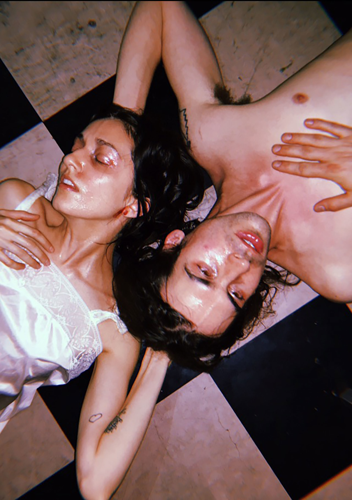
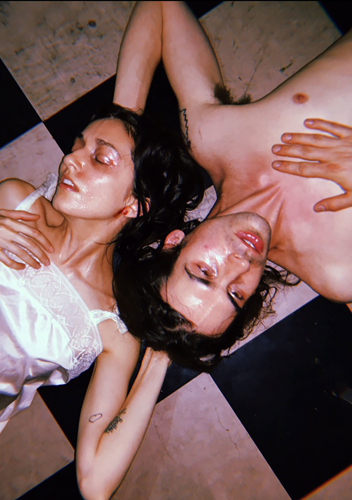
LEYA’s instrumentation is unusual, and their sound is even more unusual. And a typical listening situation just doesn’t do the album or the artists justice. The vaporous vocals, the dark chords tuned to their own harmony, and the ethereal whoosh of echoes on echoes are too intense for dinner, too distracting for a safe commute. LEYA creates music that demands and rewards focused, attentive listening.
“I can only really deeply listen with my eyes closed and not really touching anything,” harpist Marilu Donovan tells the Scene via email. The duo is on a tour that will bring them to Proper Saké on Friday for a show organized by local arts nonprofit FMRL. “I like to listen sitting in a ball on the floor and covering my face. It gets really interesting in a studio setting.”
This may be the most relatable thing an interview subject has ever told me. So much of our listening is controlled not by our own individual preferences, the intention of the artist or any conditions set by the music itself. Instead, listening is mostly governed by social norms, themselves very much dictated by capitalist motivations, to the point that listening on our own terms can be an almost sacred act of self-care. How much music never gets explored to its full potential because of the lengths we have to go to in order to make room for it? The space — cultural or physical — that we make for music has a profound effect on how it’s experienced.
“We see a lot of deviation between different spaces in terms of how the group sounds,” violinist Adam Markiewicz explains in the same email as his bandmate. “But more and more, I think we’re both getting comfortable with the sound changing night to night. There are some shows where we do an hourlong soundcheck, and others when we just plug in and play. The night-to-night differences used to bug me out a little, because I want everyone who comes to the show to hear the music at its best, but I have learned to love the ebb and flow of each separate performance and now enjoy that unfixed edge to what we do.”
That unfixed edge may be the defining element of LEYA’s work — the nebulous horizon that makes the duo’s sound such a delight. Donovan’s harp flows between woozy beauty and otherworldly menace as Markiewicz’s violin sends drones and shrieks through the space between. The pair’s voices shift shapes between ambient clouds of tone and piercing punctuation marks, often swinging from unnerving to soothing in the span of seconds. It is a listening experience that makes you acutely aware that your ears are on and turned all the way up.
That’s what makes The Fool an anachronistic form of fun, a goth-drone good time that you seldom get an opportunity to experience in an era when so much of making a living in music is about craft. The two inhabit a sonic territory where most fear to tread, but they seem to know every inch of it. And they’re always exploring further.
“I’ve been on the road nearly this entire year, so I listen to a lot of music in planes and cars, but also lots of live shows, naturally,” says Donovan. “My favorite recent listening experience has been waking up to roosters while we stayed on a farm in Atlanta. It’s a welcome experience compared to the sirens and honking in NYC. I really had to sit there and just listen.”
You can hear the results of that kind of close listening in Donovan and Markiewicz’s work together. It’s audible in how the point-counterpoint volleys of Donovan’s theremin-like vocals run against the deep, murky vibrations of her harp, like the cock’s crow shattering the silence of a breaking dawn. You can also hear it in Markiewicz’s shadow-piercing four-string explorations. He explains that being constantly exposed to the mechanical sounds of the subways all over New York and to the elevated train that runs near the apartment where he lived for a decade led him to listen differently to rumblings and screeches — and how they make up part of a rich sonic world that LEYA is also contributing to.
“I’ve always heard music in the subway trains,” Markiewicz says. “Their sound holds every buzz and slap and orchestral moment you might care to hear, all embedded within the noise. There is music everywhere, but especially there.”



