
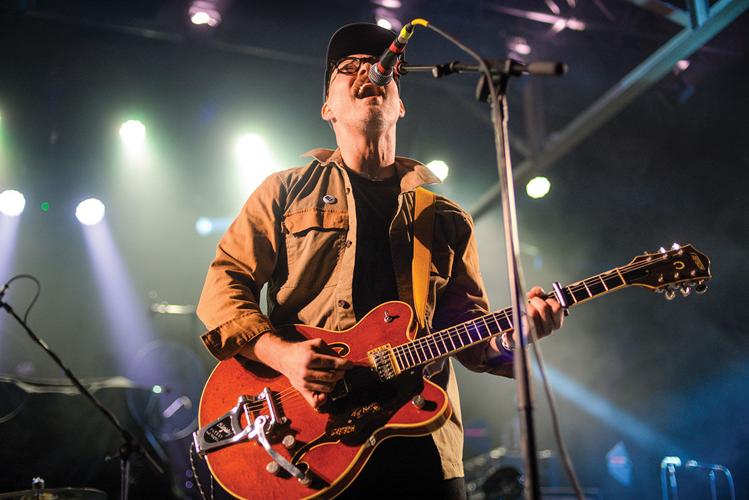


Aaron Robinson
When Imaginary Baseball League called it a day back in 2005, the mood inside the group was bittersweet.
The band was part of a loose gang of artists with Murfreesboro ties making their way without a map through a developing Nashville indie-rock scene. Their tuneful yet tough sound, buoyed by frontman Aaron Robinson’s mellifluous lead vocals, was gaining traction. Not unlike Jimmy Eat World, Sunny Day Real Estate or Louisville’s Elliott, this was a dyed-in-the-wool rock group, albeit “emo-adjacent, as much as we wanted to deny it at the time,” Robinson remembers with a laugh. He’s speaking to the Scene ahead of the reunited band’s show Saturday at The 5 Spot.

In the early 2000s, when Lower Broadway was still in transition to the tourist-heavy district it is today, the 2200 block of Elliston Place — …
Roughly 450 people attended the record-release party for Imaginary Baseball League’s 2004 debut Revive at long-defunct downtown venue Blue Sky Court. Soon major labels came calling for the group. But as much as the band (consisting of Robinson, multi-instrumentalist Keith Childrey, bassist Ben Evans and drummer Ryan Rayborn) was clicking in the jam room and onstage, getting on the same wavelength about which direction to take their careers in proved harder. Maintaining creative control — and indie cred — weighed on their minds. No contract was ever signed, and the group lay dormant for two decades, posthumously completing and releasing its second album The Inevitable Parting in 2021.
“We all grew up idealistic about how we wanted it to go — the idea of selling out,” Robinson says. “We were precious about what we wanted to do, and in some ways were our own worst enemy. We didn’t want to sign our lives away. Atlantic Records were talking to me about the band, but we didn’t have management or anyone more reliable to talk to representing our best interests. We got lost.”
Today, Robinson is a local fixture — you might’ve seen him fronting the elegant power-pop combo Pale Houses or witnessed his to-the-letter tribute to Counting Crows’ Adam Duritz (among other sensitive ’90s alt-rockers) in the all-star cover band My So-Called Band. He’s also working on a solo album with producer Paul Loren, keyboardist for Americana great Kathleen Edwards. But for the singer-songwriter-guitarist and his cohorts, a sense of “what could’ve been” has hung over their old band since it ceased to be.
It’s a welcome development, then, that Imaginary Baseball League has re-emerged more seasoned. To Robinson’s sincere surprise, they’re seeing an audience made up of one part fellow early-middle-age music lovers and one part new fans. In June, they played a packed gig at The Basement (with longtime local music figure and WNXP program director Jason Moon Wilkins taking over bass duties going forward) that felt like an early-2000s Middle Tennessee indie-music community reunion. Clearly many fans not only remember but also carry a torch for IBL. The frontman “had no idea what to expect — but we ended up with a nice, full room with a ton of old friends.”
Later that week, they opened one of three sold-out shows at Marathon Music Works for The Protomen, high-concept sci-fi prog rockers who are also IBL’s old friends from the ’Boro. It showed the group that, if they want it, perhaps Imaginary Baseball League doesn’t have to pop back up only to go away again this time.
“The vibe at Protomen was unbelievable,” says Robinson. “We’d never played for 1,800 people, and no one knew us, but they were excited, eager, not jaded. … After just one song, we’d managed to get everyone participating.”

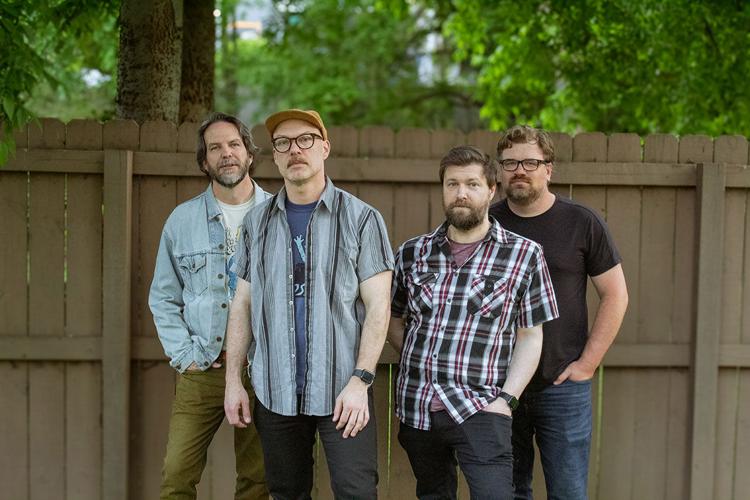
Jason Moon Wilkins (left), Aaron Robinson, Keith Childrey and Ryan Rayborn
Naturally, when the group first reconvened ahead of these performances, Robinson “expected to come back to the songs mostly gritting my teeth through the cringe. But revisiting ‘The Heiress,’ for example, a pretty on-the-nose breakup song, felt surprising. There’s an angry and sad character in there, but also a confident and compassionate voice — someone who knew what they needed and wasn’t afraid to say it. I always remembered that song as raw and overwrought, [but] was surprised how [now] it felt self-aware and even forgiving.” Heads take note: A vinyl reissue of the band’s debut album Revive, which features “The Heiress” — as well as a documentary about the band including footage from the Protomen show — is in the pipeline.
I’m reminded of something Local H’s Scott Lucas said when I interviewed him for the Scene in 2016. On that tour, the Chicago duo was revisiting the coming-of-age post-grunge staple As Good as Dead, and Lucas said: “Ah, the 25-year-old me knew a little bit about … me. I was kind of impressed by my own insight.”
Robinson relates. “There was weirdly some foreshadowing, some wisdom there,” he says, reflecting on his own earlier work. “Maybe I knew more about myself then, than I even know about myself 20 years later. To live a bunch of life, have a bunch of difficult experiences since, then be dropped back into the band [and] be able to just enjoy the experience with no interpersonal B.S. … it’s an intense and rewarding feeling.”





Post a comment as anonymous
Report
Watch this discussion.
(0) comments
Welcome to the discussion.
Log In
Welcome to the discussion.
Keep it clean. Please avoid obscene, vulgar, lewd, racist or otherwise abusive language. Comments featuring hate speech or threatening or violent content will not be tolerated.
PLEASE TURN OFF YOUR CAPS LOCK.
Be truthful. Don't knowingly lie or mislead.
Be proactive. Use the “report” link on any comment that violates our comment policy.
Share with us. We'd love to hear your feedback.