
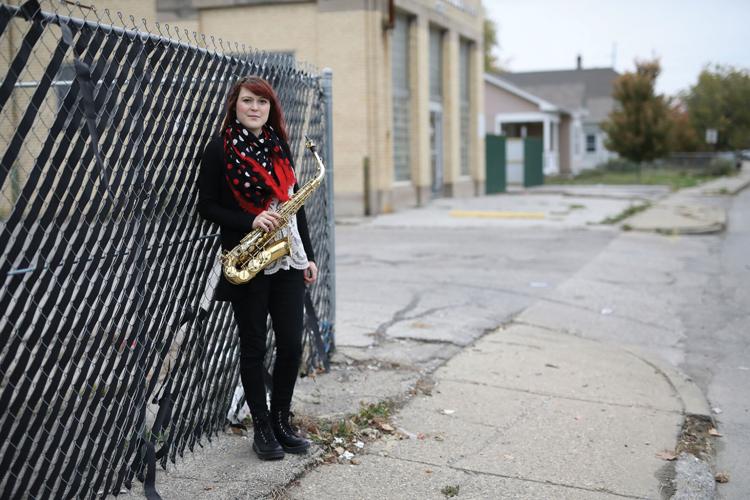


Amanda Gardier
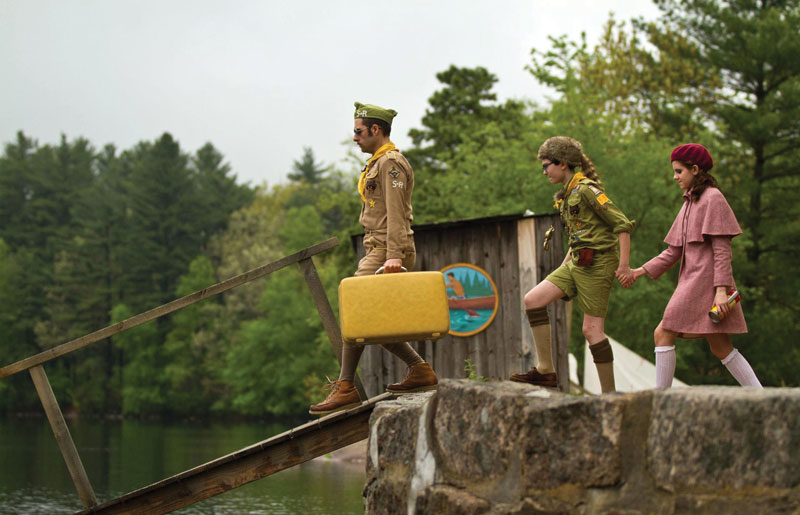
Jazzifying an essential indie filmmaker’s oeuvre is a fascinating concept that could go terribly wrong. But Baltimore-area saxophonist Amanda Gardier executes her new album Auteur: Music Inspired by the Films of Wes Anderson with the wit and elegance to appeal to superfans of the Asteroid City director and Anderson agnostics alike — all of whom can hear pieces from the record before its release when she brings her band to Rudy’s Jazz Room on Jan. 20. By tapping into not only the director’s sonic palette but also the history of music in cinema, she creates one of 2024’s early must-listen LPs.
“I think most jazz musicians nowadays — especially people at least slightly on the younger side — we can’t fight all the influences that we’ve had musically,” Gardier tells the Scene. “A lot of us, yes, grew up listening to traditional jazz and bebop and transcribing a lot of bebop solos and things like that. But we can’t escape the influences of modern pop music. … It’s a natural influence.”
On Auteur, you can hear Anderson’s sense of mise-en-scène, his propensity for diegesis and his use of color and structure — all the tools he uses to make his films such distinctive, immersive experiences — without hearing anything plucked directly from the two-and-a-half decades of scores and soundtracks to his filmography. It is a tribute that uses cinema as a starting point and runs with it. Imbued with a sense of adventure and the sound of talented musicians having a great time, Auteur has a kinetic nature that stems as much from its source material as it does from the adventures around its creation.
“I originally contacted [drummer] Dave King to record it in 2020,” Gardier explains. “Mainly, I kind of thought, ‘Oh, well, he’ll probably have a lot of availability.’ But even then, we kind of kept pushing things back. At that point, my daughter River was born. … We actually recorded it [around] March of 2021, and then I was going to release it this time last year. But I had just won the audition to join the Navy Band Commodores in D.C., and I had to go to basic training.”

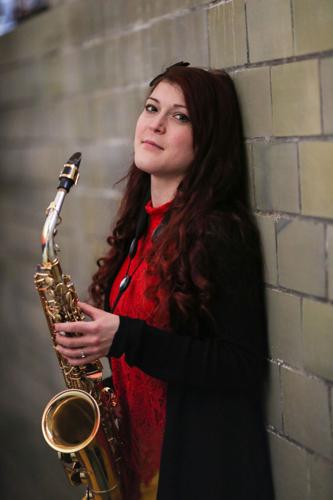
Amanda Gardier
The album captures feelings frequently conjured in Anderson’s work: of being between two worlds, out of place and time as a story unfolds in a manner so stylized it feels preternatural. In “The Blue of Winter,” melancholy sax and anxious guitars rustle past each other amid the rhythm section framing the movement. The frames built from the band’s interplay on songs like “Let’s Hope It’s Got a Happy Ending” and “Electroshock Therapy” are the most Andersonian moments. They also give the best glimpse of the characters behind the music. Gardier explains that some of the pieces draw obliquely on musical ideas associated with characters in the films. She might reverse the order of the notes, change the harmony surrounding them or splice together several ideas representing different characters, and then use that as a springboard to mirror those characters’ story arcs as the piece continues.
Drummer Dave King, guitarist Charlie Ballantine and bassist Jesse Wittman interpret the material with an audible joie de vivre, allowing Gardier’s solos and compositions to get weird when they need to without losing sight of the harmonic narrative. That clear through line is what makes Auteur listenable and accessible while checking all the boxes for deep jazz-heads. Got a friend who’s “trying to get into jazz”? Bring them to Gardier’s show, and they’ll see why this art form is really fun in the 21st century.
Her engagement with contemporary popular cinema as a source of inspiration is very much a part of the jazz tradition — I’ve got a crate of variations on the music from Black Orpheus to back me up on this — but the compositions feel new, fresh and alive. Like Anderson, Gardier creates new stories and forms by shifting nostalgic impulses out of the time and space where we expected them to lead us, and Auteur refracts jazz’s influence on the language of film and film’s reciprocal influence on jazz. Most importantly, it is a great way to kick off a year of creative listening.





Post a comment as anonymous
Report
Watch this discussion.
(0) comments
Welcome to the discussion.
Log In
Welcome to the discussion.
Keep it clean. Please avoid obscene, vulgar, lewd, racist or otherwise abusive language. Comments featuring hate speech or threatening or violent content will not be tolerated.
PLEASE TURN OFF YOUR CAPS LOCK.
Be truthful. Don't knowingly lie or mislead.
Be proactive. Use the “report” link on any comment that violates our comment policy.
Share with us. We'd love to hear your feedback.