



Molly Tuttle is one hell of a guitar flatpicker, and something of a trailblazer as well. She was not only the first female artist to win Guitar Player of the Year at the 2017 International Bluegrass Music Association Awards, but also the first woman to be nominated since the inaugural ceremony in 1990. In a genre that has been reckoning with its lack of gender balance in recent years, Tuttle’s win felt like an important step toward a more inclusive future. (Notably, she repeated her win at the IBMA Awards in 2018, the same year the Americana Music Association also recognized her as Instrumentalist of the Year.)
Tuttle says that after her 2017 win, she was initially thrilled just to be recognized by the community she grew up in. Now 25 years old, she first began playing bluegrass on the guitar at age 8 in the Bay Area. At 15, she joined her family’s band, The Tuttles, before striking out on her own to study at Berklee College of Music in Boston.
“I grew up going to those awards and seeing my favorite guitar players win, so it was really surreal to be onstage winning an award at the show,” Tuttle tells the Scene. “After winning it, I had a lot of women coming up to me and saying, ‘That meant so much to me — we’re so proud of you.’ That really made me feel good, that it was meaningful for others, for women and people who support women. I’ve been trying to find my way in being a spokesperson for women and people who might not feel included in the bluegrass community or the roots community — and trying to find ways to encourage people to make our community more welcoming and accepting of everyone, and supportive of everyone in the same way.”
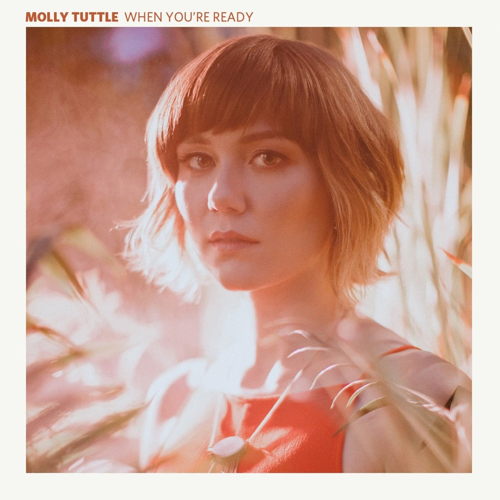
Though Tuttle remains grateful for her recognition as an instrumentalist, these days she’s focusing on her songwriting. On Friday, she’ll release her debut full-length, When You’re Ready, via Compass Records. It’s a follow-up to her 2017 EP Rise, which introduced fans of her virtuosic guitar playing to her singing and songwriting. Releasing Rise was a cathartic experience for the young multi-hyphenate musician, but Tuttle still longed to share a more holistic portrait of her artistry.
“I was first a guitarist and then started singing and writing songs,” she says. “That’s kind of what was out on the forefront for a while. With this album, I really wanted to focus in on the songwriting aspect of what I do and put the vocals and the songwriting more at the forefront — but still keep it a guitar-centered album as well. I really wanted to make sure everything that we were doing production-wise, and all the players on the album, that it all deliberately supported the songs.”
Tuttle wrote the bulk of When You’re Ready after moving to Nashville from Boston in 2015, and she eventually recorded the album with producer Ryan Hewitt, who’s worked on records by The Avett Brothers and The Lumineers, among many others. During the writing process, Tuttle relied on various musical skill sets to challenge herself creatively and to ward off writer’s block. The one constant in her writing process is banking ideas using her phone’s voice memo function, which leaves her open to the many ways the germ of a new song can present itself.
“I start from a bunch of different angles,” she says. “Sometimes that can help break me out of a rut with my writing. Maybe if I’ve been trying to start writing songs from lyric ideas I had, I’ll try writing starting from a guitar part or a melody. Sometimes if I’m stuck, I’ll just start singing a melody and play whatever comes to me, and see if anything cool pops out.”
The first taste fans got of When You’re Ready was “Million Miles,” the album’s opening track. Sonically, the song recalls recent work of another seasoned bluegrass player, Sara Watkins, who sings with a sturdy sweetness similar to Tuttle’s. Lyrically, “Million Miles” is a wistful tune about missing someone that offers a glimpse into Tuttle’s narrative style. (The recording features guest vocals from Jason Isbell as well as contributions from ace mandolinist Sierra Hull.) Tuttle co-wrote the song in a somewhat unorthodox fashion with veteran songwriter Steve Poltz.
“I just had a voice memo of him on my phone playing the first verse and the chorus,” Tuttle says. “He had said, ‘Why don’t you take this song and see if you can finish it?’ I really didn’t know what that meant. Like, I didn’t know if it needed another verse, another two verses, a bridge. So I just listened to it for a while, and sat with it, and tried to imagine what else there was to say from the character’s point of view in the song — and tried to craft a story in my head of what was maybe going on in the song.”
Tuttle added one new verse and an instrumental section to the song, which Poltz had begun in the 1990s with Jewel, his best-known co-writer. The song had been sitting untouched since, and Tuttle enjoyed the challenge of breathing new life into it.
“It was definitely a challenge to keep the same tone of the song and get inside what the mood was when they were writing it,” she says. “I just kind of imagined those things. That will sometimes happen to me — when I write a song and I leave it for a while and try to come back to it, and I’m like, ‘Wait, what was I thinking or feeling when I was writing this?’ … I try to get back to the initial inspiration and figure out what we were initially trying to say with a song.”

In addition to Poltz, versatile writers like Maya de Vitry and Sarah Siskind also contribute to When You’re Ready. Across the album, Tuttle and her co-writers explore emotional twists and turns in compelling narratives. Some of that is in the performance: On standout track “Take the Journey,” Tuttle implores the listener to be confident, with a quick delivery that almost causes you to lose track of her fiery flatpicking. But the writing is key, too. Soulful album closer “Clue” laments the sharp pain of lost love with grace, as she sings: “Thought I knew you / I could have been wrong / Did you fake the words / To my favorite song?”
While Tuttle’s natural talent is undeniable, she cites her move to Nashville as one piece of what has enabled her to find her voice as a songwriter.
“There are so many great songwriters in Nashville,” she says. “I think that helped me focus on that part of what I do, just being around great writers and learning how different people write. I really didn’t do much co-writing before I moved here. Moving here was also the first time I was out of school and trying to figure out what I wanted to do with my music, so I think I gained more confidence in what I’m doing and became more independent and really tried to focus in on what I wanted to do with my music.”



Post a comment as anonymous
Report
Watch this discussion.
(0) comments
Welcome to the discussion.
Log In
Welcome to the discussion.
Keep it clean. Please avoid obscene, vulgar, lewd, racist or otherwise abusive language. Comments featuring hate speech or threatening or violent content will not be tolerated.
PLEASE TURN OFF YOUR CAPS LOCK.
Be truthful. Don't knowingly lie or mislead.
Be proactive. Use the “report” link on any comment that violates our comment policy.
Share with us. We'd love to hear your feedback.