


Even before I got thrown into the deep end of the country music scene, it was always a genre I admired. As a writer myself, I respect a good narrative. I’ve always loved how you don’t have to be the most incredible singer out there or a totally prodigious musician to make it in country — as long as you can tell a story. A good story is king.
Being raised between Georgia and Texas, I know my fair share of country Black folks who could appreciate the occasional country banger — even some who claim to “hate” country music. I always thought that was interesting, because it appeared that country’s cousins — roots genres like blues, zydeco, even folk to a certain extent — were all fine for them to enjoy, but country seemed off-limits. For a long time, no other genre was so clearly coded a “whites only” space, so my appreciation for the genre was something I mostly kept to myself.
When I was first presented with the opportunity to write this piece, I was ecstatic. More than a few folks have been proclaiming that “it’s different now,” and that my time was coming, so the offer in my inbox felt like a confirmation. I read the assignment 10 times over and asked every mentor available what angle I should tackle things from. But I found myself in a scary position — I just couldn’t find any words. Days turned into a week, I was still coming up blank, and eventually, I realized the problem wasn’t exactly that I had nothing to say. The problem was that I had nothing new to say. Still don’t. I have nothing unique to offer, because this conversation has been had time and time again for decades.
Though I’m still learning the lay of the land in this space, I’ve noticed there’s a trap that’s been set at the door. It’s an easy one to fall into if you haven’t lived your life looking for, evading and escaping such traps.
It’s easy to see a queer woman like Brandi Carlile receive two Song of the Year nominations at the Grammys and think queer people are safe and welcome in this space.
It’s easy to see seven Black women open for Jason Isbell’s run of shows at the Ryman and believe that Black women are finally getting their due.
It’s easy to witness the Black Opry House — a house full of Black folks networking and singing songs — become the talk of AmericanaFest and think things are different.
It’s easy to discover a Black man now has one of the biggest jobs in country journalism — congratulations to Marcus K. Dowling, who’s taken on a well-deserved staff position at The Tennessean — and proclaim “Ah! Things are changing.”
If you’re having these thoughts, I really hate to break this to you: You’re caught in a massive bear trap. And you’re gonna have to lose a leg if you sincerely want to get out. You’re going to have to let go of the idea that the accomplishments of a few means significant change for all.
Notice that almost every accomplishment was for performing artists? Only one marked a change in the actual mechanics of the industry. While there seems to be room being made for performers — and we should absolutely celebrate that — we have to acknowledge that there’s been little to no change made in the realm that’s kept behind a gate and fiercely protected. For journalists, producers, instrumentalists and other people in and around the music business who are people of color and/or queer, 2021 was another year where we clapped really loud for our favorite artists getting their flowers, and we waited eagerly on the sidelines hoping our time would eventually come too.

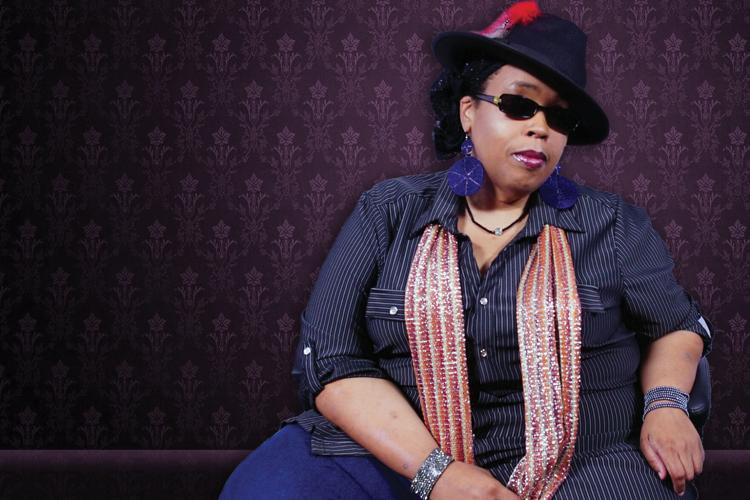
Lilli Lewis
What happens when we don’t have Black and queer folks in these behind-the-scenes positions? Singer-songwriter and label exec Lilli Lewis can tell you that the lack of Black journalists in the industry can completely change the narrative of a project. “I only got to talk to one Black person in the press cycle for my new record,” she tells me. “Now I’m hearing that my album is about slavery, and apparently ‘My American Heart’ is a protest song?” We both laugh at the sheer ridiculousness of a patriotic spiritual being warped into a BLM chant, but the underlying frustration is clear.
Stories like these are present at every level for every position of the industry. There are few POC producers out there, so the music isn’t staying true to the sounds of Black artists. Not enough venues, publications and festivals are owned by queer folks, so queer artists struggle to find a space where they can even feel safe performing if they are out. There aren’t enough POC photographers, lighting directors, stylists or makeup artists, and now you have POC looking absolutely abysmal at times. I’m talking casket-ready.

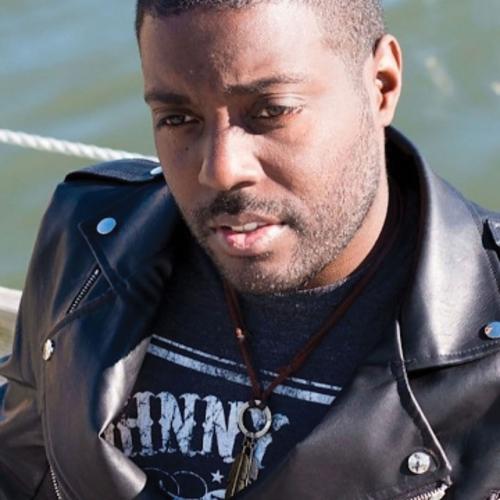
Jett Holden
And if we have virtually no POC or queer executives? Suddenly every artist who draws on that part of their experience is too “out there” — not safe enough to market. Just ask Jett Holden, who at the start of his career was told that he had to choose between being “Black or gay” in country music because he “couldn’t be both,” as if he had an option. Or you could ask Miko Marks, who is only now returning to country music after a 13-year absence precipitated by a traumatic experience at her former label.
Eventually (and soon — like, today, preferably) we have to take an honest, contextual look at what’s happening in this space. “To showcase a few diverse artists and not have a diverse board or staff that you actually listen to and consider is to be performative,” says Rissi Palmer. I’d agree.
Celebrating diversity is fantastic. Seeing Sista Strings and Allison Russell close out the Black Opry Revue at Exit/In began the healing of a wound in me that I didn’t know was bleeding. Meeting so many Black and queer singer-songwriters this past year gave me hope that the next generation of country Black girls won’t have to hide their appreciation for country music, because they’ll see folks who look like them. Soon, country may not be presumed to be a “whites only” space — but not if we all continue to fall for the obvious trap laid in front of us. If we don’t get more POC and queer folks past the gates and into spaces that matter, we will lose everything as soon as “diversity” stops being profitable.
I warned you: In order to get out of the bear trap, you’d have to lose a leg. So, can we have a moment of honesty? Finding a person of color who can sing is not revolutionary, especially among Black people. We be singing! And finding a queer person who is talented, pushes boundaries and breaks barriers is not groundbreaking. To quote the Glee character Kurt circa 2009, “Mercedes is Black. I’m gay. We make culture.” Country music is just now deciding to acknowledge an everyday occurrence. That’s beautiful, but there’s so much more we have to offer.
Truth is, in terms of the “general rethinking in country music of who gets covered,” I’m not concerned about the artists. Their revolution will be televised. But in terms of the “who gets to cover it” — well, now we have a story. And a good story is king.


The state of country music now and in the year ahead



Post a comment as anonymous
Report
Watch this discussion.
(0) comments
Welcome to the discussion.
Log In
Welcome to the discussion.
Keep it clean. Please avoid obscene, vulgar, lewd, racist or otherwise abusive language. Comments featuring hate speech or threatening or violent content will not be tolerated.
PLEASE TURN OFF YOUR CAPS LOCK.
Be truthful. Don't knowingly lie or mislead.
Be proactive. Use the “report” link on any comment that violates our comment policy.
Share with us. We'd love to hear your feedback.