
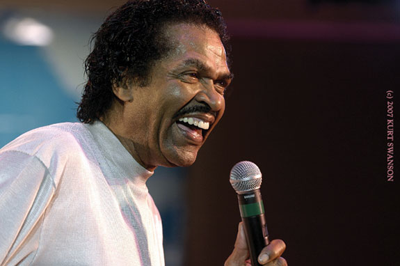

Bandleader, songwriter, vocalist and multi-instrumentalist Bobby Rush ranks among the most unique performers in any style. Now approaching 70, Rush still plays 250 shows a year, and has maintained widespread popularity within the increasingly divided blues world, despite championing a sound and approach vastly different from that of Buddy Guy, B.B. King or even Robert Cray. Rush is outspoken about his audience and appeal, and unafraid to address explosive cultural issues.
"I certainly have plenty of white fans, but the type of show I do has always been most popular with black audiences," Rush says. "I've been recording and performing for 56 years, and I remember when I was starting out, educated black people would say to me, 'Bobby Rush, you're too good for the blues.' A lot of them wanted to forget their roots and the past. There was a period when I was on the road and they called me 'The King of the Chitlin' Circuit.' I've always been proud to play in those places.
"But a funny thing happened over the years. As more and more black people went back to their roots, and we started getting black mayors and now a black president, suddenly the blues became kind of a hip cultural thing, and those doctors and lawyers stopped trying to hide and pretend they didn't know anything about the blues and started to embrace their roots."
Rush began his career in the early '50s and learned the rudiments of singing and playing the guitar in Chicago, alongside such legends as Elmore James, Little Walter and "Big Moose" Walker. He scored his first major hit with "Chicken Heads" in 1971, but his fame accelerated when he moved to Mississippi in the '80s and began cutting a string of albums for his LaJam label, as well as for Malaco's Waldoxy, and even one session for Philadelphia International.
Releases like Sue, What's Good for the Goose Is Good for the Gander, Handy Man and Gotta Have Money feature songs with quirky lyrics and salty stories, vibrant leads and just enough guitar and/or harmonica flash to provide ample blues sensibility, yet still emphasize the exuberant performance mode that's endeared Rush to listeners more interested in vocal fireworks than instrumental brilliance. The same holds true of more recent Rush releases like Raw or last year's Blind Snake (both on his Deep Rush label).
Rush's live show, complete with full band and dancers ("The Booty Girls"), contains the requisite visual theatrics and sexuality to compete with any arena rock outing, and he incorporates enough funk and rap touches to remain contemporary without sacrificing his artistic credibility — all of which also make him the ideal artist to launch the new Nashville Blues Society's periodic concert series.
"We feel Bobby Rush is the kind of performer whose appeal extends across audience lines," according to society member Ted Drozdowski, who's also part of the exciting acoustic blues duo known as The Scissormen (and an occasional Scene contributor). "There are a lot of things we want to do here locally, work with other groups such as The Marion James Blues Society and Tennessee Jazz and Blues Society, present shows with local acts and really help boost the profile of the local blues scene. But we're also very interested in getting people across the board to support the blues, and Bobby Rush appeals to both black and white and really anyone who enjoys the blues and good music. Plus we're having this on Jefferson Street at a place with a good sound system and lots of parking space, and we're very excited about Bobby Rush being our first concert presentation."
The Nashville Blues Society conducts Sunday night jam sessions at Jefferson's Showcase, will soon begin publishing a newsletter, and operates the website nashvillebluessociety.org. Their mission of increasing and enhancing exposure and performing opportunities for local and regional blues musicians dovetails with Rush's vow to continue bringing his music to diverse audiences.
"I feel very fortunate to keep working all these years," Rush said. "I'm still having a lot of fun and love the music, even though sometimes I think about coming off the road. But there's a newfound respect for the blues today, and I'm happy to see it and feel like the things I've done over the years helped pave the way for the music to get more of the respect it deserves."
Email music@nashvillescene.com.



Post a comment as anonymous
Report
Watch this discussion.
(0) comments
Welcome to the discussion.
Log In
Welcome to the discussion.
Keep it clean. Please avoid obscene, vulgar, lewd, racist or otherwise abusive language. Comments featuring hate speech or threatening or violent content will not be tolerated.
PLEASE TURN OFF YOUR CAPS LOCK.
Be truthful. Don't knowingly lie or mislead.
Be proactive. Use the “report” link on any comment that violates our comment policy.
Share with us. We'd love to hear your feedback.