
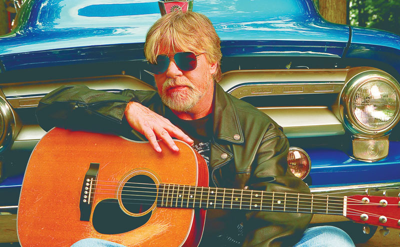

Dear Mr. Seger,
May I call you Bob? I'm going to call you Bob. Can I ask you a huge, huge favor? Can we finally get some reissues of your classic mid-period work? Specifically, your Nashville-recorded, damn-close-to-perfect and impeccably titled seventh album Seven.
I know you've been dragging your feet on entering this whole "digital distribution" shitshow that's been the focus of this century, but what about some nice old-fashioned vinyl so I can replace my recently deceased copy of your 1974 classic with something pristine and new, something that doesn't require me paying through the nose? Pretty please, Bob? For the working man?
Granted, my copy was not in very good condition when it came into my possession. The cover was splattered with something that was still sticky after decades in the back of some dude's storage space. The vinyl smelled like grandma — that sickly nostalgic odor of stale cigarette smoke and Seagram's 7 — with a thin layer of film that took an extra bit of elbow grease to get off. There were scratches and pops and dings, evidence that this record was the soundtrack to some raging. The record was not in great condition when I salvaged it from the moldy crates, but damn if it didn't stand up to another decade of constant listening.
That record was a beast, and its resistance to the forces of entropy was admirable. I will miss it mostly because it captures The Seeg in a vulnerable moment. Seven lacks the sheer bravado of his early work and the weathered wisdom of his classic era. Seven and its antecedent Back in '72 are the calm before the generation-defining Live Bullet storm. This is the first outing for what would become the Silver Bullet Band, and a last-ditch attempt to regain the marginal success he'd achieved in the wake of Ramblin' Gamblin' Man. It is a document of a man who had spent his entire adult life on the carousel of rock 'n' roll, always within reach of the brass ring but never quite able to grasp it.
These were the years when "Turn the Page" — arguably the greatest "life on tour kinda fuckin' sucks" song, and a highlight of Back in '72 — wasn't just another part of the classic-rock canon, easy to ignore thanks to its ubiquity. It was in fact this rare, brutal look into the life of music's working middle class, an insight into how the music sausage gets made that was unfiltered and sort of unpleasant. Bob, the songs that you were writing during those years may not be your best known or best loved, but they are raw, beautiful and honest. The weariness and the heaviness of the funky drum break on "Seen a Lot of Floors," the sheer paranoia and adrenaline of lines like "You look just like a commie / And you might just be a member" from "Get Out of Denver" — these are explosive, perfect rock 'n' roll moments that should not be left in the dustbin of history.
Sure, I get it: Those were rough years that bore little fruit in terms of commercial success (especially when compared to the ultra-mega-monster successes of Night Moves and Stranger in Town). They might not be fun to revisit on a personal level — but, dude. OK, there may be some label chicanery to sort out to get Seven onto the streets — I won't pretend to know the details of your four-year departure from Capitol Records for your own imprint in the Reprise Records stable — but I bet you can handle it. You're like a rock, amiright? You should be able to talk the label into doing your bidding.
Yes, I understand that I can track down those European bootlegs, or the 20-year-old CD reissue that probably has terrible, awful mastering because early '90s major labels loved to make reissues sound like wet farts in an aluminum can. But I don't want those. I want the music as it was meant to be heard. I want to revel in all the sonic glory that Quadrafonic Sound Studios captured back in the Nixon era. I want to dig into every gnarly guitar solo and get bludgeoned by every pounding piano chord. I want the damn vinyl, and I want to pay YOU, Mr. Seger, for the pleasure of listening to it.
Seven is an exquisite moment in rock history: a bridge connecting the excesses of the arena, the primal rage of punk and the progression of the post-psychedelia world. It is one of the most obscure works by one of the modern era's least obscure artists — but it doesn't have to be. Seven is a killer slab of rock 'n' roll, 30 minutes of streamlined, soulful artistry. It is a powerful, elating album that was never truly given its due. Also, it would look pretty killer on 180-gram vinyl. Or maybe 220. Is it too much for me to ask for an audiophile-grade half-speed master?
I'm not going to press my luck. But please, Bob, reissue Seven. If not for me, than do it for the kids. Think of the kids, Bob.
Love always,
Sean



