

1907. That’s the year Tennessee’s oldest restaurant opened its doors. Those are also the last four digits of the phone number for Varallo’s Restaurant, the place that holds that honor.
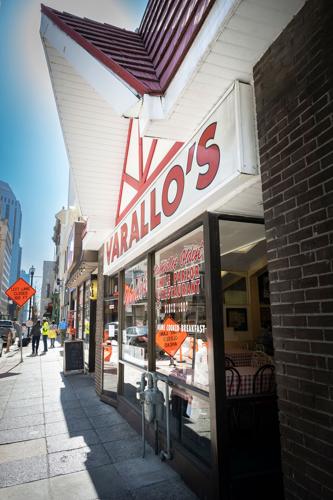
Varallo’s has changed locations a number of times over the past century-plus. Since the early 1990s it has been located at 239 Fourth Ave. N., sporting a triangular pediment and old-school-style signage. Once called Varallo’s Too, this is now the sole Varallo’s location.
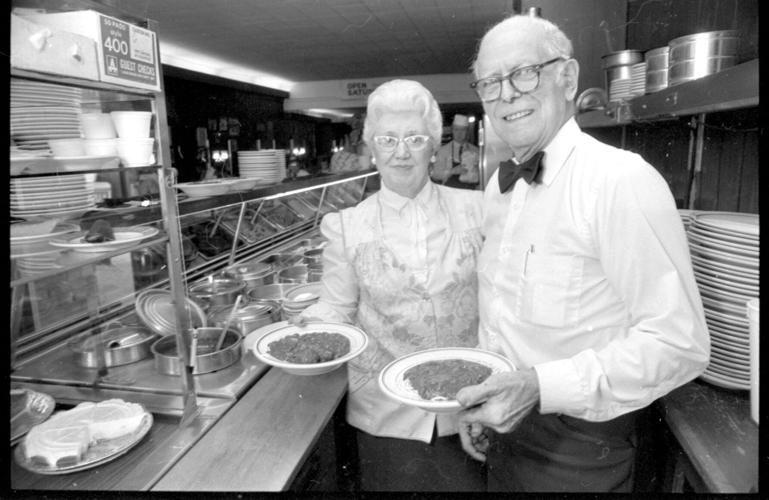
“Everyone in the family worked in the restaurant, either waiting tables, bussing dishes or washing dishes,” remembers Jim Varallo, whose grandfather Frank Varallo Sr. founded the business and whose parents, Frank Jr. and Eva, were known throughout Nashville for their decades of chili-slinging and top-notch customer care.
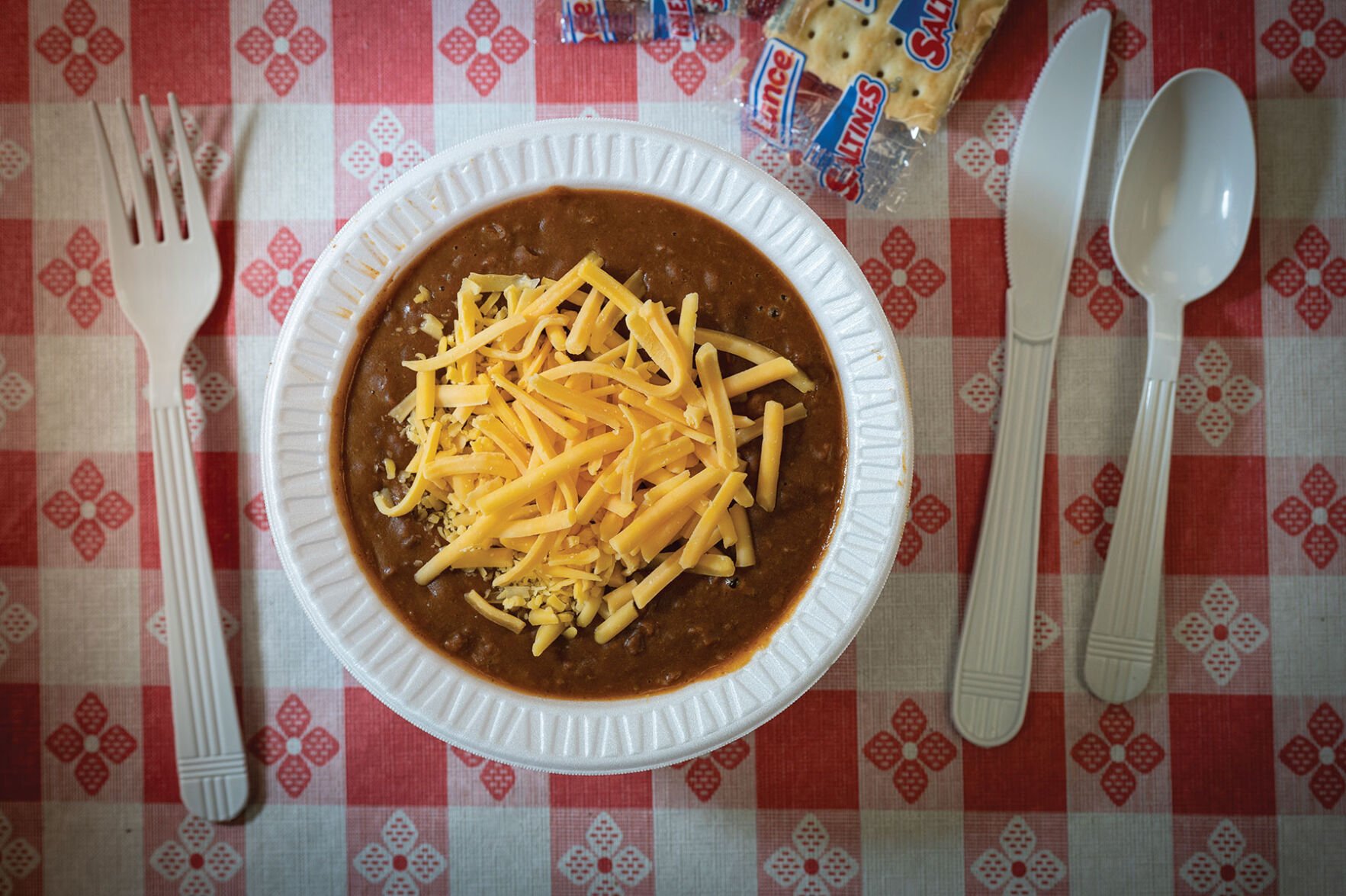
While Nashville today is known as the home of hot chicken and meat-and-threes, chili has a long history in Music City. You may be familiar with Cincinnati chili — this is not the same thing. Cincinnati’s version is sweeter and has a different texture, intended to be eaten on spaghetti with onions, beans and cheese. Varallo’s chili can be eaten on its own, although with the Varallo’s three-way you get it served on top of spaghetti and a tamale. (With your choice of long or short spaghetti.) Fun fact: Jim remembers when one of the leading Cincinnati chili restaurants opened in Nashville on Eighth Avenue North, aware of Varallo’s reputation, thinking that Music City would eat up their take on chili. As he recalls, the store was open just three months.
Bob Peabody bought the business from Todd Varallo — the grandson of Frank Jr. and Eva — in 2019, becoming the first non-family member to own the restaurant.
“The time had come,” Jim says. “We had no more heirs, and Bob loved the history of the restaurant. We fell in love with Bob.”

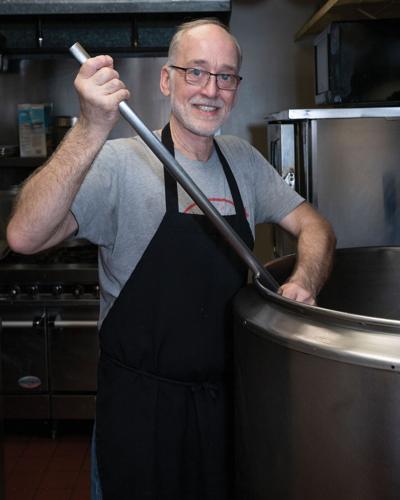
Bob Peabody, current owner of Varallo’s
Peabody, a supply-chain specialist, was looking for a career change and was intrigued by Varallo’s heritage. He followed Todd around the small restaurant for months, writing down everything Todd had in his head — things Jim says were passed down from Frank Jr. and Eva. From those observations, Peabody crafted an operations manual. He would send sections to Todd for review and editing until he felt like he had everything ironed out.
Then, 2020. The world changed. When Varallo’s reopened after a six-and-a-half-month pandemic hiatus, which included some long-overdue remodeling, Peabody had the full menu, including chili, spaghetti, breakfasts, burgers and meat-and-three combos available. And he noticed things were not the same. For decades, much of Varallo’s business had been thanks to downtown office workers, many of whom would come in for breakfast before work and again at lunch. Peabody estimates that before the COVID pandemic, about 70 to 80 percent of business came from state workers. But when more people started working at home, or having hybrid workplaces, that shifted. They didn’t need food near the office as often, and they weren’t going out for lunch with their co-workers. Peabody made tweaks, and — perhaps temporarily — did away with the meat-and-threes to focus on the better-selling dishes.
During the pandemic, supply-chain limitations also caused difficulties for Peabody. He couldn’t find many of the goods he needed, such as napkins to fit his existing dispensers. The small restaurant has a dishwashing station large enough for pots and pans, but not for a steady stream of plates and silverware, so having disposable plates was essential.
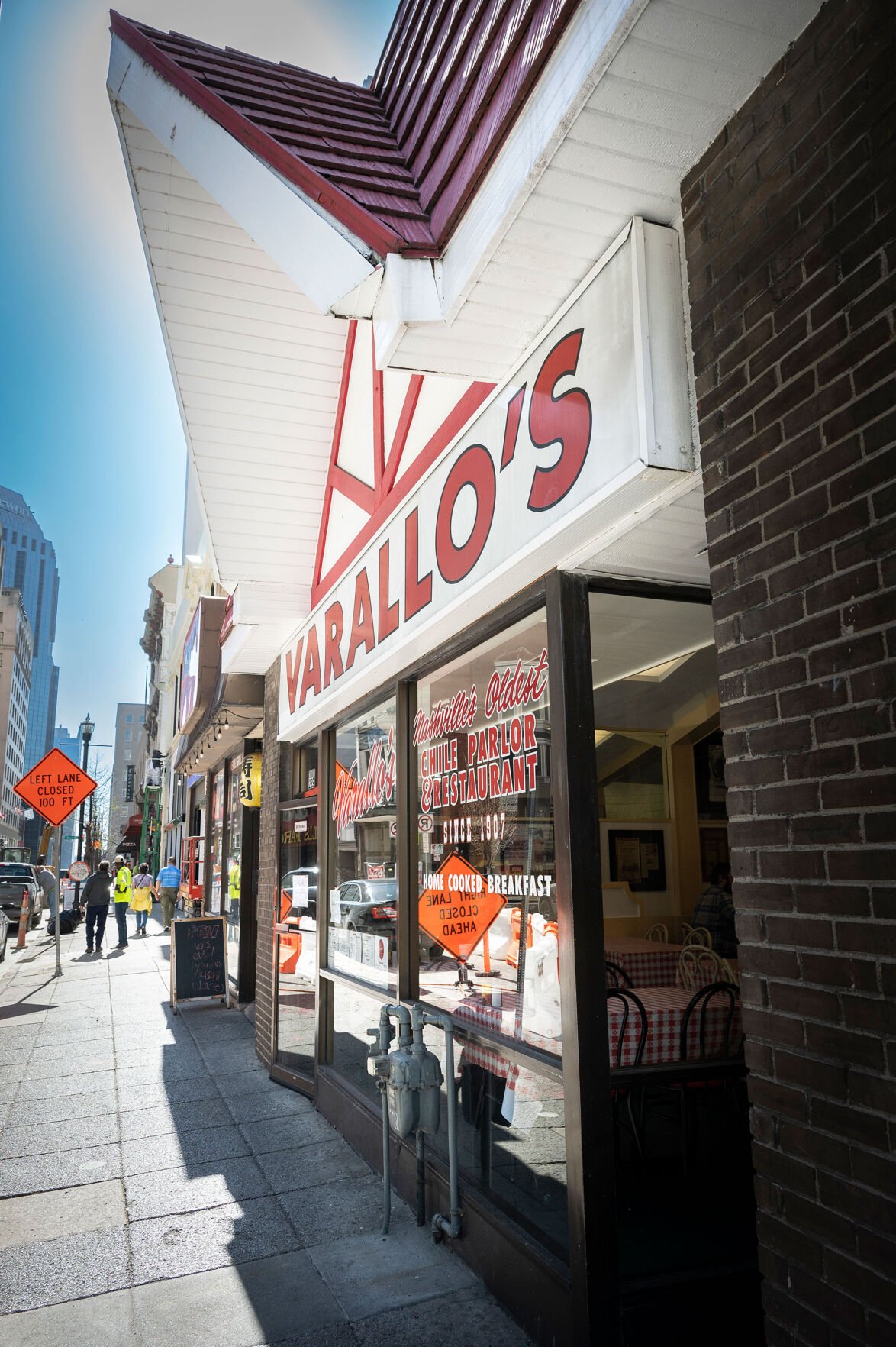
Varallo's in 2023
While Peabody does still have regulars, he estimates that at least 50 percent of his business now comes from out-of-towners, particularly hotel dwellers appreciative of one of the few affordable places to grab breakfast downtown. Construction workers, who are busy downtown, also appreciate a place to get a hot breakfast before work, Peabody says.
“I’ve really enjoyed getting to know the regulars,” Peabody says. “You develop relationships and know what they order. But the people from out of town are fun too. The customers are what I enjoy.”
Peabody also adjusted Varallo’s opening hours, and continues to be attentive to what customers want. In mid-March the restaurant will reopen on Saturdays, although not until 7 a.m., an hour later than on weekdays. Since he’s catering to visitors rather than downtown employees on Saturdays, Peabody says a 7 a.m. start time is sufficient — but, he notes, you can expect it to be very busy by 8 a.m.
If you’ve eaten at Varallo’s recently, you’ve seen Peabody. He’s the guy behind the counter and at the giant vat of chili. He gets to work around 3:30 a.m. to open the doors at 6, and that’s the Varallo family way. “My dad believed you needed to run every day from start to finish,” Jim says. “You needed to be there in person, and he taught Todd to run it that way.”

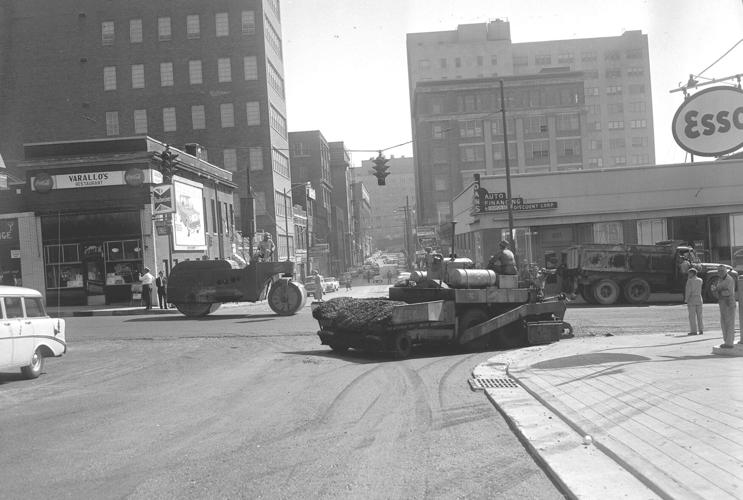
Varallo’s now-closed Church Street location in 1958
Peabody has a sense of responsibility to lead the Varallo’s brand like the family would. Varallo’s has survived many changes and in fact was born of change. Frank Sr. was a professional concert violinist who turned to chili after an injury halted his musical career. He spoke four languages fluently — his first job was as a translator at Ellis Island — and also traveled frequently. On repeated hunting trips to Mexico he ate a chili that he loved, and that recipe turned into the Varallo’s recipe.
That recipe has changed over time. In its early days, Jim says, “Families and proper women did not go into saloons, and the chili recipe was extremely hot. It was toned down when the city began to grow.”
In the late 1980s the Varallo’s family sold the licensing rights to their recipe for canned chili on supermarket shelves. That company has stopped making that product about a year-and-half-ago, although they still own the rights. Peabody says he receives 18 calls a week from people asking where they can find it. He tells them that he’ll happily sell chili to go. That doesn’t help folks calling from Florida, but selling locally in pints and quarts has increased the takeout business.

Eva and Frank Varallo Sr. in 1989
While Varallo’s has historically been a breakfast and lunch spot for 116 years, Peabody is seriously considering dinner and late-night hours. The restaurant’s home is part of the historic Arcade building. (It is on the street, not inside the Arcade itself.) The Arcade’s current renovation project has put tenants on a month-to-month lease. But Peabody says the landlords have left him hopeful that not only will he be able to stay, but that there is opportunity for expansion. As the restored Arcade opens with old and new businesses, Peabody understands that the plan is for the property to be open later at night and on the weekends. If that’s the case, he’ll be there then as well, serving chili and burgers and all-day breakfast to the increased foot traffic. He may even bring the meat-and-three back.
“I survived the last three years,” Peabody says. “I intend to stay here. This is the oldest restaurant in Tennessee, and I feel an obligation to keep it going.”



Post a comment as anonymous
Report
Watch this discussion.
(0) comments
Welcome to the discussion.
Log In
Welcome to the discussion.
Keep it clean. Please avoid obscene, vulgar, lewd, racist or otherwise abusive language. Comments featuring hate speech or threatening or violent content will not be tolerated.
PLEASE TURN OFF YOUR CAPS LOCK.
Be truthful. Don't knowingly lie or mislead.
Be proactive. Use the “report” link on any comment that violates our comment policy.
Share with us. We'd love to hear your feedback.