
Hathorne0013
HathornePhoto: Daniel Meigs
Given all the out-of-town restaurant “concepts” invading our city, it’s nice to see a project in which a talented longtime Nashville chef gets to use his skills to finally open his own restaurant.

Hathorne Photo: Daniel Meigs
John Stephenson has been cooking around Nashville since 1991. His longest stint was at Fido, where he ran the kitchen for 12 years. His cooking there earned him a lot of respect in the dining scene; especially beloved were his daily specials, which explored the goodness of seasonal local ingredients.
After a gig developing the menu for the late second incarnation of The Family Wash on Main Street in East Nashville, Stephenson started working on Hathorne, his dream restaurant. Located on Charlotte Avenue in Sylvan Park, it opened in December. It’s a winner.
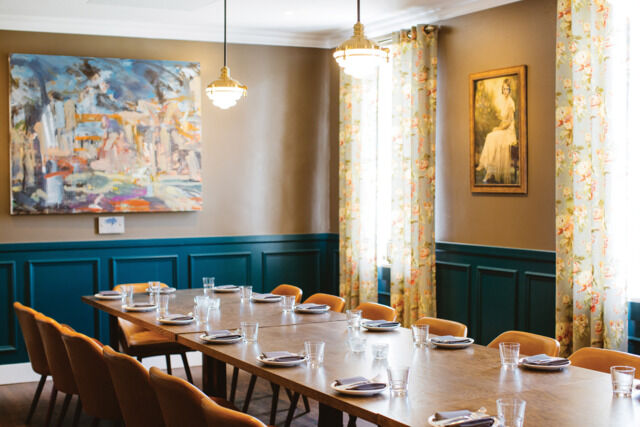
A quick glance at the menu doesn’t really hint at all the flavors and ingredients packed in each dish, which I’ll describe in a minute. But first a note about the restaurant’s name and venue. Hathorne, the name, isn’t pronounced like the author Hawthorne. (The first syllable, “Hath,” rhymes with “math,” not “moth.”) Stephenson chose the name Hathorne in homage to his grandmother’s maiden name, Hathorn. (He took poetic license and added the final “e.”) Currently, Nashville’s dining scene overflows with restaurants using family surnames in their monikers, but Hathorne seems to embody a unique sincerity and authenticity. A black-and-white portrait of the young Miss Mary Ruth Hathorn, circa 1929, with her intelligent gaze and bobbed hair, presides over the bar.
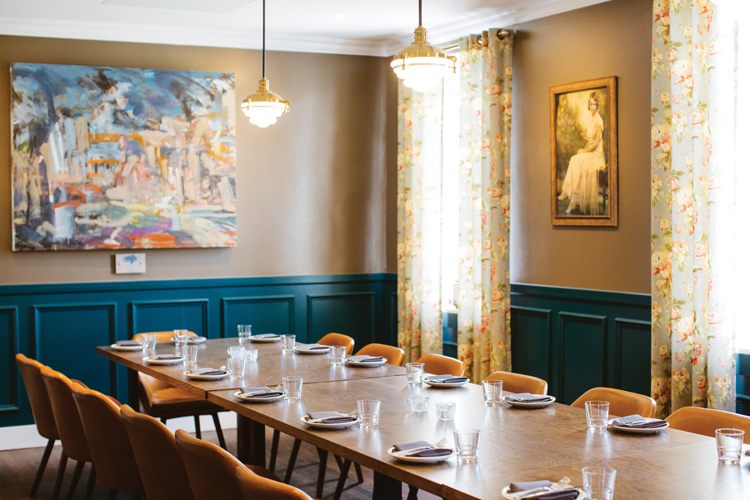
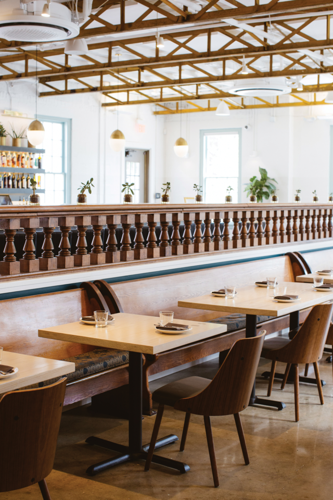
The restaurant’s setting also helps establish a mood. Hathorne fills the former fellowship hall of a Methodist church that used to operate on the site. The hall was built in 1948 to host potlucks and outreach to immigrants. (The main part of the church, built in 1898, is next door, now transformed into the Clementine events venue.)
Instead of banquettes, Hathorne has pews, but they’re carefully crafted with upholstery that makes them far more comfortable than the seating at a typical church (or at the musical Mother Church, the Ryman Auditorium, for that matter). The chairs are equally comfortable, also thanks to the restaurant’s much-appreciated attention to detail. Everything adds up to a relaxed spot that nods to the past while being exquisitely convivial in the present. Out front, there’s also a pleasant patio with a view of both McDonald’s and the 1930s-era edifice that houses the popular Richland Park library branch. (One could say that duality is the Charlotte corridor in a nutshell.)
When it comes to the menu — created by chef-owner Stephenson and executive chef Joey Molteni — Hathorne follows the current (and welcome) approach of offering shareable plates of various sizes. The left-hand column features smaller plates, with the more hearty dishes listed on the right.
On a couple of visits with friends, not one dish struck an off-note. Not surprisingly, given Stephenson’s previous achievements with seasonal produce at Fido, the vegetables are extremely well-executed.

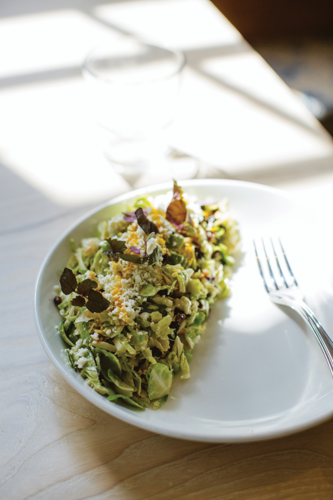
Shaved Brussels at Hathorne Photo: Daniel Meigs
The Brussels sprouts, for example, are a surprise and a revelation. Instead of the ubiquitous charred sprouts (which I find both bitter and boring), Hathorne’s Brussels sprouts taste like spring. The dish is an eyeful of brilliant green; the sprouts are shaved into leafy pieces and tossed in a piquant black-walnut vinaigrette, studded with currants and bits of feta cheese, which add variety and texture without smothering the subtle flavor of the sprouts. I could enjoy this dish every day — especially since it’s quite healthy.
Another excellent vegetable dish is the plate of roasted heirloom carrots, served with chard. A dollop of yogurt mixed with mayu (black garlic oil) provides a creamy and savory touch, and a topping of puffed farro adds crunch.
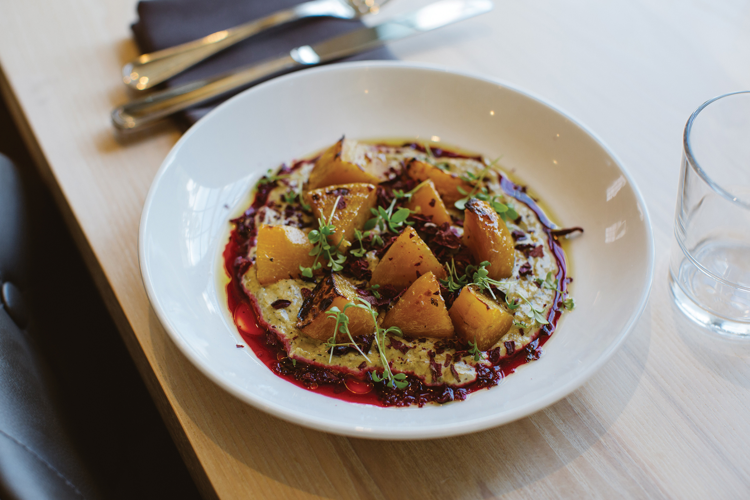
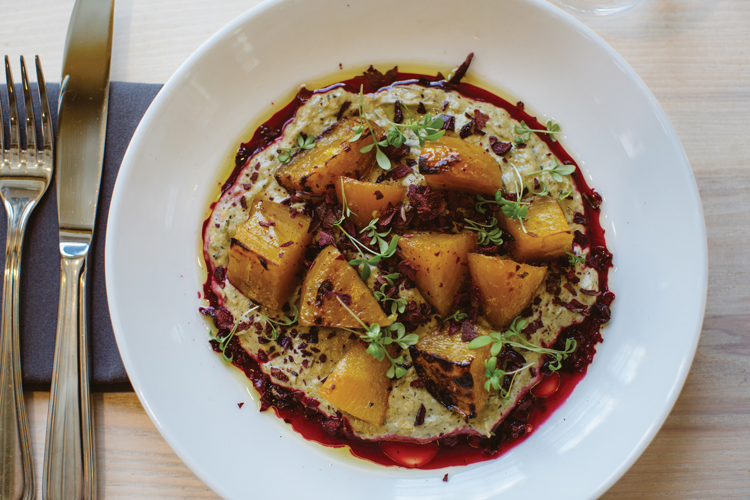
I know many people are devout haters of beets, but if you’re not one of those poor unfortunates, you must try Hathorne’s roasted golden beets. Golden beets have a less aggressive flavor than red ones, and the chef brilliantly places them atop a bed of tahini and grilled green-onion puree, with a sprinkling of Parmesan cheese. Red beets have a controlled presence in the form of a grated topping and a splash of beet water encircling the dish.
Of the heartier dishes, I am partial to the spicy lamb, beef and pork meatballs. Before it arrived, my dining companions and I debated whether we would somehow be served a separate meatball from each meat category, but of course the little savory spheres are actually made from a mixture of all three ground meats. We marveled at how each ingredient — lamb, beef and pork — contributed a distinct flavor to the meatballs, which also happen to be gluten-free. They come with a sweet, herby mint pistou and a hint of sprightly preserved lemon. A small pequin pepper inside each meatball brings some heat. (The spiciness wasn’t overwhelming, but you may want to have a beer or cooling glass of wine on hand to soothe the palate.)
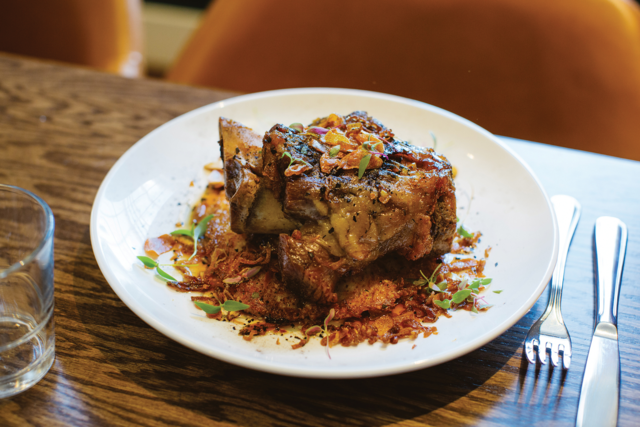
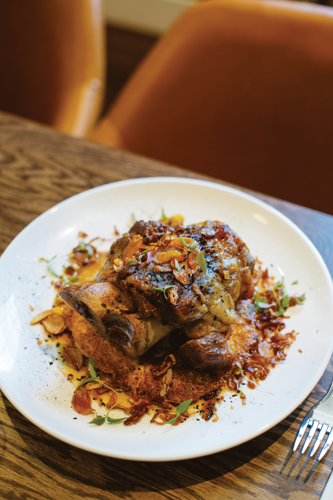
Confit pork shank at Hathorne Photo: Daniel Meigs
One item I ordered almost as an afterthought turned out to be quite memorable. The plate of confit pork shank is a happy array of juicy braised meat served on the shank bone, lying atop a circle of stone-ground grits, hominy and melted cheese. Pork and grits really couldn’t be more Southern, but the presentation invoked Italian traditions of osso buco (in this case pork shank, not veal) and a cheesy frico or cornmeal polenta. It’s a very well-thought-out dish, and surprisingly easy to share, since we could easily pluck nuggets of meat without having to resort very often to the steak knife.
But what knocked me out the most was Hathorne’s take on branzino. It’s served as a whole fish, cooked so perfectly that that the fillets easily slide off the bones. The dish comes with pickled vegetables and an herb emulsion, which are nice flavors to have, but what’s really incredible is how fresh, mild and nutty the bits of fish taste. Again, it’s something I wish I could eat every day.
To complement the food, Hathorne has a carefully curated list of wine, craft beer and special cocktails. Given my love for wine with a little carbonation, I tried both kinds of bubbly offered by the glass: a dry cava from Spain and Charles Sparr’s brut rosé sparkler from France. They were both great, and I also appreciate that Hathorne serves some wines in half-liter carafes, including a food-friendly pinot gris from California.
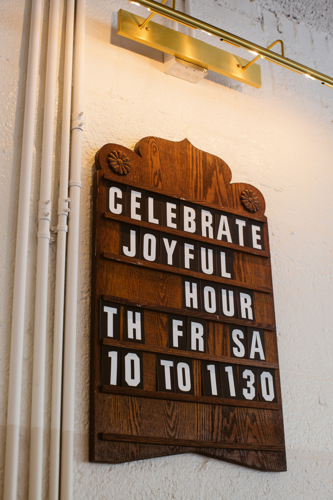
In addition to dinner, Hathorne serves brunch 10 a.m. to 2 p.m on Sundays. The Hathorne team also offers happy-hour deals during the week, along with something called the Joyful Hour, which runs 5 to 7 p.m. Mondays through Saturdays, and features drink deals and special bar snacks. The name harkens to the joyous fellowship of the former church hall, and the idea is to lure more casual visits beyond dinner.
I approve of this plan, because I think more people ought to know about Hathorne. (Perhaps because its entrance is tucked away next to Clementine and isn’t obvious from the street, Hathorne still seems to be under the radar of a lot of diners.)
Chef Stephenson has been waiting a long time to open his own place, and his fans have been waiting as well. It’s time to get joyful at Hathorne.



