

On the heels of the Metro Council’s approval of a substantial property tax hike, the media has been awash with complaints from business owners bemoaning the onerous nature of the increase. Many of the business owners who get the most ink and broadcast time are located within the urban core, and many of them own the buildings where their restaurants and bars operate.
While there’s no question that such a sudden and substantial tax increase — which raises the rate by 34 percent, to $4.221 per $100 in assessed value — creates a burden for businesses of all sizes, those entrepreneurs who actually own their property at least have an exit strategy. If their businesses were no longer viable, property owners have salable assets in their building and land, tangible resources that most likely have appreciated in value during the real estate boom of Nashville’s past decade. While no one wants to see businesses fail under the pressure of increased financial strains brought on by the combination of … well, just about everything that has happened during 2020, the opportunity to convert equity into cash does offer a bit of a safety net.
But what about restaurateurs who don’t own their buildings, particularly those who have not seen the benefit of increased attention and investment in Nashville’s downtown? Many of Nashville’s immigrant-owned restaurants depend on support from clientele who don’t have the same disposable income as tourists and other denizens of downtown establishments.
Most restaurant leases are structured with what is known as a triple-net agreement, in which the tenant is responsible for paying all the expenses of the property — real estate taxes, building insurance and any utilities, maintenance or improvements. Even before the end of a lease’s term, any increases in these expenses are passed on immediately to the lessee. That means Metro’s new tax rates have already become a fact of life for restaurant tenants.
Kurt Rutkowski
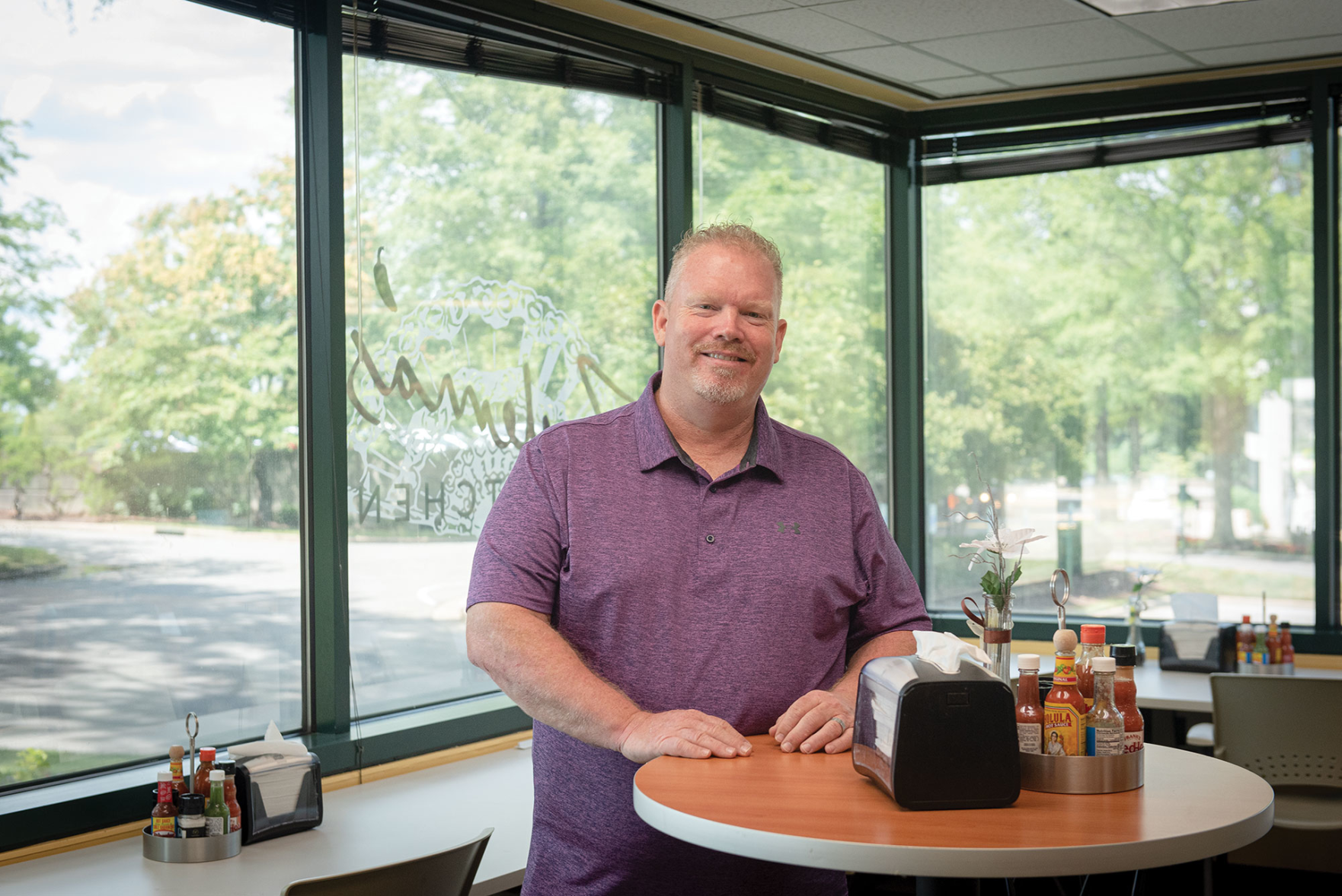
Kurt Rutkowski owns and operates two restaurants with his wife Zulema — the casual Zulema’s Taqueria as well as Zulema’s Kitchen, a full-service restaurant near the airport that serves Latin-inspired cuisine and depends on neighboring office workers for much of its business. Many of those workers have been displaced by the pandemic. Says Rutkowski: “When the entire Latin American division of Bridgestone moved out to work from home, it really affected my customer base. It’s had a tremendous impact on us.”
Rutkowski is a renter of both his buildings, and the effect of the tax increase is substantial. “Triple net hits me three times,” he says. “I’ll see it in my rent, in my utilities and in any improvements I might want to make to my businesses, unless I’m willing to use companies from outside of the county to do the work. My customers don’t realize it yet, but they will feel it, too. Whether they own a house, or go to a restaurant or a bar, or if they buy a product that’s made in Davidson County, they’ll be paying that increase. How long can we sustain on just 10 percent of our sales, higher costs plus a property tax increase? I don’t know the answer, but the mayor is making it really hard to do business in Nashville. I feel that it’s very unfair. Independent restaurants don’t have a huge cash purse behind them like big downtown restaurants do. Any consumer can just look at the business auction sites to see how many restaurants are already going under.”
Rutkowski says he can’t cut his labor costs any further than he already has. “Most of our workers are family or family friends,” he says. “The main reason we opened up again after the shutdown was so that we wouldn’t lose our people.”
In addition to the property tax, Rutkowski has seen many other input costs increase. “We’re an ethnic business,” he says. “We sell tacos and burritos. You can’t make those without maseca [the corn flour used to make tortillas]. The Mexican border is closed, so you can’t get it here. Sam’s Club doesn’t have it. Our regular vendors don’t have it. We’ve had to source it from wherever we can find it at much higher prices. Avocados, limes, anything that comes from Mexico, the costs have gone up.”
In the face of this sort of financial headwind, Rutkowski has to figure out how to change his business. “We haven’t passed the increases on to our customers yet. We sell three tacos and a side for $9, so I can’t go up by 35 percent without shocking them. I’ll probably do it as a fee per transaction rather than through increasing menu prices, but I haven’t figured out how to do that yet. I’ll also be forced to make some cuts, so maybe my hamburger patty will go down a size, meaning the consumer will be getting a lesser value.”
Rutkowski tries hard to be sanguine about his situation, but it’s difficult. “I’m not a pessimist, or I’d have never become an entrepreneur,” he says. “I honestly don’t know if we can sustain this for the rest of the year. And as a renter, I can’t really sell my business, because there’s no money in it.”
Hugo and Any Reyes own three Pupuseria Salvadoreña restaurant locations — in Nashville, Antioch and Murfreesboro. Thanks to translation assistance from their daughter Yasmin, we spoke with Any about how the tax increase has changed her family’s attitude toward investing in their businesses.
“We own the Nashville location on Welch Road and rent the other two,” explains Any. “Every time the taxes go up, our rent goes up, so we’re not inclined to invest in the rentals.” Besides, she adds, “Welch Road was our first, and it’s a blessing that God has given us.”
Hugo is a board member of the Nashville Area Hispanic Chamber of Commerce, but Any says the group has been more interested in discussing PPP loans than the new tax rates. “The meetings have been very informative, but we will bring up the taxes at the next one,” she says.
As small business owners, the Reyes family recognizes what their customers can afford to pay. “The customers come because our food is accessible,” Any says. “It’s especially hard because they don’t have as much work, so they’re not spending as much. We can’t raise our prices because we would not have as many customers, so we will try to look for other solutions.”

Pablo Bonacic
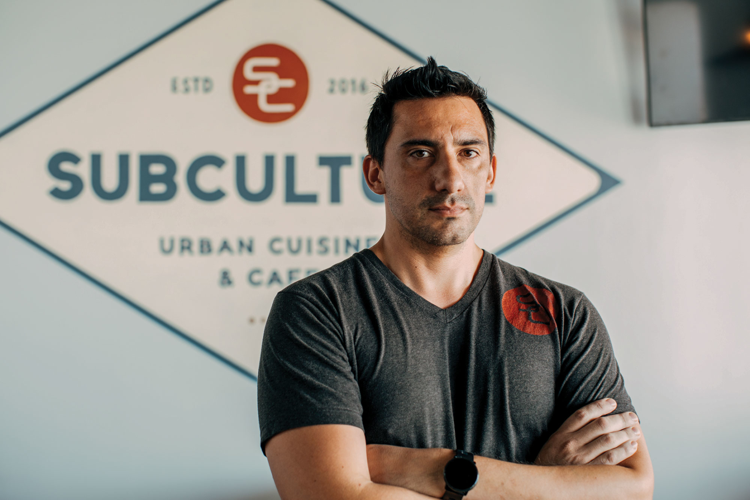
Chilean-born chef Pablo Bonacic opened Subculture Urban Cuisine and Cafe with his wife and brother in 2016. The tiny cafe near the corner of Nolensville Pike and Old Hickory Boulevard quickly earned a cult following thanks to its creative approach to bold, flavorful cuisine. Bonacic also opened small outposts of his restaurant adjacent to a couple of brewery taprooms, but those spots aren’t currently in operation as he waits out the pandemic.
It’s exactly this nimble attitude and business acumen that Bonacic says will help him survive both the downturn and the tax increase. “We’re at about 50 percent of our regular sales,” he says, “but even with being closed for so long with half our sales, we can still support our staff. We’re all getting paychecks, at least enough to get by, and we’ll start fresh next year.”
Bonacic’s secret is watching the numbers like a hawk and operating out of a 600-square-foot restaurant space. “It’s a really small space, so a 34 percent increase really only amounts to $500 a year, because we intentionally make sure that our rent is only about 3 percent of our total sales.”
In recent years, Bonacic has looked to expand into larger rental spaces closer to downtown, but he says he’s glad he didn’t pull the trigger on any of those deals. “We were looking at places with $10,000-a-month triple-net leases and considering building a kitchen at Southern Grist. It would have cost 90-grand to put a hood in that place, but it just makes no sense. We don’t want to go into debt, and if we had built it, we wouldn’t exist.”
Instead, Bonacic invested in himself. “I’ve got some money that I’ve invested in small businesses in the Hispanic community to help start food trucks and stuff. I decided to put it into a food trailer at Southern Grist [in the Nations] and help create the brand and clientele to pay off the investment. We have a tiny overhead, and the trailer is already paid off in full.”
Contrary to what you might see on the nightly local news, Bonacic believes that big downtown restaurants are the only ones that can afford to operate with rent or mortgage costs at percentages higher than he does. “If I had gone downtown or to East Nashville, rent would have been 10 percent of our sales, and we would have to produce so much just to survive. A 34 percent increase on that rate is much harder to swallow, but those big downtown bars have got so much money behind them that their mortgages aren’t too big for them to pay in a good weekend. The margins are so good with alcohol, and their volumes are so huge.”
Bonacic is confident about his plan, but he’s still a realist. “There are no guarantees you’ll be able to stay open,” he says. “Our model is small enough that if we have to go back to day one, when it was just me and my brother in the kitchen, we can do that. If everything fails, I know we can get work pretty quick because we’re hard workers. Sometimes you just gotta be willing to let go, man.”
He also believes that the community where he works at the edge of the county on Nolensville Pike has another advantage when it comes to dealing with the tax increase.
“Immigrants are willing to do whatever it takes to save their businesses,’’ he concludes, sounding a bit like Hamilton and Lafayette in “Yorktown.” “They just want to work. When it comes to the tax and their rent, it’s going to go up, and they’re going to pay it.”



