


Vivian Howard
I watch a lot of food television.
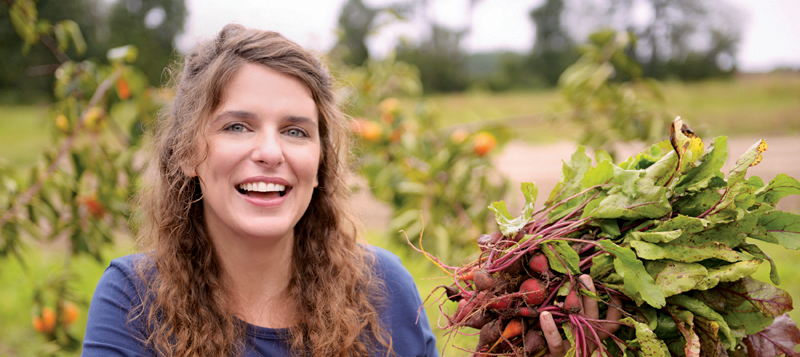
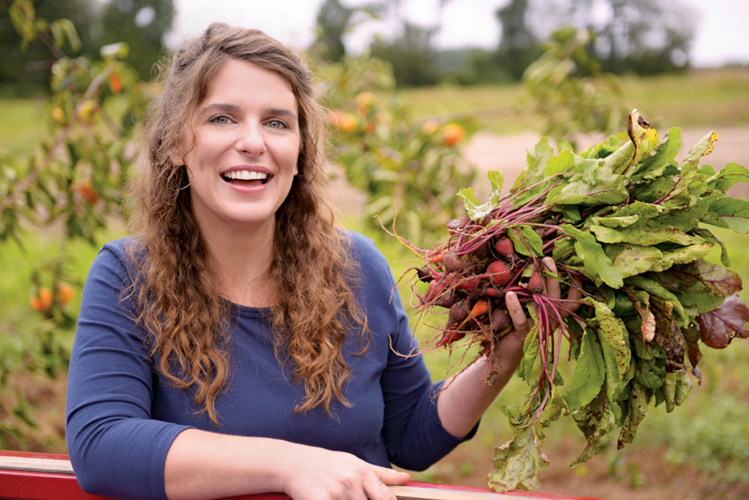
Actually, what I should say is that I have watched a lot of food television. In the past couple of years, my attention has strayed elsewhere as many programmers (Food Network being the biggest culprit) have veered from informing and telling stories to fetishizing celebrity chefs. There’s still good stuff to be found — go find Luke Nguyen’s series about the Mekong Delta — but here in the U.S., there’s way too much Bobby Flay and not enough Vivian Howard.
Howard and production partner Cynthia Hill, a documentary filmmaker and childhood friend, began filming A Chef’s Life in 2012 just as Howard’s restaurant in Kinston, N.C., was beginning to take off. What was originally going to be a show about Eastern North Carolina food traditions took a sharp turn when her place, Chef and the Farmer, burned during the filming of the first season. The result was something magical, a show that was half food and half behind-the-scenes story of a restaurant chef struggling to make it all work.
Few food shows have taken as honest a look at the sources of stress in running a restaurant as A Chef’s Life has: the bad hours, the crappy margins, striving to keep a balance between creativity and consistency, the hazards of working with your spouse, the pull of motherhood. Howard and her husband Ben Knight moved to Kinston from New York at the urging of Howard’s parents, who financed the opening of the restaurant as an inducement to draw their daughter home. That stretch of North Carolina is one of the country’s poorest areas and not exactly the kind of place endowed with the disposable income needed to support a white-tablecloth restaurant built on seasonal menus and a farm-to-table ethos. But Howard’s presence on the list of James Beard Award nominees shows that she’s been doing something right.
The show focuses dually on life at the restaurant and a single ingredient for each episode, toggling between grits and rebuilding or between pickles and auditioning a new chef. Howard leans on neighbors, family and farmers to tease out family recipes and secrets, homing in on her corner of Southern cuisine through the traditions of the people around her.
As the seasons progressed and Howard’s popularity grew, the show began tackling the issues of fame and how a chef evolves in a media-driven world. (I’m sure I’m not the first person who followed Howard on Instagram long before tasting her food.) As the fourth season kicked off this month, we found Howard cooking for a benefit dinner, using that fame to raise money for charity. It’s instructive to see A Chef’s Life built more and more around moments like that and less around the daily events of the restaurant, and yet, the show’s dual focus never loses sight of the food, whether it’s spring onions, watermelon or field peas.
(Side note: Hey, Nashville Public Television, this is a show that’s won a Peabody Award and a James Beard Award in the past couple of years, so why are you burying it at 2:45 a.m. on NPT2 for the first half of its season? It gets upgraded to the regular NPT lineup later this month, airing Saturdays at 10:30 a.m. beginning Oct. 15, but come on, a show this good deserves better.)
All is bound together by cinematography that enters into the territory staked out by Zero Point Zero, the production company behind Anthony Bourdain’s shows Parts Unknown and No Reservations. It’s occasionally lush to the point of actually inducing hunger, lingering over slow-roasting pigs and pots full of beans, collards and fruit.
Howard’s celebration of these ingredients and the complexity behind Southern food traditions is the antidote to Food Network pap like Guy’s Grocery Games or the latest from Paula Deen. Moments like watching a friend’s 92-year-old aunt beat a sack of dried field peas wring joy out of both Howard and viewers at home, a concept missing from the Next Food Network Stars of the world.
I mean, how many shows can pull off using an Avett Brothers song? At the beginning of each episode, Seth Avett counts into the staccato piano interlude of “Will You Return” that doubles as the theme music:
1, 2, 3, 4
I wish you’d see yourself
As beautiful as I see you
Why can’t you see yourself
As beautiful as I see you?
It’s a raucous little tune with a hint of melancholy, a perfect match for a show that’s unafraid to depict some self-doubt in its star. And that’s the lesson that I wish more food television would take from A Chef’s Life, that it’s OK to show the host as vulnerable or goofy, wracked with anxiety or doubled over laughing, even if it’s not a perfectly staged shot. Howard’s ability to make us identify with the person behind the chef’s apron makes her mission of exploring the South one ingredient at a time a vital one. There may not be a better food show on TV right now.



