


There’s a scene in the new documentary short “How to Heal the Planet,” which premieres Monday night, when one of urban farmer Jeffrey Orkin’s children is playing in the dirt. When asked what she’s doing, she replies, “I’m making the world better.”
It’s a poignant and personal moment, and one that makes Orkin teary. It also demonstrates the real essence of the film from Nashville director Davis Watson — that the climate story is not all doom and gloom. There are behavioral changes we can make, processes we can embrace that can make a difference. There is hope to heal the planet.
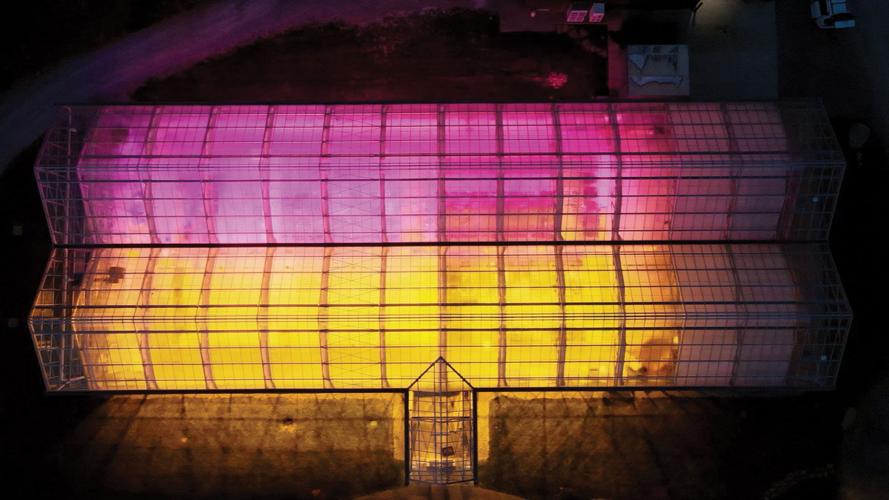
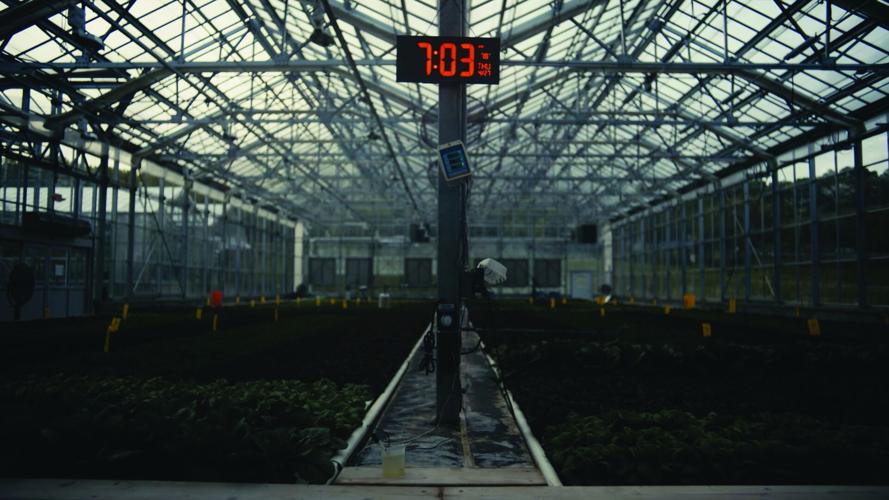
The 25-minute film tells the story of how our city’s local food scene is part of a larger movement through Orkin’s experience. He started growing food on a windowsill in his Bennie Dillon condo on Church Street, and then moved to a storage area, focusing on hydroponic gardening methods. Hydroponic plants are soilless, growing in nutrient-enriched water. Because the crops are grown in small spaces in what are referred to as vertical farms, they can be raised in cities without a lot of land, reducing the miles food has to be transported from farm to table. They use less water than traditional farming and are counted as one of the possible solutions to the myriad threats to the American food system.
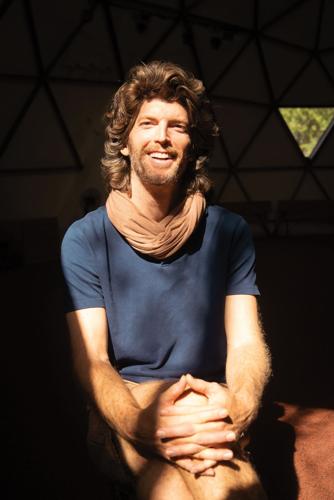
Director/farmer/Renaissance man Watson — he’s even written for the Scene on a couple of occasions, and is also the brother of The Yellow Table Café’s Anna Watson Carl — returned to filmmaking during the pandemic. He wanted to make a film to combat the perception, as Conan O’Brien later joked during the 2026 Academy Awards, that all short documentaries are “little sads.” Watson and Orkin are cousins, sharing interests in farming and bettering the world, so Watson thought Orkin should be his first subject. Watson hopes “How to Heal the Planet” becomes a pilot of sorts, the first of many short films depicting climate work through a more optimistic lens. The project is under the umbrella of Paradocsical, Watson’s documentary website and project.

Davis Watson
“We have a pitch deck of other stories from Maine to Puerto Rico to California,” Watson says. “Of different people doing really interesting, resilient things.” He started with Orkin’s story in part because it was personal and also because it was set in Nashville, where Watson grew up, and was easier to do on a budget.
The film follows Orkin’s path to founding Nashville’s Greener Roots Farm and becoming an essential supplier of truly local, urban-grown produce to Nashville’s best chefs. Those chefs include Margot Café & Bar’s Margot McCormack — people who initially were skeptical about whether hydroponic lettuces and microgreens could taste good. Watson admits that he too was doubtful in the beginning.
“I was in California, where water is very precious, and I see people growing in this coconut coir,” Watson says, referencing the soil alternative utilized in sustainable hydroponic farming using processed coconut husks. “I’m a soil guy; I didn’t know what this medium was. But I really had a shift in my consciousness. We could grow, like, three times as much food, three times as fast.”
The short film features a who’s-who of the early Nashville food scene, including McCormack, Tyler Brown (formerly of Capitol Grille and Southall) and Jeremy Barlow (now known for Fryce Cream and previously the owner of Tayst, an innovative fine-dining spot).
Since “How to Heal the Planet” was filmed, Orkin sold Greener Roots, which continues to supply chefs with nutrient-dense produce grown within 50 miles of their restaurants, including in a greenhouse at Franklin’s Southall. Now growing produce in his new home in Atlanta (although not lettuces, because he says he could never get them better than the ones from Greener Roots), Orkin is reflective on the film and its possible power.
“I’ve been an entrepreneur for many, many, many years, and it’s hard to really understand and see the impact, because you’re there every single day,” he says. “When somebody takes the time to document what that meant. … Truthfully, I have cried every time I’ve watched it, because I just kind of forget what I accomplished with that business.”

Still from “How to Heal the Planet”
In the film, Vanderbilt University professor Amanda Little, author of The Fate of Food, discusses how hydroponics can be not just better than traditional farming methods but also part of the solution.
Solutions are what Paradocsical seeks. To launch the film, Watson is hosting a screening night/fundraiser on Monday, April 27. The lineup includes a screening of the film, a silent auction and a post-show panel with Orkin, Watson, William Crenshaw (Greener Roots’ new owner), McCormack and several others from the film. (Watson says the night is a stop on McCormack’s farewell tour as she prepares to close Margot in June.) Suggested donation is $20, with proceeds benefiting Paradocsical and The Nashville Food Project, but space is available at a pay-what-you-can level.
The screening will take place at Riverside Commons, a new venue in an old stone church that is now the home of Paradocsical. Watson plans to host movie nights and conversations at the East Side venue over the next year.
“Davis is a much better storyteller than I am,” Orkin says. “In the current political climate and the current world we live in, where there’s a lot of disappointing, frustrating, negative energy, I think to highlight that there are really cool, beautiful things happening out there is really impactful.”



