


Cafe Roze
Let’s do a little thought experiment together, shall we? Close your eyes and think of your favorite restaurant — the one you miss the most — and what you’ll order as soon as you feel safe to sit down in its dining room again. Got one? Now open your eyes, and … poof! The COVID-19 pandemic is gone. Everyone has been vaccinated or acquired immunity — except for the anti-vaxxers, who have mysteriously disappeared like characters from The Leftovers — while you were in your cogitative state.
In this fantasy fast-forward, new Tennessee Gov. Randy McNally (see what we did there?) has declared that restaurants are now free to operate at full capacity again — thus ending the charade that they could somehow manage to survive financially when Payroll Protection Plan guidelines require adding 100 percent of employees back to the payroll, but government guidelines allow half as many patrons as usual to dine at a time. All restaurant workers must wear personal protective equipment, making tasting the food they’re cooking problematic, but we’ll figure that out somehow.
Just as restaurateurs have had to make many difficult choices during the course of the pandemic and resulting interruption of their business (and they’ll still have many more to make), diners will also have to face some decisions as we figure out what the restaurant business looks like on the other side of this thing. Below are some thoughts to chew on while we contemplate what the next steps might be.
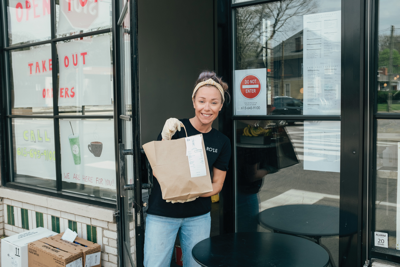
Will carryout/delivery still be a bigger part of your dining experience?
The trend toward enjoying restaurant food at home was already growing before government guidelines made it mandatory. Fast-food joints already had a handle on the process, evidenced by the continued success of chains like Sonic and the hypersonic efficiency of Chick-fil-A’s drive-thru business. Forward-thinking restaurateurs were already recognizing the predilection of many of their younger customers — customers who preferred grabbing their food to-go or taking advantage of delivery services to stay home and binge-watch their favorite shows. All over the country, new virtual restaurants called “ghost kitchens” have been popping up, sometimes operating different takeout/delivery concepts based around specific foods like burgers or pizza, all out of a single kitchen without any sort of dining room attached.
As Nashville restaurants pivoted to off-premise dining models, some really embraced the new reality and perfected the process of preparing and delivering food with little or no human contact. Menus have been tightened to facilitate ease of ordering and preparation, and “family meals” are now a major part of many restaurants’ offerings. Will diners continue to avail themselves of these opportunities, and will carryout become important incremental revenue in addition to regular dining-room service after restaurants open up again? Only time will tell.
Will you continue to cook more meals at home even after your favorite restaurants have fully reopened?
While social media used to be filled with diners’ photos of amazing dishes cooked by professionals, now you’re more likely to scroll through the timeline and see homemade bread and inventive uses of okra that was salvaged from deep within someone’s freezer. Many people have embraced cooking for their families at home during the pandemic, turning it into almost a patriotic act combined with the sort of self-expression that is still Instagrammable. This is in spite of the fact that staple kitchen ingredients have often been hard to come by. Let’s pour one out for all those blameless soon-to-be-neglected sourdough starters that are certain to be the final casualties of the COVID-19 epidemic when their owners stop feeding them.
Will you make dining decisions based on how restaurants treated their employees?
You could call Nashville “the world’s biggest small town.” We are indeed a very close-knit community where people know who the good bosses are and who laid off their entire staff with a note taped to the front door of their restaurant. In the rush to reopen, there may very well be a period like football free agency, during which the more coveted employees choose where they want to hang their aprons based on how owners treated their former workers. Going forward, restaurants will also need to maintain focus on the safety of their employees as much as their patrons. And we’ll be watching — you can bet on that!
Will you remember/care about which chain restaurants tried to make PPP claims?
Whether they ended up keeping the money or not, there will probably be some pushback on bigger restaurants that jumped to the front of the line for Payroll Protection Plan payments, severely stretching the definition of “small business.” J. Alexander’s Holdings busted through the $10 million cap by applying separately for its flagship restaurant chain as well as for its subsidiary Stoney River Steakhouse and Grill. Other chains with Nashville locations — like Shake Shack, Ruth’s Chris and Potbelly — also suffered from bad publicity once their applications were revealed. All four corporations subsequently announced they would return the funds, but it remains to be seen whether the dining public will be left with a bad taste in their mouths.
Will you be willing to pay more for your food now that you understand how close to the bone restaurants run their operations?
Hopefully consumers are now more aware of the razor-thin profit margin that restaurants operate on, most returning 90 percent or more of their revenue to their restaurants and the community in staff salary, rent, taxes and payments to their food and beverage purveyors. With little or no safety net to survive extraordinary circumstances like these, the current restaurant model has been exposed as untenable based on current pricing levels. The “New Normal” may include changes such as more limited menus, higher prices and changes to the traditional tipping system that has created pay inequalities between serving and kitchen staff. Even as diners also suffer through record unemployment and battered savings accounts, they’d best be prepared to dig a little deeper in their pockets for restaurant meals going forward.
Will you want to know more about the farmers/purveyors who provide food to restaurants now that the delicate nature of the nation’s food supply chain has been exposed?
Remember how hard it was to find some items at the very beginning of the state and citywide stay-at-home orders, as grocery shoppers hoarded paper goods, meat and produce? Imagine what that will be like when all the restaurants in the nation try to reopen at essentially the same time after emptying their larders of food and supplies during a lengthy shutdown. Now add in this complication: The crisis began just as many farmers were making planting decisions for the year, and ranchers were planning spring breeding. Now there are stories of livestock being slaughtered to avoid the expense of feeding them during these times of uncertainty, as well as farmers leaving crops to rot in the fields, plowing under their rows or just not planting at all. The same food supply chain that provides inventory for grocery stores also sells to restaurants, and that system is at best extremely delicate, if not broken. Hang on to those dried beans you bought but haven’t figured out how to cook yet.
Will your attitudes toward downtown celebrity restaurants, conventioneers and various tourist activities change once you realize how much impact they have on the city’s finances?
Whether or not you ever dined at “Ol’ Kid Red Rock’s 32 Bridge Good Time Riviera Underground Whiskey Row House + Rooftop Bar,” it has become apparent how critical tourist dollars have been to maintaining Nashville’s white-hot economic boom over the past few years. While building the Music City Center was definitely a risky $600 million-plus gamble coming out of the 2008 recession, it has paid off in the form of hundreds of thousands of visitors spending their money for food, drink and lodging. Nashvillians are already facing the difficulty of Mayor John Cooper’s proposed property tax increase as the result of our precarious Metro financial situation, and if the tourists don’t “come back soon, y’all,” it’s only going to get worse. So even if you don’t want to actually hug a conventioneer the next time you see somebody with a plastic badge hanging around their neck strolling around downtown, you might want to at least thank them for coming.
It’s going to take a concerted communal effort to revive our restaurant and hospitality industry after we emerge from the CoronaDome, and there are still more questions than answers at this point. How diners answer these questions will be crucial as to whether next year’s headline is “Wither Nashville Restaurants.”



