

Last year I wrote about the launching of a new distillery, Log Still, founded by Nashville businessman Wally Dant. With Log Still, Dant seeks to rekindle the history of his family’s role in the industry from the 1800s, when his ancestor J.W. Dant fashioned a still out of a hollowed-out poplar log. Knowing that it would probably be a few years before they had any decent whiskey worth releasing (although they were quick to release a gin since it doesn’t need time to age in a barrel), I said I was looking forward to trying some of their product.
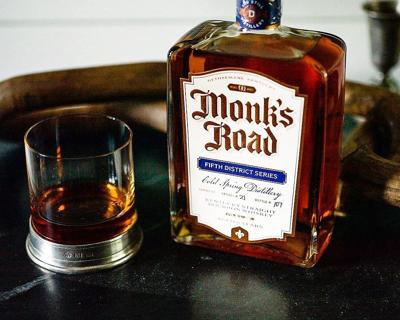
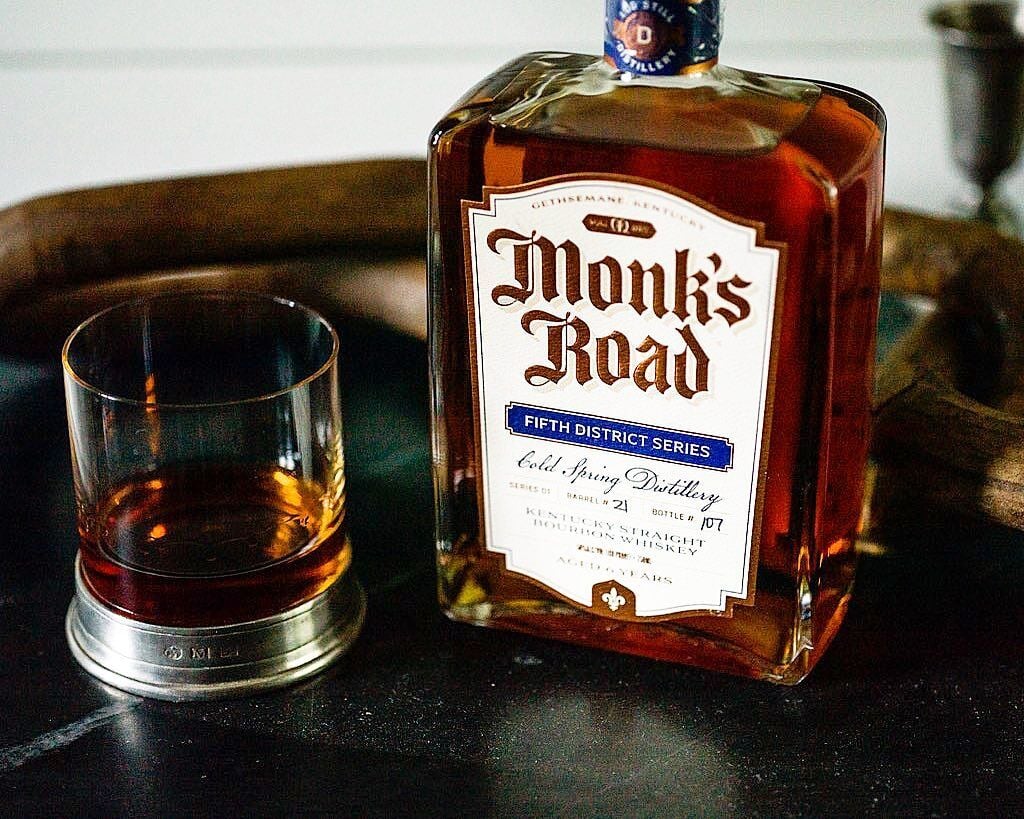
Well, that time has finally come — Log Still has begun distributing in Middle Tennessee. Their first release is called [inhale] Log Still Distillery’s Monk’s Road Fifth District Series Cold Spring Distillery Kentucky Straight Bourbon Whiskey [exhale]. The various aspects of that mouthful of a name represent the name of the distillery, the traditional Cold Springs name of the old family distillery, the Monk’s Road product line and the planned Fifth District single-barrel series release. Let’s just call it Monk’s Road Bourbon, shall we?
We know they didn’t actually make this bourbon, because it’s revealed as being six years old, but that’s fine — many young distilleries source their first products as they wait for their own distillate to age in oak. It’s at least a chance to discover what sort of flavor profiles they’re looking for and their abilities as blenders of barrels.
So how does it taste? Objectively, Monk’s Road is a very nice bourbon, albeit pretty pricey at an MSRP of $80 a bottle. It's 100 proof, and I appreciate that they’ve chosen to release it at a higher alcohol level to let the nuances of the liquid and oak come through, rather than trying to stretch their valuable stores of whiskey by watering it down. This allows the spicy, nutty aromas to come through on the nose and winter spices and fruitiness to show up on the palate attack. I found the balance between spirit and barrel to be quite nice in this whiskey. The finish was not extremely extended, but was quite pleasant with notes of soft, warm oak.
So as a first taste of where this distillery might be heading, Monk’s Road is promising. If you’re the sort of collector who wants to get in on the ground floor of a potential new player and you have 80 bucks burning a hole in your pocket, I say go ahead and grab a bottle so that you can say your tried it before they hit the big time.
The second whiskey I’ve been lucky enough to sample lately is the latest release from Chattanooga Whiskey Company — their new Scotch Cask Finish edition. Longtime Bites readers will know that I’m a huge fan of Chattanooga Whiskey. In fact, their high-malt style of whiskey has led to a personal existential crisis about whether I prefer Tennessee whiskey, bourbon or (gasp) Tennessee High Malt as my favorite style.
I’ve always been a dabbler in whiskeys from Scotland, never jumping in with two feet for the smokiest peaty whiskeys of Islay or the subtler malt-forward products of the Highlands. But Chattanooga Whiskey’s style of creating whiskey based on malty distiller’s beer to create spirits that still qualify as corn-based whiskeys has just hit me in the feels for years. When I scan my voluminous home whiskey bar for a last dram of the evening, I frequently pour another two fingers of some Chattanooga Whiskey product, knowing that means I’ll just have to go to the liquor store again soon while three-quarters-full bottles of other older review products languish taking up space. If only we didn’t have such a crappy glass recycling situation in Nashville.
I frequently describe Chattanooga Whiskey’s various profiles as emphasizing the things I do like about scotch while eliminating those I don’t. But with their new 95-proof Islay Scotch Cask Finish Whiskey, Chattanooga Whiskey has issued a direct challenge to my fandom. (“Oh yeah? Hold my beer! And distill it into a whiskey and finish it in a super smoky, peaty 250 liter cask.”)
The mash bill for this product is a combination of two of the distillery’s most popular recipes, but the differentiating factors come in the form of finishing. It’s already a small-batch product, stated as somewhere between five and seven barrels. (Six?) After aging for at least four years in traditional 53-gallon barrels, the whiskey has been finished in 250-liter Islay Scotch hogsheads for at least three months to take on the earthy smoke that burning peat traditionally contributes to Islay whiskeys.
The result is a delightful limited-release whiskey that demonstrates base notes of peat, honey and oaty malt accented with just enough smokiness to make it unique in Chattanooga Whiskey’s already varied product line. It’s currently available in limited markets, but Tennessee is lucky enough to be one of them.
Damn, I’m gonna have to build a bigger bar!



Post a comment as anonymous
Report
Watch this discussion.
(0) comments
Welcome to the discussion.
Log In
Welcome to the discussion.
Keep it clean. Please avoid obscene, vulgar, lewd, racist or otherwise abusive language. Comments featuring hate speech or threatening or violent content will not be tolerated.
PLEASE TURN OFF YOUR CAPS LOCK.
Be truthful. Don't knowingly lie or mislead.
Be proactive. Use the “report” link on any comment that violates our comment policy.
Share with us. We'd love to hear your feedback.