
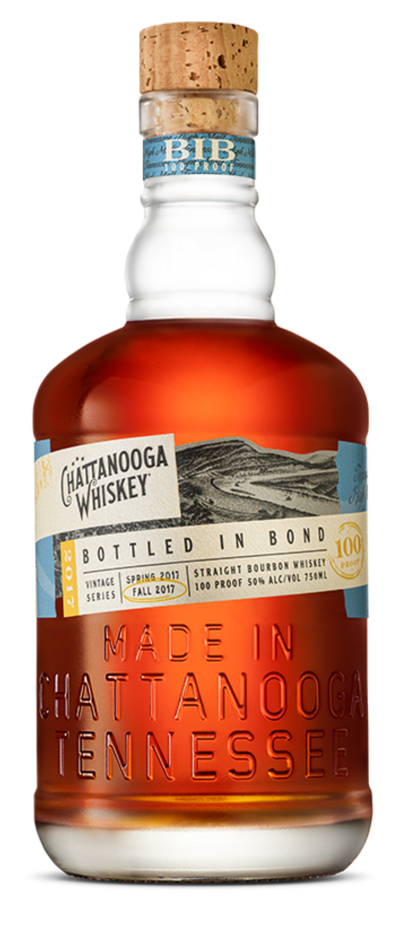

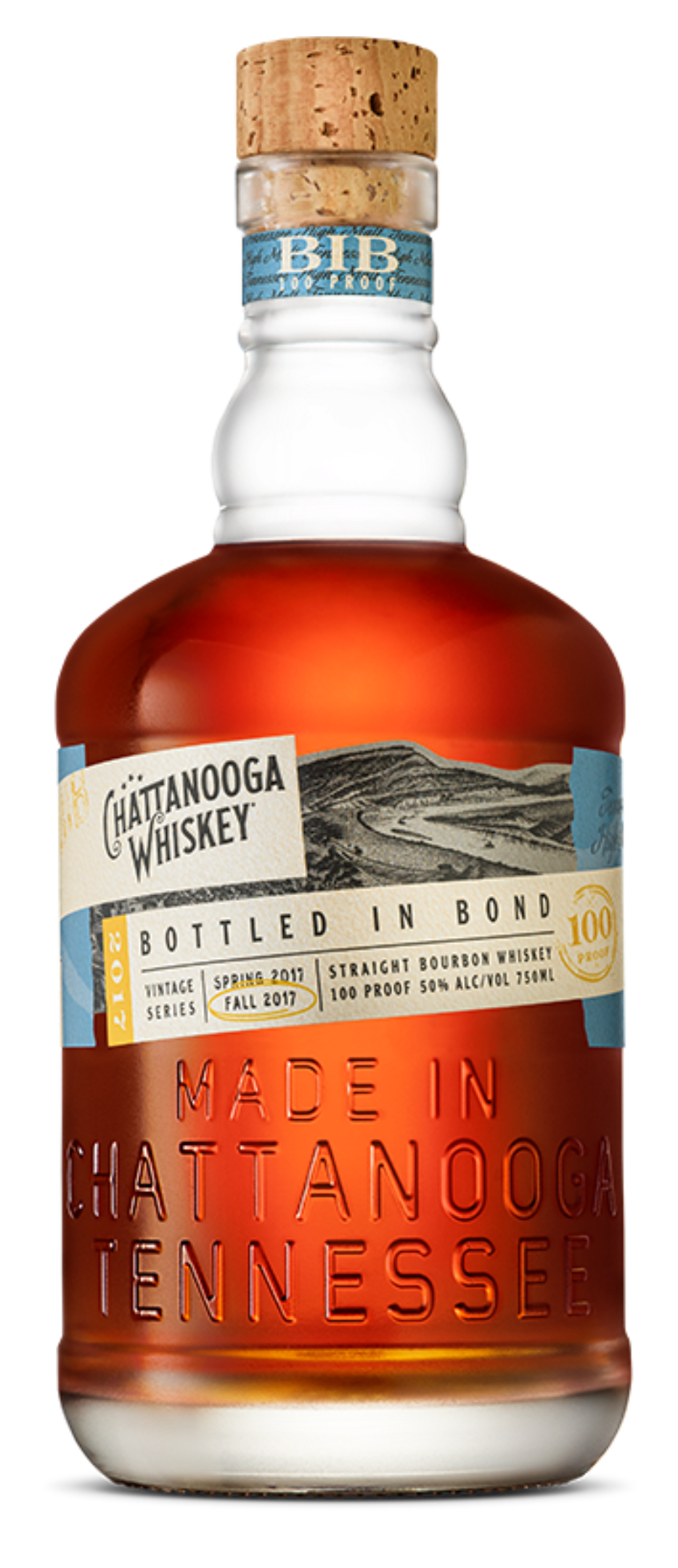
I’ve long been a fan of bottled-in-bond whiskeys. The regulations for using that descriptor of a whiskey require that it be manufactured by a single distillery location in a single season (January through July or August through December) and aged for at least four years in a bonded warehouse before bottling at 100 proof. The designation was originated as kind of a purity check for unscrupulous rectifiers who would blend whatever rotgut they could scrape up from multiple sources and then throw in any number of nasty things to add color and character.
Those days are happily gone, so what bottled-in-bond offers now is a taste of a place and a time. Huge distilleries may manufacture the same product in multiple locations or blend barrels from all over to make a consistent final product, but they can’t do that if they want to call a product BiB. The fact that all the juice must come from a single season doesn’t mean much for the big boys, because they can produce enough in a single day to outpace a small craft distillery’s annual output.
But for those little guys, the chance to taste what they were making in a particular period of their journey as distilleries at least four years ago can be fascinating. That’s what really draws me again to Chattanooga Whiskey’s latest bottled-in-bond offering. I wrote about their spring edition earlier this year and what made it so unique.
While a huge Kentucky-based distillery can just set aside a day or two’s output as their bottled-in-bond offering and call it a day, Chattanooga Whiskey never does things the easy way. In addition to its flagship Tennessee high-malt whiskey product, the company is constantly innovating at its small experimental distillery, coming out with unique new whiskeys that feature interesting grain bills and malting techniques. Some of their favorite recipes are repeated, and that’s what gives them the chance to include them in their semiannual bottled-in-bond product releases.
Without getting too technical about the specifics of each element of the blend, the spring and fall BiBs from Chattanooga are each made from four different whiskeys melded together. Three of the mash bills are repeated between the two releases, but at different percentages in the recipe, and one wild-card whiskey is added in a smaller quantity to make it unique. So for example, the spring release was made with mashbills A, B, C and D (not their real names) distilled in the first half of 2017, while the fall BiB is made up of B, C, D and E from later in 2017.
Just tweaking those ingredient proportions and adding a small bit of a new whiskey makes a remarkable difference between the two Chattanooga BiBs. Fortunately, I still had a couple snifters left of the old juice when the fall edition arrived so I could compare them.
While I really liked the spring, fall impressed me even more. In the glass, the color is a little more intense, like a new penny vs. an older one. The initial palate attack was a little more tannic on the side of the tongue, with an interesting oily mouthfeel to coat the palate and hang on for the ride to come. I got nice notes of fig, and burnt caramel, orange and molasses, and maybe a little bit of the pipe tobacco my grandfather used to smoke when I was little. (And which I took up as a pretentious theater kid in 11th grade. Yeesh.) The 100 proof was a little hot, but that just made the ride to the long finish a bit more intense.
Like most Chattanooga Whiskey products, malt is the highlight of this whiskey, as opposed to the corn-forward bourbons and Tennessee whiskeys. The unique element added to this fall’s batch was called SB 91, a whiskey made with yellow corn, malted rye, caramel malted barley and honey malted barley. The brains behind the distillery come from beer-brewing backgrounds, so malted grains are always critical to their recipe development. First make a great beer, then a great whiskey.
I was lucky enough to taste the SB 91 on its own, and the sweet maple, barley-forward whiskey was already a favorite. Added to this bottled-in-bond offering, I imagine it contributes a lot of those molasses and loamy notes I liked. And thanks for reminding me of my grandpa, but not for reminding me of standing in the corner at a cast party with an $8 plastic Dr. Grabow pipe, puffing away like a wannabe Sherlock Holmes.



