
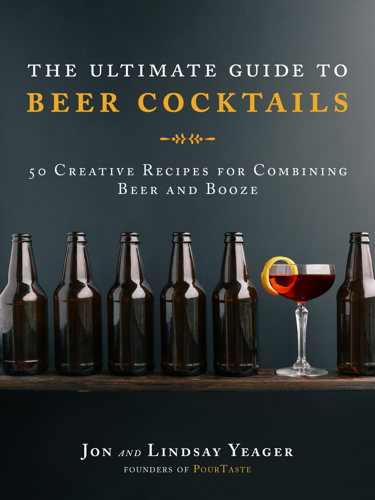


The husband-and-wife team Jon and Lindsay Yeager work professionally together under the moniker PourTaste, operating a cocktail consultancy. In addition to presenting the annual Nashville Cocktail Festival, the Yeagers develop cocktail menus for various bars around town and produce their own line of bar products under their E. Harlow line. Their latest project is a new book titled The Ultimate Guide to Beer Cocktails, published by Skyhorse Publishing.
Their take on “beertails” is pretty exhaustive, beginning with a dense history of beer and of cocktails that goes all the way back to the Code of Hammurabi. This recounting of the journey of beer and drinks to the present is followed by a set of tips and techniques that would be helpful for any home mixologist and a glossary of esoteric bar terms you can throw around the next time you’re drinking in one of Nashville’s more serious cocktail emporiums.
These prefaces are followed by the meat of the book, 50 recipes for creating inventive cocktails that include beer in their list of ingredients. The Yeagers are well-known as big proponents of brandy, despite being in the middle of rabid whiskey country. Understandably, a lot of these recipes are based around the use of exotic brandies, armagnacs, sherries and other complex ingredients like pistachio-infused green Chartreuse or homemade tinctures. You shouldn’t buy this book thinking you’ll be able to whip up most of these recipes at the drop of a hat from the stocks of your home bar unless your home is The Patterson House. But plenty of drinks on their list start with whiskey, bourbon, rum or other spirits you should readily find at your local liquor store or in your own cabinet.
My real quibble is that the vast majority of the beers listed in the recipes are really obscure. Like I’ve never heard of about half of them, and I’m supposed to write about this stuff for a living. I’m sure they were chosen as the perfect ingredient to contribute a particular element to these recipes, but a list of possible substitutions would have been helpful. About half of the recipes do offer open options like “IPA of choice,” so there are at least some chances for you to play around with these recipes without having to fly to Belgium with a big empty suitcase.
The Yeagers offer a fun seasonal twist option with every recipe, so that’s a fun way to experiment with changing up the drinks throughout the year. This book is as much an academic exploration as it is a recipe compendium. As an examination of a novel category of drinks, it’s a fun read, and I’d certainly like to have been in the room during recipe testing. If you’re a super hardcore home mixologist and beer nerd, this is a must-have for you. Pick it up on the usual book sites or on the Pour Taste website.



