

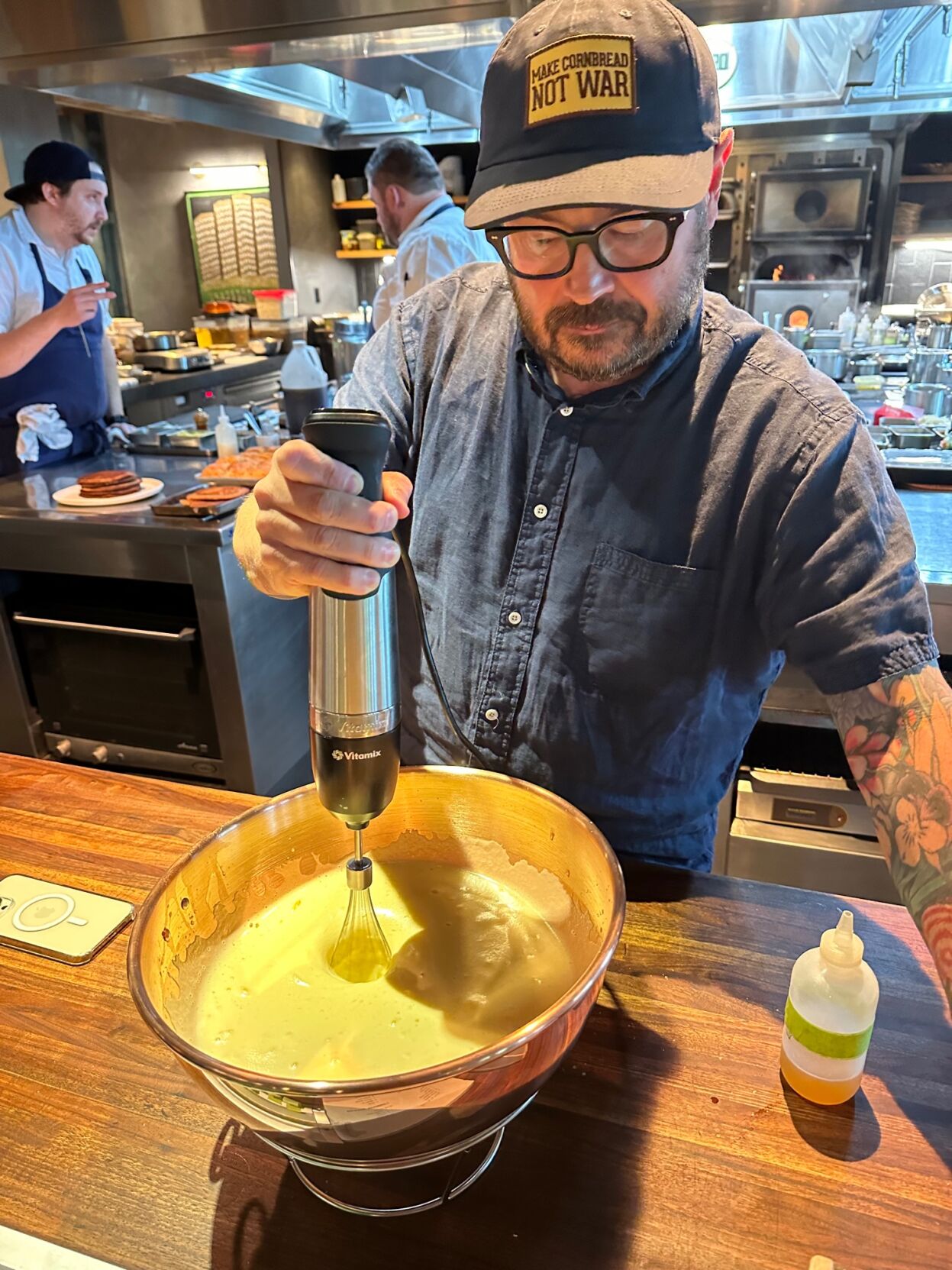
Chef Sean Brock settles in for a good long whisking
When was the last time you really got excited about an omelet?
Making them at home is usually pretty much the same amount of work as putting together a good sandwich, except with some bonus cholesterol. The omelet station at most brunches involves waiting in line for your chosen ingredients to make a perfunctory pass through a skillet manned by an indifferent line cook.
But now that Audrey has begun to accept reservations for weekend brunch from 11 a.m. until 4 p.m., when dinner service begins on Saturday and Sunday, there is actually an omelet that has me intrigued.
Perhaps I should use the French spelling, “omelette.” This particular egg dish is known as the “Omelette de la mère Poulard” after its creator, Anne Boutiaut Poulard. Poulard, also known as Mother Poulard, came up with the recipe for her restaurant in the 19th century in Mont Saint-Michel, France.
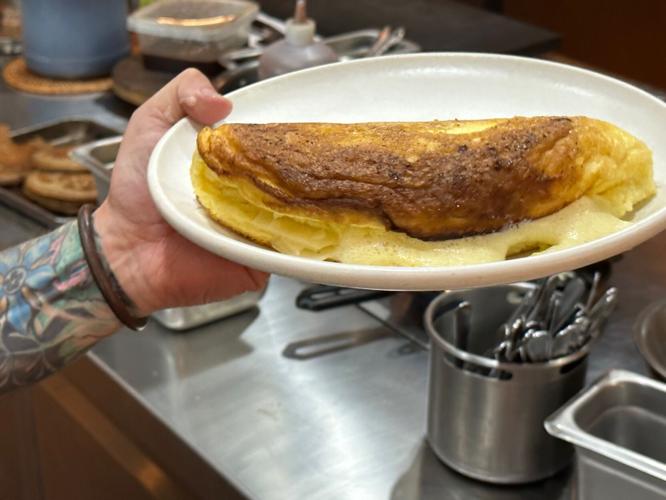
Still served at the iconic French restaurants and several other dining spots on the small island on the north coast of France, the mère Poulard omelet (Grammarly is forcing me to abandon the French spelling) is a wondrous hybrid between a traditional folded omelet and a souffle. Chef Sean Brock became fascinated by it and believes Audrey may be the only restaurant in America serving the dish.
"There's probably a reason for that!" he shared with a chuckle. "We'll probably find out the hard way!"
There are a couple of reasons it's rare in the U.S. The first is that it is an incredibly time-intensive dish, requiring at least 20 minutes of beating with an electric whisk to froth a bowl of eight eggs to the proper height and consistency. When it comes to egg dishes at brunch, speed of service is usually of paramount importance. At least the Audrey staff has made a nod to modern day by using a hand mixer that has the power of a small trolling motor instead of beating the eggs by hand, as in this mesmerizing video of the original old-school technique.
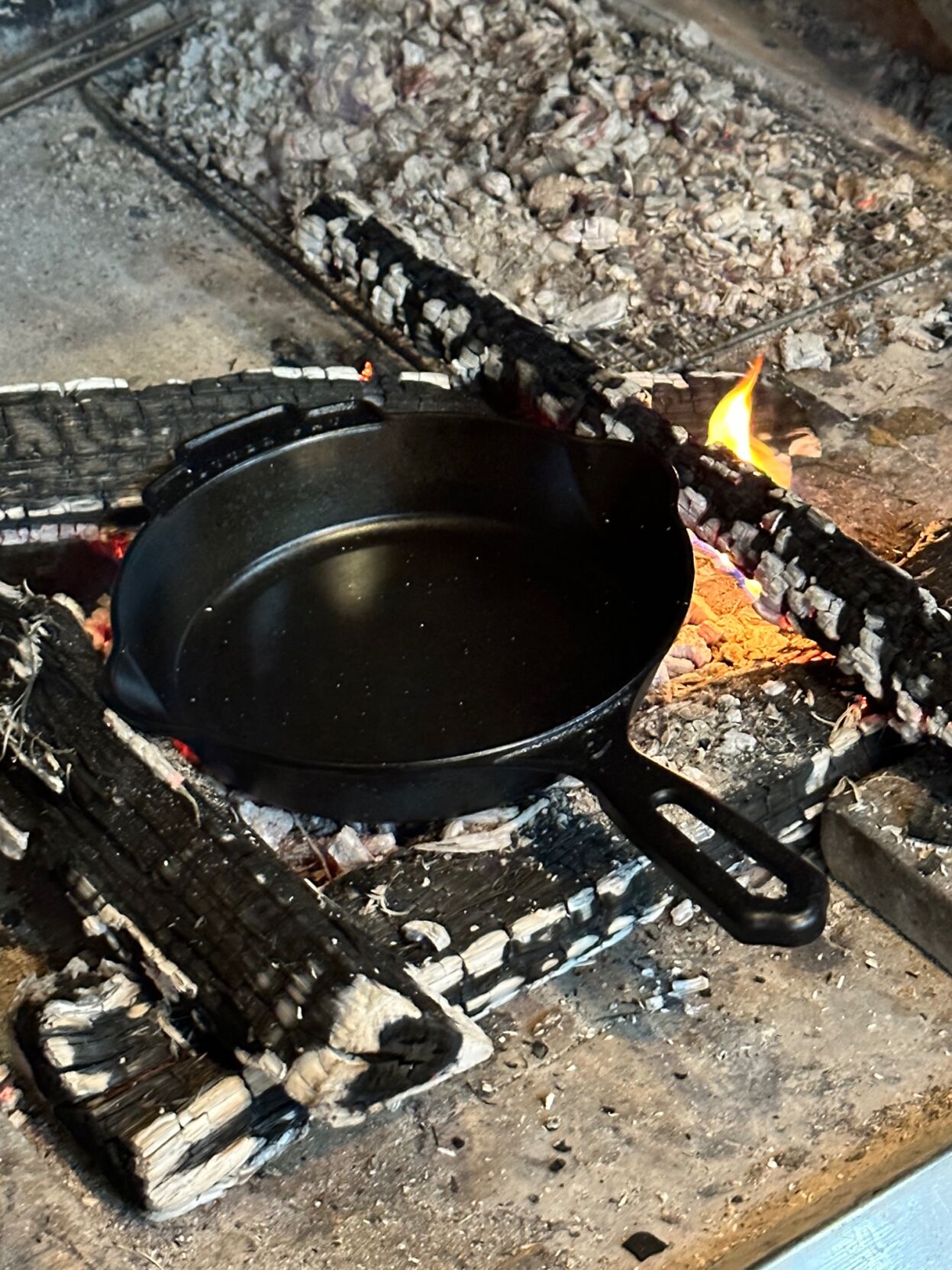
Bring the fire!
The second limitation of creating this dish is that it must be cooked over an open hearth (also shown in the video. Watch it! Trust me.) where the combination of infernal glowing embers along with actively burning sticks of wood creates a convection effect. This draws heat and smoke over the top of the frothy egg mixture in the Butter Pat skillet (appropriately filled with an decadently large pat of butter) to gently cook the insides of the omelet while the screaming hot skillet sets the exterior — while also offering a kiss of smoke and savoriness to the end product. The chef moves the pan off the fire after the bottom sets to a rack above the fire to moderate the heat as the insides of the omelet gently cook. It's a hands-on process that requires nuance and total attention. If you subscribe to the rule that a proper French omelet shouldn’t have even a spot of color other than the pale yellow of perfectly-cooked eggs, this masterpiece will disabuse you of that notion.
Brock reverentially sang the praises of the mère Poulard omelet during a recent demonstration and interview with me, describing it as both revolutionary and historic at the same time.
“It’s a brilliant and modern thing, but it’s not gastronomy," he said. "If we had tried to come up with a way to do this, we would have probably figured out a way to create an egg foam with an iSi bottle and cook it that way.”
Instead, when he was trying to figure out a way to cook eggs over the hearth that is integral to the kitchen at Audrey, he looked to the past.
“It was a modern idea out of an era of creativity that I really admire," he said. "The only change we make is adding a little bit of egg white amino to the bowl, but it’s the fire that adds the smoke flavor that makes it taste almost like bacon. It’s like eating meat.”
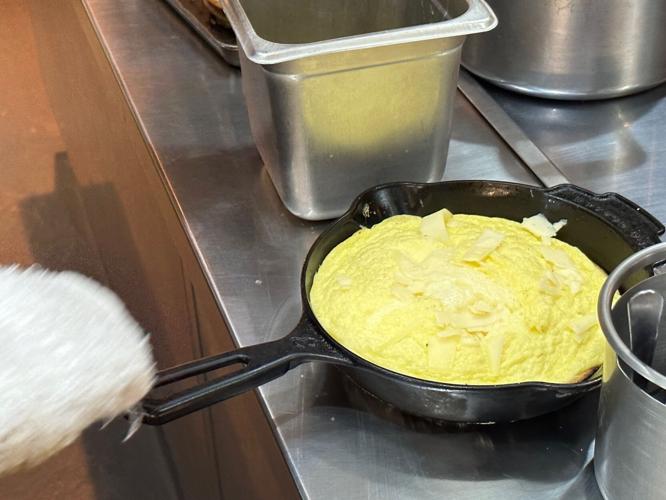
The kitchen adds nothing else to the bowl of eggs, which makes about four omelets per 20-minute whisking period. All the flavor comes from the fire except for a small sprinkle of Kenny’s Farmhouse Cheese's Rose, one of the creamery’s flagship cheeses that is creamy, briny and grassy, kind of like a roquefort.

The omelet almost overflows the skillet as Kenny's cheese is added.
The fluffy omelet never fully sets up in the skillet, remaining foamy and barely cooked inside as the chef gently folds it for plating alongside an endive salad. The omelets are big enough to share, and Brock recommends ordering one for the table to experience in addition to individual dishes for each diner. It's actually a pretty light dish considering that just two eggs create something large enough to cover most of the plate.
"I like that it's not sleep-inducing like most brunch dishes," explains Brock.

Can you believe this is only two eggs?
Choice for those dishes are legion, thanks to an inventive menu that Brock and his team have created for the morning meal service. Dishes that caught my eye during my test run/photo session/omelet expedition included a short stack of ruddy Jimmy Red cornmeal pancakes served with fried apples and syrup made from the shagbark that falls off hickory trees; a small platter of shucked oysters served with a bourbon mignonette, Appalachian cocktail sauce and country ham jelly; and a bowl of crab grits served with ramps, sorghum-cured egg yolk and bay laurel.
Other dishes that I didn’t put eyes on but which scan really nicely on the menu range from 18-month aged country ham with Poirier’s corn syrup; grilled Sunburst trout with asparagus, chervil and tomato gravy; and a barbecue lion’s mane mushroom that is marinated and then grilled before being served with green garlic. As many times as someone has told me to try a mushroom dish by promising “it tastes just like steak,” I’m going to believe chef Brock on this one.
So jump on those reservations, taste your way around the menu and let us know what you think. But seriously, get that omelet!



