
I admit it: Every time I see the sign for Guantanamera hovering above Nolensville Road, I start singing the Sandpipers song by that name, right up to the point that I realize I don't know any words other than, "Guantanamera ... Guantanamera ...." Then I break into a silent chorus of, "One-ton tomato, go eat a one-ton tomato."
Before the traditional Cuban ballad about a woman from Guantanamo was ever contorted into the ridiculous tomato parody song, before the Sandpipers turned it into an easy-listening hit in 1966, Pete Seeger transformed the tune into an anthem of the peace movement. It was the time of the Cuban missile crisis, and relations were notoriously strained between the island country and the U.S.
A half-century later, Guantanamera restaurant just might have the kind of unifying impact that Seeger wanted for the song of the same title, because Alfonso Nieto's lovely eatery opens a window onto the culture of many new Nashvillians from the Caribbean and South America. The restaurant is not Nieto's first endeavor to connect new Americans to Nashville. He is also the owner and publisher of the Spanish-language newspaper Hola Tennessee. The experience at his restaurant is so inviting and endearing, it's bound to attract a diverse group of guests, who will leave knowing a little more about Latino and Hispanic customs and cuisine. Generally and optimistically speaking, when people break bread together, good things happen.
To put it mildly, there are a lot of good things happening on the menu at Guantanamera, which takes its name from Guantanamo, Cuba, where Nieto's wife was born. The restaurant sign says "Cuban food," but the repertoire reaches more broadly across Southern and Central America, with significant offerings from Nieto's native country, Colombia, as well as from Peru, Venezuela and Costa Rica.
Don't confuse Guantanamera's regional fare with that of the building's previous occupants, including La Hacienda Marisqueria Mexican seafood restaurant and Mexico Restaurant and Supermarket. The cuisines of Cuba and mainland South America differ from Mexican tradition in the absence of peppery spice. Onion, garlic, tomato, cilantro and salt form the flavorful foundation of Guantanamera's repertoire, which abounds with beef, pork, chicken, seafood, beans, potatoes, yuca, plantains and rice.
A quick glance at the menu can be daunting to non-Spanish-speakers, but look again and you'll find helpful translations. In fact, seldom have we experienced a meal that was simultaneously so exotic and so accessible, thanks to patient and gracious staff — including Nieto — who took time to explain everything and who had answers for all our questions.
For example: Is the hot chocolate homemade? Yes, and stirred with cinnamon. Do you use syrup in the mojito? No, just muddled mint and sugar with rum and lime. What's the difference between tostones and maduros? Tostones are firm, green plantains fried to yield a crisp, starchy fritter. Maduros are soft, ripe plantains fried to produce a caramelized fruit so sweet and decadent it doubles as a dessert with guava paste and queso fresca. Where does the chorizo come from? The recipe comes from Colombia, but the actual sausage links — laced with rings of chopped green onion — are made in house. The plump pork links are served as an appetizer with tiny arepas (like corn dumplings) or as part of the Bandeja Paisa. Translated as the Hillbilly Platter, the meaty medley of sausage, red beans, fried pork belly, plantains, ground flank steak, avocado and rice with fried egg is an iconic Colombian meal designed to fuel a coffee picker for a full day.
Lots of dishes sound familiar in translation: sancocho de pollo (chicken soup), arroz con pollo (rice with chicken) and, of course, sandwich cubano. But in our experience the quality and presentation were anything but commonplace. The chicken soup is tinted green with herbs and thickened with the natural starches of cassava, potato and green plantain, which bob in the soothing bath, along with carrots and whole sections of corn on the cob. Arroz con pollo arrived in a sculpted mound of rice strewn with juicy hunks of roasted chicken, bell peppers and tomatoes and plated with the exquisite caramelized plantains. The Cuban sandwich is loaded with tender roasted pork, Swiss cheese, ham, mustard, mayonnaise and pickles on a flaky, crisp Cuban baguette imported from Florida.
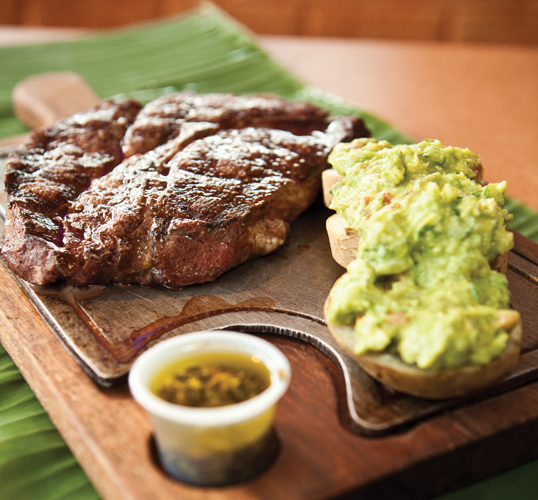
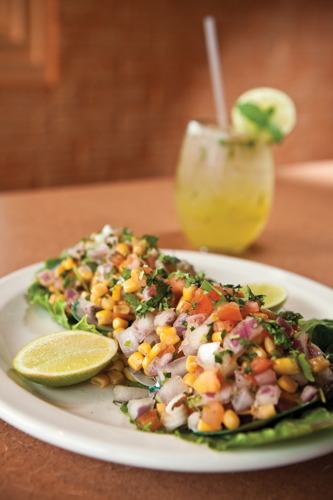
Ceviche with tender calamari rings, fish and shrimp was vibrant with lime juice and pink onion and plated in the Peruvian style with corn on the cob and a brick of skinned boiled potato. Mussels in the Peruvian style were the size of plump dates and topped with a colorful medley of diced onion, tomato and raw sweet corn stripped fresh from the cob. And before you quibble that the steak — marinated and grilled and served with a mound of fresh guacamole, potatoes and bright chimichurri — isn't the best-quality 10-ounce steak you've ever tasted, keep in mind that it costs $12.99. Add a $4.99 glass of Chilean red and pinch yourself.
Ask a server what to order, and she'll likely suggest you not miss the empanadas. Excellent advice, as these crisp-fried pockets of soft cornmeal, stuffed with pulled pork and served with red and green salsas, are the ingenious long-lost cousins of traditional Southern barbecue fare.
Ask us what to order, however, and we'll insist on paella, which requires 45 minutes' advance notice. The traditional flat pan of saffron rice and seafood arrives like a crowning glory — literally — ringed with a crown of mussel shells and overflowing with shrimp, calamari, roasted pork, chorizo and a roasted chicken thigh whose glass-crisp bronzed skin was arguably the crowning glory on the crowning glory.
But we'll also advise against parillada de pollo, flat strips of thin grilled chicken served with sliced potatoes covered with cheese sauce and olives. Yes, cheese sauce and olives. And as dazzled as we were by the whole fried tilapia, toothy underbite and all, we were disappointed by its leathery texture.
With so many intriguing and well-executed items, the options can be dizzying, so keep it simple: Call ahead and order paella for the table and a round of mojitos, swirling with freshly muddled mint. Those standout items keep running though my head all these days later. I just can't get the vibrant colors and fresh flavors out of my mind — like the catchy song that shares Guantanamera's name.
Guantanamera serves lunch and dinner Thursday through Sunday, with karaoke and tropical dancing on Fridays 9 p.m. to 2 a.m., and live music on Saturdays 7 to 9 p.m.
Email arts@nashvillescene.com.



Post a comment as anonymous
Report
Watch this discussion.
(0) comments
Welcome to the discussion.
Log In
Welcome to the discussion.
Keep it clean. Please avoid obscene, vulgar, lewd, racist or otherwise abusive language. Comments featuring hate speech or threatening or violent content will not be tolerated.
PLEASE TURN OFF YOUR CAPS LOCK.
Be truthful. Don't knowingly lie or mislead.
Be proactive. Use the “report” link on any comment that violates our comment policy.
Share with us. We'd love to hear your feedback.