

One of the laziest ways to boost your Facebook numbers is to go to one of those nostalgic group pages — “The Nashville I Remember” or “I Remember Nashville When …” for instance — and post something like: “I miss Rumba. What restaurant do you miss?” About 200 comments later, all you’ll learn is that Ireland’s sure made a good steak biscuit, and just about anybody could get laid in the ’90s if they hung around happy hour at Rio Bravo long enough.
We all have favorite eateries that have become casualties of the rapid pace of restaurant openings and closings — from reliable old meat-and-threes like The Pie Wagon to bright flashes that burned out quickly, like Kuchnia & Keller. Some bloggers keep running totals of the passings, like a memorial wall, but they also foam at the mouth over any news of potential real estate deals that might include another spot to find upscale tacos.
Sure, I miss Rumba and those curried mussels. But when a new mattress store is willing to pay more at the end of a restaurant’s lease, who do you think is going to win that real estate battle? We will definitely see more old reliables fall by the wayside in the near future when their rent goes up, but there are still hundreds of good, great and awful restaurants that have lasted for decades in this town. The popular Brown’s Diner has been serving up cheeseburgers and longnecks since 1927, but you wouldn’t give it a top score for ambiance in the Zagat Guide. Jimmy Kelly’s continues to be a favorite local steakhouse after more than 80 years, even as fancy new temples of beef open all over downtown. Pancake Pantry has attracted long lines of tourists and locals since Tulane was still a member of the SEC.
So to what can we attribute the shortening life spans of so many Nashville restaurant projects? If you had told me in 2001 that The Trace, Iguana and Sunset Grill wouldn’t last forever as the “Vodka Triangle” in Hillsboro Village, I’d have spit-taken my cosmo all over my popped collar. (TMI, I know.)
It’s not like there’s a lack of available quality retail space in this town, because almost every one of these new mixed-use high-rise developments includes at least a couple of Class A retail/restaurant spaces on the ground floor as part of their plans. The new Vertis Green Hills sits on the space that once was home to a Burger King and a gas station. In their place, the same footprint houses Char and the True Food Kitchen, which opened last week; Brixx Wood Fired Pizza and Santo will open there soon. Another project, 222 Second Avenue, replaces a parking lot with space for The Green Pheasant, a new high-end Asian concept, and a French-Southern fusion cafe named Liberty Common.
These are all bold projects from entrepreneurial owners, but that in itself does not ensure success. Nashvillians occasionally eat like crows, flocking to whatever is shiny. But there’s always something newer and flashier in the pipeline to distract them. Restaurants respond to the competition by rolling out new happy-hour deals or advertising elaborate boozy brunches to increase cash flow. Whenever I see a restaurant announce that it’s either adding or eliminating lunch service, I suspect they’re going through the same sort of death throes that characterized the demise of longtime stalwarts like Sunset Grill and Mambu.
The primary factor for how long a restaurant lasts comes down to us, the diners. Despite the public gnashing of teeth when a local institution like The Pie Wagon shutters, you have to ask yourself, “When did I really last eat there?” When the Elliston Soda Shop threatened to close on short notice, the city lost its collective mind and lined up down the block for the chance at one last nostalgic milkshake. This show of support emboldened the owners to go ahead and sign another lease extension rather than shutting the doors. But how many of those foul-weather fans returned on a regular basis after that to repay the Elliston owners for their leap of faith? Apparently not enough to keep them from selling out to a new investor a couple years later.
I liken the situation to the television networks. Forty years ago, there were just three broadcasters: NBC, ABC and CBS. With only 45 one-hour slots in prime time, Gunsmoke managed to run for 20 years. Nowadays, with hundreds of cable channels and on-demand outlets, you’d think that even a marginal television show could hang around for a while, if for no other reason than the fact that there are more places for it to reside. Yet The Simpsons remains an outlier in terms of longevity at 30 seasons.
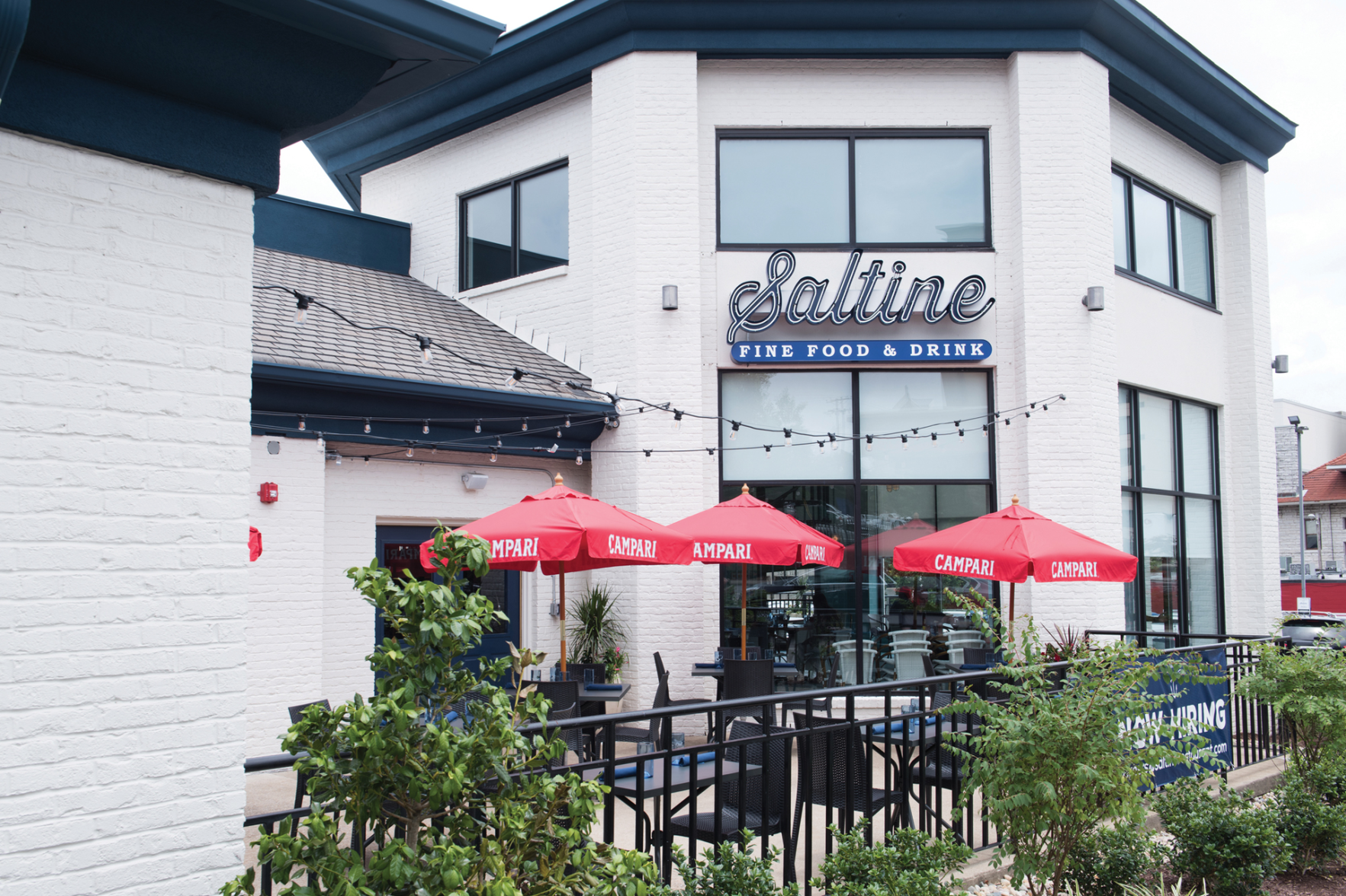
It’s an oversimplification to say we’re experiencing a restaurant bubble and that the industry is in a sort of death spiral, as some local publications scream in front-page stories. Yes, there have definitely been casualties, but opportunistic restaurateurs have learned to shift with the changing tides. Doug Hogrefe is a partner in 4-Top Hospitality, the team behind Amerigo, Etch, etc., Char and Saltine, as well as additional concepts in other markets. Even in the face of increased competition and challenging labor markets, 4-Top has managed to continue growing by taking advantage of unique opportunities.
“You can’t use your 2010 business plan anymore,” says Hogrefe. “We try to keep it simple. We want to open restaurants where people go on a regular basis. We opened Etch across the street from the Schermerhorn because that’s where [chef Deb Paquette’s] clientele goes. When we heard about the space in Green Hills, we asked ourselves, ‘Why isn’t there a steakhouse in Green Hills?’ So we opened Char. The original Char in Jackson, Miss., has had a piano bar for years, so we knew we could appeal to people who used to go to F. Scott’s for music and food.”
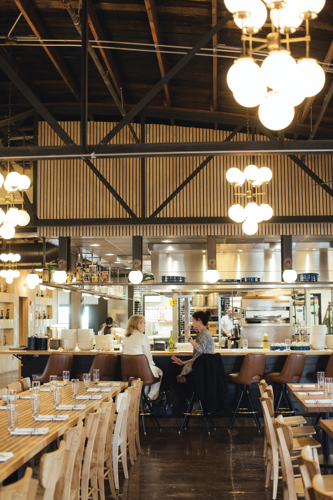
Hogrefe says he worried somebody might put a national chain like Bonefish Grill next-door to the flagship Amerigo location on West End after Blackstone closed its neighboring brewpub, so 4-Top made a clever defensive move. The group already had its own seafood-based concept with Saltine, so they converted Blackstone into black ink at the popular newest outpost of the coastal eatery.

The late Kuchnia & Keller
Other successful restaurateurs demonstrate the flexible finesse to veer with changing market conditions. In Franklin, Jason McConnell closed his own Mexican restaurant, Sol, and reopened it a couple weeks later as the wildly popular Cork & Cow steakhouse. Fresh Hospitality is constantly on the lookout for real estate to secure for their multiple restaurant concepts, and they’re not afraid to swap one out for another to find what works better. After the quick departure of Kuchnia & Keller this year, chef-partner Tandy Wilson took only a month to convert the former Eastern European concept into a homestyle Southern focus with Mop/Broom Mess Hall.
Respected longtime restaurant operator Randy Rayburn agrees there are still plenty of opportunities for nimble movers.
“It’s not a local bubble,” says Rayburn. “The consistent, well-executed concepts with strong team leadership at all levels and quality-focused team members will survive as long as they deliver to their customers. The more consistent the quality of the food and service teams, the longer the life of the business. If a restaurant is not growing over a one-to-three-year cycle, they are in the process of dying.”
Both Rayburn and Hogrefe say this may be a tough time to be a single-location independent restaurant. Says Rayburn: “While the market grows bigger, it only squeezes those in the struggling middle range more and more. Those at the top and bottom of price and quality have enough customers to thrive.” Hogrefe warns of the perils of financial crunches. “The main danger I see is if tourism tanks for reasons outside of our control. Low-performing restaurants won’t have the capital to survive that sort of downturn.”
Hogrefe also says more potential investors are looking to the outskirts of town. “People are getting smart and looking at Donelson and Madison. They may not get all the press, but it’s an easier way to make a living. We wouldn’t be doing all this if it wasn’t a way to make money.”
As with the television networks, nothing lasts forever, and consumers’ appetites and tastes change much more rapidly than they used to. Merely maintaining a high level of service and quality doesn’t seem to be enough anymore for a restaurant to survive past the first few years of novelty. You have to constantly be evolving and improving to stay in the public eye. Benjamin Goldberg of Strategic Hospitality lives by the continuous-improvement mantra at his many successful ventures, among them The Catbird Seat, Pinewood Social and Bastion.
“Continuing to push the envelope and evolve is continuously happening at our restaurants, whether it is a new cocktail menu, or new food items, or just a change in ways we do things,” says Goldberg. “We never want to settle for what we have been doing; we want to continue to move forward and try to get better every day.”
In 2001, Bill Carey wrote for the Scene about how the closing of Planet Hollywood might be the harbinger of the death of the downtown restaurant scene, noting other shutterings ranging from NASCAR Cafe to the Gibson Cafe to Fuddruckers. Fortunately, the trend was actually that locals stopped supporting bad chain restaurants. Are we really the worse off as a city for the loss of those establishments, the culinary equivalent of the Housewives of Some Metropolitan Area reality TV series? I think not.
“People are eating out in droves,” says Hogrefe. “We’re not in a death spiral. There will be more closures, for sure, but mainly because they weren’t good restaurants.”



