
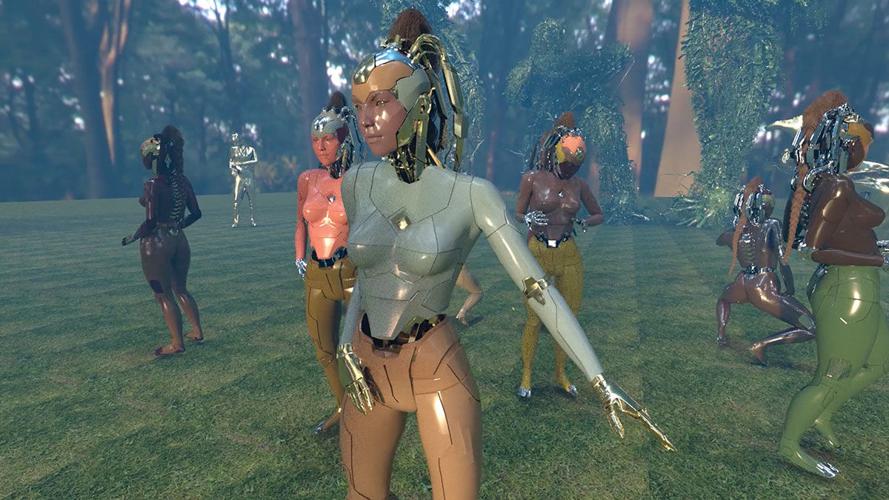

For 26 years, Mark Scala has been curating art shows in Nashville. As the Frist Art Museum’s chief curator, he’s introduced generations of audiences to globally influential contemporary art and artists. But he’s also shaped the way Nashville thinks — his exhibitions make big, complicated ideas feel approachable and engaging. Shimmer: Dreaming the Posthuman, which opens at the Frist on Sept. 25, is his final major curatorial endeavor before his official retirement at the end of the year, and in many ways it’s the culmination of his work at the Frist’s helm. The exhibition includes 17 visual artists working in technologies like animation, augmented reality, virtual reality and AI.
I spoke with Scala in the Frist’s cafe the week before installation began, and we spoke about his legacy, the future of AI, and his hopes for Nashville’s future. This interview has been condensed for clarity.
Something I’ve always found exciting about the shows you curate is how you’re able to take really cerebral, almost philosophical perspectives and find artists who are working with the same ideas.
That’s been central to my work as a curator — to make connections for people, and to help them understand even the most difficult, challenging ideas. But the thoughts that I find manifest in the art are also things that people are already thinking about.
Do you feel like artists are particularly skilled at being able to make those big ideas accessible?
It’s always an interesting dance between the curatorial concept and the artist’s own practice. I wouldn’t include an artist who didn’t feel comfortable being included, or feel comfortable with my understanding of their work within this larger context.
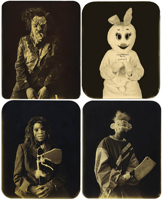
The exhibition considers a complex subject — what is left after life, whether in presence or absence
How does Shimmer fit into this trajectory? What is it that’s making you think about the posthuman at this point?
I mean, every single show that I have done has planted the seeds for the next show. With Paint Made Flesh, there was this Jenny Saville painting, and I learned that she had worked with plastic surgeons who refer to themselves as “Michelangelos of the flesh.” So that made me think about art in relation to technology and in relation to science. And that became Fairy Tales, Monsters, and the Genetic Imagination. And you know, what I’m starting to think of is that one of the throughlines in most of these shows is humanity in relation to technology, to science, to philosophy.
I feel like the history of art is a history of religion in a lot of ways, similar to how science has sort of taken the place of religion in society. So it sort of makes sense to me that artists are continuing to explore the same ideas that artists have always been exploring.
It’s all about what it means to be human, right? And I don’t think today you can separate that question from technology, but I also don’t think you can separate that question from our relationship with nature, and that’s where the posthuman comes in. Posthumanist philosophy is unlike humanist philosophy, which centers on humanity as being the be-all-end-all, at the top of the ladder in terms of our species development, which gives us certain freedoms and rights to exploit the non-human. The post-human will say that’s a mistake. Because we’re actually so closely related to the world, to every single natural element, every species, every rock — there’s a connection there. And when something happens to one type of being, it happens to others. So does technology move us away from ourselves? Or does it move us — can it move us — closer to ourselves?

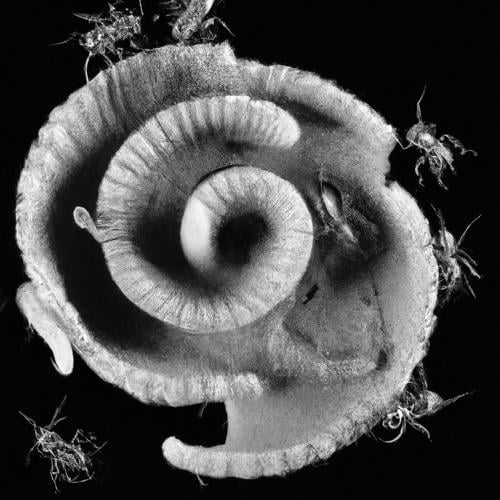
“Collective Effervescence,” Marguerite Humeau
Everyone has been talking about the technology around AI and how rapidly it is advancing — not only in the art world but just in general. Everyone is afraid, and it’s not in the distant future anymore.
It’s such an interesting thing. There are maybe six or seven artists in Shimmer who are using AI — not as the sole means of producing their work, but as a tool that they add to. For example, Marguerite Humeau needed to be able to show termites dancing, right? And so she used AI to show termites dancing. It’s a very specific thing. She’s not taking from other artists, and I think that’s a big distinction. That’s what I think a lot of people — a lot of musicians and artists — are very concerned about. If their work is being data-mined and used without their permission, and adapted and adjusted and manipulated without their permission, that is a real concern. And it’s a legitimate concern. But right now, the larger concern — the concern that’s outweighing everything else — is human extinction.
And if we avoid AI out of fear, then that makes room for other people, the people who aren’t avoiding it, to know it so much better.
And then they’ll control things. So that’s part of what I hope people will come away with from this show. Right now it’s an open field. A lot of these artists are using AI in subversive ways, in ways that it is not meant to be used, in ways that will help us build a sense of empathy with the world. And not only are they really smart, but they have a very keen social awareness and cultural awareness. Part of the conversation is, how do you take art and remove it from this kind of enclave, and so it becomes effective in a larger sense?
And you want to be able to have challenging, difficult conversations in a museum setting, in an art setting. That’s sort of the goal, right?
You know, Amelia Winger-Bearskin is absolutely brilliant, and she uses AI, but she’s also very leery of it. You know, I think most of these artists, even if they’re using AI, they’re probably more aware than any of us what the dangers are, what the pitfalls are. And so I’d much rather have them doing work with AI than somebody who is just embracing it wholeheartedly, who thinks it’s the salvation of the universe, like all the tech bros are telling us to do.

A futuristic art show at the Frist, a superhero opera, the Nashville Film Festival and more can’t-miss autumn events



Post a comment as anonymous
Report
Watch this discussion.
(0) comments
Welcome to the discussion.
Log In
Welcome to the discussion.
Keep it clean. Please avoid obscene, vulgar, lewd, racist or otherwise abusive language. Comments featuring hate speech or threatening or violent content will not be tolerated.
PLEASE TURN OFF YOUR CAPS LOCK.
Be truthful. Don't knowingly lie or mislead.
Be proactive. Use the “report” link on any comment that violates our comment policy.
Share with us. We'd love to hear your feedback.